
DPD Speaker endorses Prabowo's diplomacy amid global fragmentation
Regional Representatives Council Speaker Sultan B. Najamudin voiced support for President Prabowo Subianto's diplomatic efforts to promote a peaceful world order, citing Indonesia's independent and active foreign policy as crucial in an era of deepening geopolitical division.
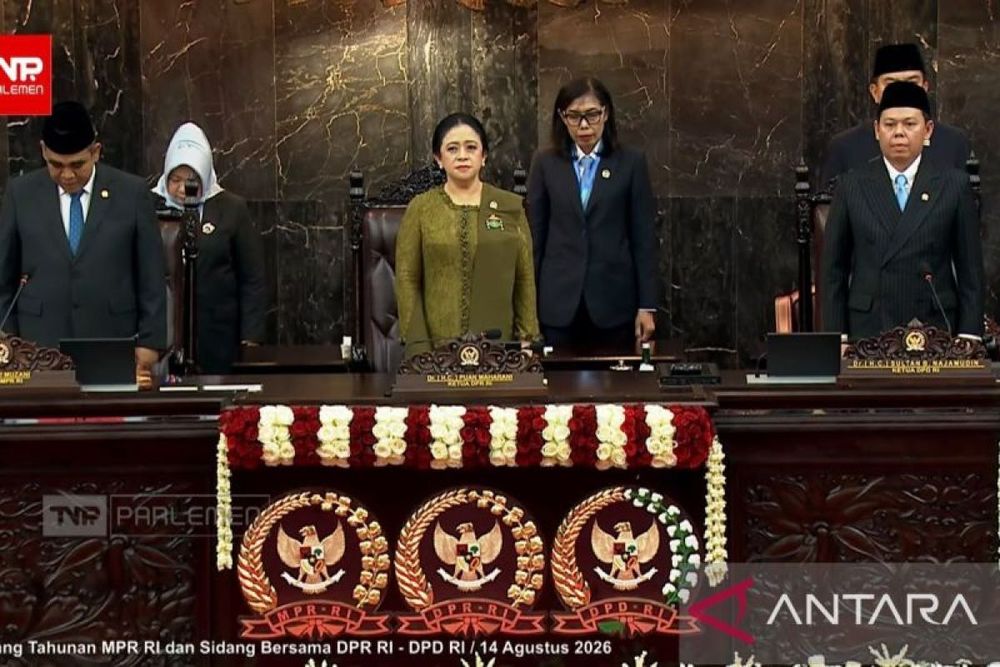
DPD Speaker endorses Prabowo's diplomacy amid global fragmentation
Regional Representatives Council (DPD) Speaker Sultan B. Najamudin on Friday endorsed President Prabowo Subianto's diplomatic initiative to advance a peaceful and just global order as geopolitical fragmentation intensifies worldwide.
Addressing the 2026 Annual Session of the People's Consultative Assembly (MPR) and the joint session of the House of Representatives (DPR) and DPD at the Parliament Complex in Jakarta, Najamudin underscored that the world stands at a critical historical juncture. The session, marking Indonesia's 81st Independence Anniversary under the theme "A Sovereign, Just and Prosperous Indonesia," brought together 732 MPR members, comprising 580 DPR lawmakers and 152 DPD senators serving the 2024-2029 term.
Indonesia's "Bebas Aktif" Foreign Policy Doctrine
Najamudin, who assumed the DPD speakership in October 2024 after securing 95 votes to defeat incumbent La Nyalla Mattalitti, emphasized that mounting geopolitical fragmentation is compelling nations to reassess their strategic priorities. Indonesia's relevance in this shifting landscape, he argued, stems from its longstanding "bebas aktif" foreign policy doctrine, which guides the nation to remain non-aligned while actively pursuing peaceful policies and participating in international conflict resolution.
"This is where Indonesia's relevance lies, with its independent and active foreign policy pursued independently and proactively in response to this new era," Najamudin stated.
The "bebas aktif" principle, originally articulated by Indonesia's first Vice President Mohammad Hatta in the early post-independence era, has shaped Indonesian diplomacy for over six decades. The doctrine directs Indonesia to avoid siding with major powers while vigorously championing peace and engaging constructively in global affairs. President Prabowo has maintained this traditional hedging approach while pursuing a more active foreign policy compared to his predecessor.
Southeast Asian Senate Forum Initiative
Najamudin revealed that the DPD is expanding interparliamentary cooperation with partner nations and spearheading the establishment of a Southeast Asian Senate Forum. This initiative builds on Indonesia's historical leadership in regional cooperation, which has produced key ASEAN milestones including the Bali Concord and ASEAN Charter.
The DPD's emphasis on international parliamentary engagement reflects its constitutional mandate. Established in 2004 following amendments that transformed Indonesia's parliamentary system from unicameral to bicameral, the DPD holds advisory powers limited to regional government matters and can propose legislation to the DPR but cannot review bills passed by the lower house.
"Indonesia believes the world cannot be sustained solely by the strong, but by all nations that respect one another and work together to preserve peace," Najamudin said, articulating the philosophical foundation of the proposed senate forum.
Green Democracy and Legislative Vision
Beyond foreign policy, Najamudin has championed "Green Democracy," a concept he authored that integrates democratic participation with environmental ethics and sustainable governance, reflecting his broader legislative vision for Indonesia's future.
The annual sessions underscore Indonesia's commitment to multilateral cooperation and peaceful international engagement as cornerstones of its foreign policy at a time when global power dynamics are rapidly shifting.