
Banyuwangi declares 14-day emergency as forest fire threatens UNESCO Geopark at Ijen Crater
East Java's Banyuwangi district has established emergency status following a forest fire at Ijen Crater Nature Tourism Park, with water-bombing helicopters deployed to combat the blaze threatening the UNESCO Global Geopark site.
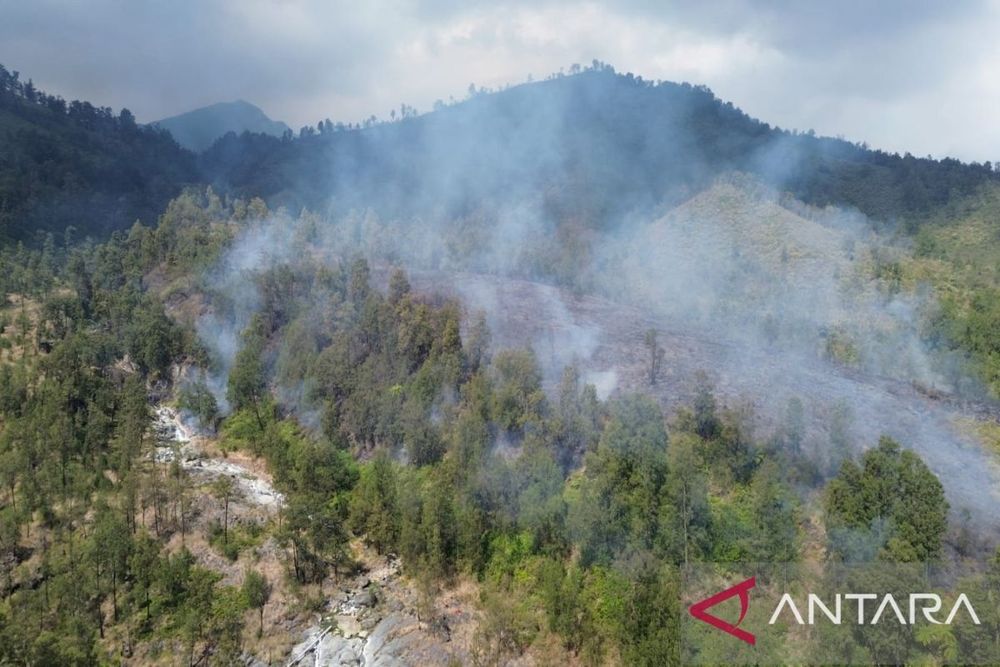
Banyuwangi govt declares emergency over Ijen forest fire
Authorities in Banyuwangi, East Java Province, activated a 14-day emergency response on Saturday following a forest fire at Ijen Crater Nature Tourism Park, deploying aerial firefighting resources to protect the internationally recognized geological site.
District Head Ipuk Fiestiandani, who has led Banyuwangi since February 2021, signed Decree No. 100.3.3.2/229/KEP/429.011/2026 establishing the emergency status to accelerate response operations. The district has requested water-bombing helicopter support from the East Java Disaster Mitigation Agency and the Surabaya Search and Rescue Office.
The fire poses a significant threat to Ijen Crater, located approximately 2,386 meters above sea level on the border between Banyuwangi and Bondowoso regencies. The volcanic complex sits within a 20-kilometer-wide caldera and features the world's largest highly acidic crater lake, known for its distinctive turquoise color and rare blue fire phenomenon caused by sulfur gas combustion.
The timing of the incident carries additional significance as Ijen Geopark, designated as a UNESCO Global Geopark on May 24, 2023, is preparing for its mandatory four-year revalidation assessment scheduled for August 3-7, 2026.
Banyuwangi Disaster Mitigation Agency Chief Partana confirmed that an East Java agency water-bombing helicopter is scheduled to arrive at Ijen Crater on Sunday, September 6. The aircraft will depart from Malang, land at Banyuwangi Airport, then proceed to Paltuding, the main visitor entrance and starting point for crater hikes, to conduct aerial firefighting operations.
The emergency declaration covers September 4-17, 2026, with provisions for extension depending on conditions and operational requirements.
Authorities first detected the fire in forest and plantation areas of Pasewaran, Kalipuro Subdistrict, on Wednesday, September 2, initiating a phased response. The blaze spread toward Pondok Bunder, a route leading to the crater, on Friday, September 4, forcing officials to temporarily close the tourism park.
National fire crisis intensifies
The Ijen incident occurs amid a severe nationwide fire crisis. Indonesia has recorded over 202,000 hectares of forests and land burned across the country by August 2026, representing a 110 percent increase compared to the same period in 2023, according to Ministry of Forestry data. The country documented more than 96,000 fire hotspots by late July 2026, surpassing the same point in the devastating fire years of 2019 and 2023.
The 2026 fire season has been exacerbated by a developing El Niño event. Indonesia's BMKG weather agency has warned that the 2026 dry season is more intense and prolonged than usual, with nearly 93 percent of Indonesia recording low rainfall by mid-July 2026. Meteorological authorities identified August and September as the most critical months for fire risk.
East Java Province has demonstrated particular vulnerability to fire incidents, having recorded 20,957 hectares of forest and land fires in 2024, making it the sixth most affected province in Indonesia that year.
The emergency response at Ijen highlights the challenges facing Indonesian authorities as they combat widespread fires during peak risk months while protecting critical natural and cultural heritage sites.