
Daicel Launches DURACON POM Line with 30% Post-Consumer Recycled Content
Daicel Corporation's High Performance Polymers SBU introduces four new polyacetal grades containing 30% recycled material, addressing growing demand in the automotive and industrial sectors for sustainable engineering plastics.
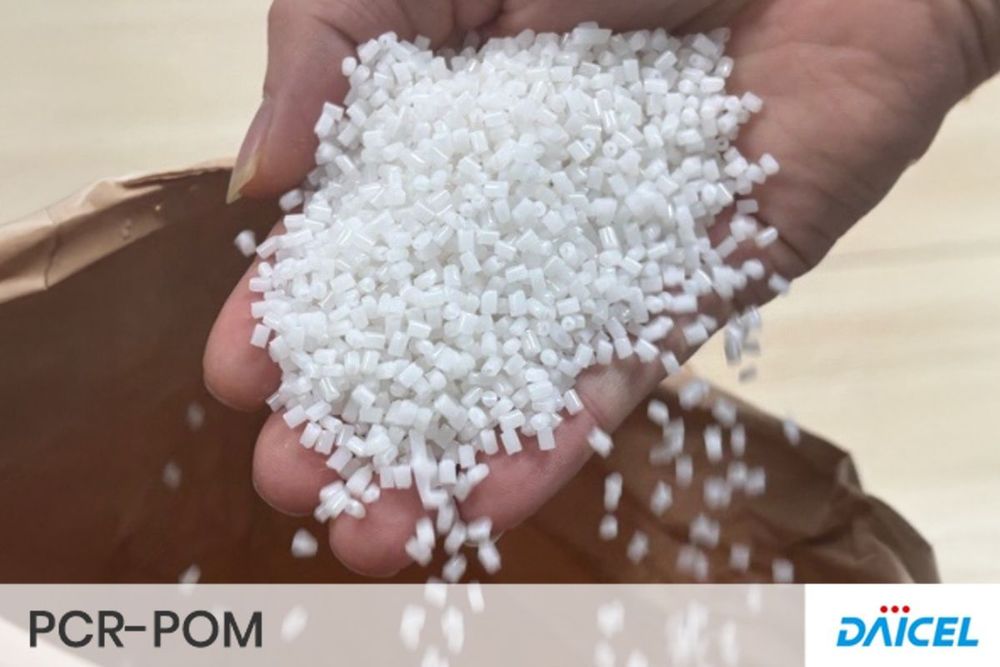
Daicel Launches DURACON POM Line with 30% Post-Consumer Recycled Content
Daicel Corporation's High Performance Polymers Strategic Business Unit has launched four new DURACON POM grades incorporating 30% post-consumer recycled material, marking a significant advance in sustainable engineering plastics. The Osaka-based company, which integrated Polyplastics' engineering plastics operations in April 2026, unveiled the new product line at CHINAPLAS 2026 in Shanghai, one of Asia's largest plastics industry exhibitions featuring over 4,500 exhibitors across approximately 380,000 square meters.
The new PCR-POM offering includes standard, low VOC, sliding, and tough grades, enabling customers to select materials suited to specific application requirements. The standard grade offers a melt flow rate of 9, while low VOC materials address automotive interior requirements where cabin air quality is increasingly critical. The sliding grade delivers enhanced tribological properties, and tough materials maintain performance levels comparable to virgin POM grades.
Technical Achievement in Recycling Challenges
The development represents a notable technical accomplishment in an area where recycling has historically been limited. POM recycling has remained minimal despite the material's high market value, primarily because polyacetal is immiscible with other plastics. Due to relatively low production volumes, dedicated separation methods for recovering POM from mixed plastic waste streams have not been developed.
Post-consumer recycled materials present greater challenges than post-industrial recycling. While post-industrial recycling generates high-quality products with well-known composition and minimal contamination, post-consumer materials derive from products after consumer use and typically contain contaminants, heterogeneity, and material losses during collection and separation. A major obstacle in utilizing PCR materials is ensuring consistent quality despite variability in feedstock properties.
Leveraging compounding expertise and quality control technologies developed over decades, Daicel confirmed that key mechanical properties in the new grades remain at levels comparable to conventional formulations, even with 30% recycled content.
Market Context and Regulatory Drivers
The launch addresses growing demand driven by environmental regulations and market expansion. The European Union's End-of-Life Vehicle Directive mandates that 95% of vehicle components must be recoverable or recyclable, pushing automotive manufacturers to incorporate recycled content. The post-consumer recycled plastics market in automotive applications was valued at USD 11.92 billion in 2024 and is projected to reach USD 22.32 billion by 2030, growing at 11.1% annually.
The broader engineering plastic recycling market is estimated at 16.11 million tons in 2026 and expected to reach 22.06 million tons by 2031, expanding at 6.49% annually. Asia-Pacific holds the largest regional share at approximately 47-56%, driven by rapid industrialization, urbanization, and supportive government policies promoting recycling initiatives.
Material Applications and Prior Recycling Efforts
DURACON POM, established as an engineering plastic for approximately 30 years, features high mechanical strength and rigidity, excellent wear resistance, sliding properties, and dimensional stability. The material is widely adopted in automotive construction and electrical industries for applications including gears, connectors, precision parts, and automotive components.
Since 2023, Daicel has offered DURACIRCLE re-compounding service, which recycles plastic scrap collected from customer manufacturing plants. While this previous initiative focused on post-industrial recycling of manufacturing scrap, the newly developed PCR-POM utilizes polyacetal that has been used in the market as recycled feedstock, representing a shift to more challenging post-consumer material recovery.
Daicel is undertaking further development activities aimed at expanding its PCR-POM portfolio to meet a wider range of customer needs across industrial sectors.