
Minister urges campus labs to build world-class industries
Higher Education Minister Brian Yuliarto calls for Indonesian universities and research institutions to transform laboratory innovations into global industrial leaders, citing Taiwan's semiconductor success as a model for bridging the gap between research and commercialization.
Minister urges campus labs to build world-class industries
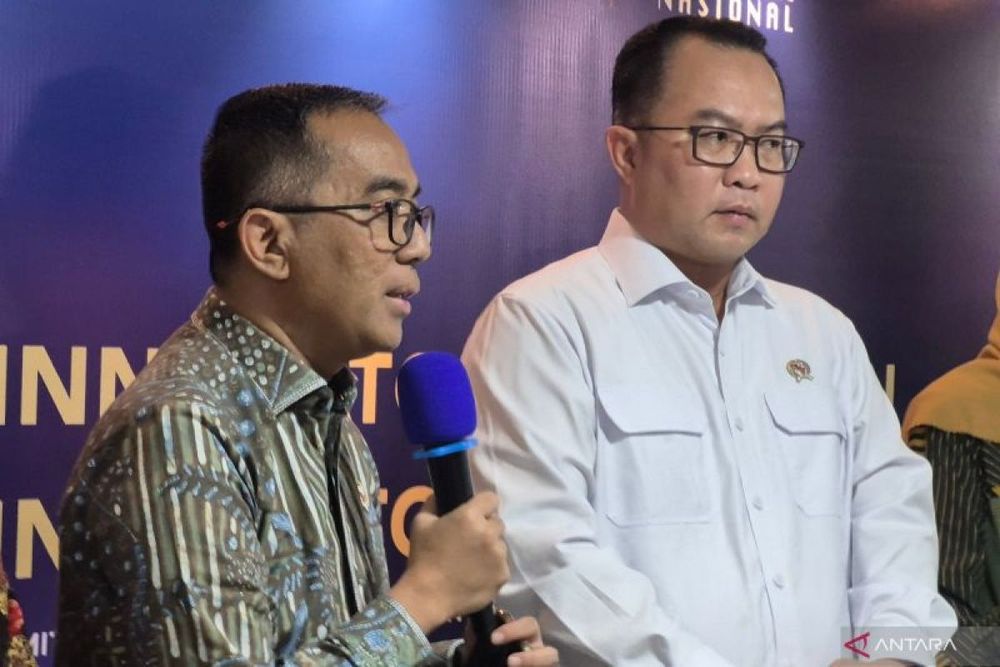
Minister of Higher Education, Science, and Technology Brian Yuliarto has challenged Indonesian universities and research institutions to transform their laboratories into launching platforms for world-class industrial companies.
Speaking at the Indonesia Innovator Award 2026 event in Jakarta on Monday, Yuliarto outlined an ambitious vision that extends beyond producing impactful research products to creating a roster of companies born from laboratories at the National Research and Innovation Agency (BRIN) and university campuses.
Bridging the valley of death
The minister emphasized that Indonesian researchers must overcome what is known as the "valley of death" — the critical gap between research development and commercial viability where many innovative projects falter. This phase occurs when research has exhausted initial funding but has not yet demonstrated sufficient market potential to attract private investment.
Becoming a company, a company becoming an industry, and indeed there, as researchers, we know the valley of death is there. There are so many innovative products, but we have not succeeded in bringing them to industry.
He stressed that Indonesia's path to becoming a developed nation requires more than manufacturing ordinary mass-produced goods. The country must build a technology industry founded on absolute mastery of advanced science, particularly in deep tech — sophisticated technologies based on substantial scientific or engineering innovation, including artificial intelligence, biotechnology, quantum computing, robotics, nanotechnology, and advanced materials.
It must have an impact on society, that is our concern, which is what makes it challenging for a country to leap forward.
Taiwan's semiconductor success as a model
As a benchmark for success, the minister pointed to Taiwan's Industrial Technology Research Institute (ITRI), established in 1973. In 1987, ITRI spun off Taiwan Semiconductor Manufacturing Company (TSMC), which became the world's first dedicated semiconductor foundry. At its inception, ITRI transferred fabrication facilities, equipment, technology, and 98 professionals to TSMC, demonstrating how government research institutions can successfully create global industrial giants.
BRIN's strategic role
BRIN Head Arif Satria echoed the minister's call, recalling the president's message that a country's capacity to master technology will significantly determine its international standing. BRIN, which consolidated 48 governmental research bodies when it became a cabinet-level agency in August 2021, now employs over 14,000 people as Indonesia's sole national research agency.
To accelerate national economic growth toward Golden Indonesia 2045 — the government's long-term development vision launched in 2019 that aims to transform Indonesia into one of the world's top five economies by its centennial — BRIN has outlined three strategies:
- boosting productivity of micro, small and medium enterprises through innovation
- strengthening national industry and state-owned holding company Danantara's competitiveness through research
- facilitating co-development of advanced global technology
The Golden Indonesia 2045 vision, launched by President Joko Widodo on May 9, 2019, sets the goal for Indonesia to become a sovereign, advanced, fair and prosperous nation, achieving high-income status by 2045.