
The facts on Iran's nuclear programme were public — Prabowo ignored them
President Prabowo Subianto claimed at a Jakarta business forum on August 1 that Iran already has nuclear weapons and predicted this could trigger a regional arms race involving Saudi Arabia, the UAE, and Qatar, offering no evidence for either point. The piece argues the claim doesn't hold up: Iran is bound by the NPT, and IAEA inspections have consistently found only a civilian program. It notes one real caveat — Iran had enriched uranium to 60% purity before June 2025, well above civilian needs but below weapons-grade — but stresses that stockpile levels aren't the same as intent, and even the US's March 2025 threat assessment stated Iran isn't building a weapon. The IAEA chief reaffirmed this even during this year's 12-day war. The author traces the claim to longstanding US and Israeli talking points rather than Indonesian analysis, and argues naming Gulf states as likely nuclear aspirants was especially damaging, since those countries have spent years normalizing relations with Iran. This undercuts both Indonesia's ties with Gulf partners and its credibility as an informed voice on Middle East affairs. Iran's embassy denied the claim the next day, and the piece concludes that basic fact-checking could have avoided the episode entirely.
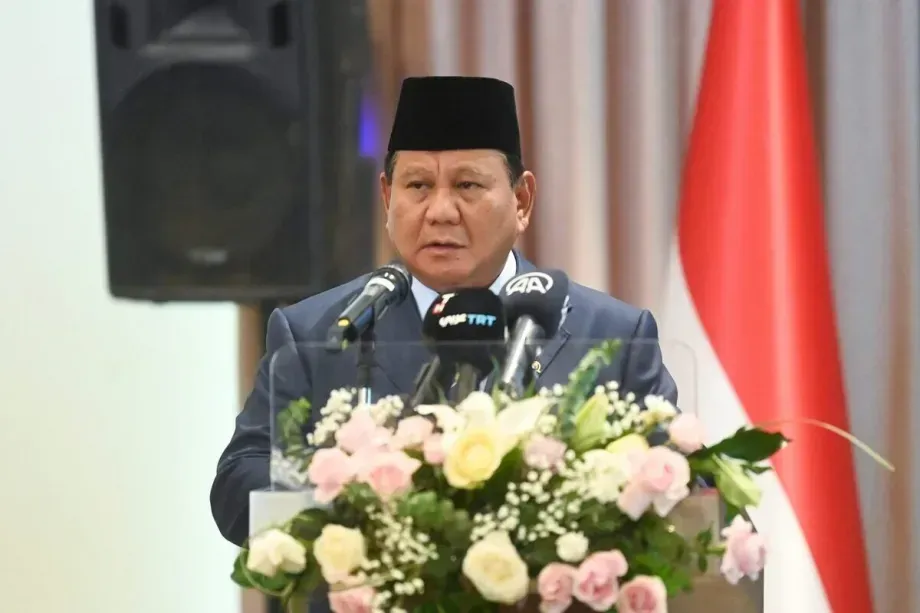
On 1 August, at a business forum in Jakarta, President Prabowo Subianto told a room of executives that Iran already possesses nuclear weapons, and predicted a regional chain reaction. His exact words, as reported, were: “It is said that Iran already has nuclear weapons. Now Saudi Arabia wants one too. If Saudi Arabia wants nuclear weapons, it’s possible the UAE will also want them, Qatar will also want them, Egypt will also want them.” He named no source and offered no evidence, neither for the bomb nor for the domino effect across Saudi Arabia, the UAE, Qatar and Egypt.
Between the claim and reality stand roughly ten minutes of reading. Iran is a party to the nuclear Non-Proliferation Treaty, which bans it from building nuclear weapons while permitting peaceful uses such as power generation and medical research. IAEA inspectors have examined its facilities repeatedly under that treaty and consistently reported a civilian programme, not a weapons one.
The caveats in the public record are real, but narrower than the president's assertion. Before the June 2025 strikes, Iran had enriched uranium to 60 per cent purity — far beyond any civilian need, yet short of the roughly 90 per cent a weapon requires. Stockpiles are a question of caution; intent is a question of fact, and on intent even Tehran's harshest critics have spoken plainly. The US intelligence community's Annual Threat Assessment of March 2025 states: “Iran is not building a nuclear weapon and… Khamenei has not reauthorized the nuclear weapons program he suspended in 2003.” Even during the twelve-day war with the US and Israel earlier this year — Tehran's moment of maximum temptation — the IAEA's director general said again there was no sign of a weapon being built. Decades earlier, Iran's founding religious leader banned weapons of mass destruction under Islamic law, and that prohibition remains in force. None of this is disputed by anyone who reads what the inspectors actually report.
So where did the certainty come from? Not from Indonesian intelligence, and not from independent analysis, but from a claim the US and Israel have pushed for years to isolate Iran diplomatically — one that outlasted the failed 2018 nuclear deal and hardened after this year's war. Prabowo repeated it without attribution and without noting that it is contested.
Then he made it worse. By naming Saudi Arabia, the UAE and Qatar, he pulled three of Indonesia's most important Gulf partners into a story they have spent two years trying to leave behind. Saudi Arabia and Iran restored diplomatic relations in 2023, and Gulf governments have largely avoided endorsing the claim that Iran is about to build a bomb. A friendly president publicly casting them as nuclear aspirants will not be read charitably.
The remark also undercuts a reputation Jakarta has spent years building: a sympathetic, precise voice on the Middle East — outspoken on Gaza, critical of Israel's conduct, a bridge between the Muslim-majority world and international forums. Iran has been one of the more committed state backers of the Palestinian cause. A demonstrably false claim about its nuclear programme hints that Prabowo's grasp of the region's politics may be thinner than his rhetoric on Palestine suggests. Nor does it go unnoticed that Israel's own undeclared arsenal never attracts comparable urgency.
Iran's embassy in Jakarta responded a day after the speech: Tehran has never pursued nuclear weapons and never will, and Ambassador Mohammad Boroujerdi added that Iran's resilience during this year's war had already answered the question without needing a warhead to do it. The president was corrected in public by the very embassy his remarks had put on the spot. The failure to check is his alone, and every future statement he makes on Iran, Saudi Arabia or the wider Middle East will now be read against this one. Credibility in foreign policy takes years to build and one afternoon to spend.