
Prabowo calls on new civil servants to lead Indonesia toward 2050 economic goals
President Prabowo Subianto urged 1,204 newly graduated civil servants to prepare for leadership roles as Indonesia aims to become the world's fourth-largest economy by 2050, emphasizing that effective bureaucracy will determine the success of the nation's development agenda.
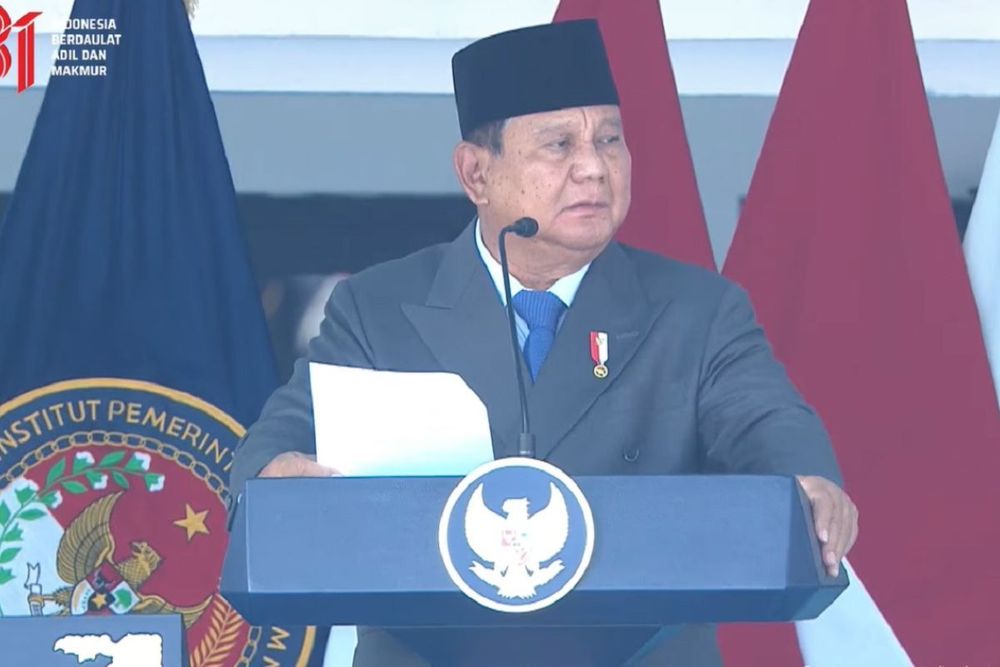
Prabowo urges young civil servants to prepare for Indonesia 2050
President Prabowo Subianto called on Indonesia's newest civil servants to build the capabilities needed to lead the nation toward its ambitious economic targets, as major international forecasts predict the country will rank among the world's top economies within a quarter century.
Speaking at the inauguration of 1,204 graduates from the Institute of Public Administration's 33rd cohort in Jatinangor, Sumedang, West Java, on Wednesday, Prabowo emphasized that today's young bureaucrats will shoulder responsibility for governing Indonesia as it undergoes dramatic economic transformation.
"In the next 25 years, it is you who will run the government," the president told the graduates of the state-run academy, which operates under the Ministry of Home Affairs to train civil servants specifically for regional and central government positions with a focus on governance, public administration, and leadership development.
Economic projections show Indonesia rising among global powers
Multiple prominent forecasts support the optimistic economic outlook Prabowo referenced. PwC's report "The Long View — How Will the Global Economic Order Change by 2050" projects Indonesia will climb from its current position as the eighth-largest economy to fourth place by mid-century, surpassing France, Germany, and the United Kingdom based on GDP at purchasing power parity. The projection places Indonesia behind only China, India, and the United States.
Goldman Sachs reached a similar conclusion in its 2022 "Path to 2075" report, forecasting Indonesia as the fourth-largest economy by 2050 with a GDP of $6.3 trillion. These projections represent substantial growth from Indonesia's current economic position — the International Monetary Fund ranks the country 17th globally with a nominal GDP of approximately $1.54 trillion in 2026.
Recent economic performance suggests the nation is on a strong trajectory. Indonesia's economy expanded 5.61% in the first quarter of 2026 compared to the same period in 2025, exceeding economist forecasts of 5.3%, according to official statistics from BPS.
Population and human capital as growth drivers
Prabowo highlighted that Indonesia's large population — currently approximately 287.9 million people, making it the fourth most populous nation globally behind India, China, and the United States — provides a foundation for sustained economic growth. Demographic projections indicate this advantage will continue, with the population expected to reach approximately 317 million by 2050.
The president warned, however, that ambitious policies and national goals will fail without capable and committed bureaucrats to implement them effectively.
"You are the driving force behind governance and the bureaucracy, determining the success of future development agendas," he told the young civil servants.
Long-term development framework
Prabowo's emphasis on bureaucratic excellence aligns with Indonesia's broader development strategy. The Golden Indonesia 2045 Vision, officially launched by former President Joko Widodo on May 9, 2019, sets targets for the country to become the fifth-largest economy globally with a GDP of $7.3 trillion and per capita income of $25,000 by the nation's centennial in 2045.
This vision rests on four strategic pillars:
- sustainable economic development
- human development and mastery of science and technology
- equitable development
- strengthening national resilience and governance
The final pillar underscores why effective civil service is central to achieving national ambitions.
Call to service and values
The head of state assured the graduates that his administration is working to create conditions that enable young civil servants and future leaders to serve the nation effectively and protect its integrity. He urged all Institute of Public Administration graduates to remain faithful to Pancasila, the state ideology, and the 1945 Constitution while serving communities across the archipelago.
Prabowo also reminded the young bureaucrats of the importance of humility and of consistently prioritizing the interests and welfare of the Indonesian people in their work.