
Indonesia targets completion of 35,872 village cooperatives by August 2026
The government aims to complete construction of 35,872 Red and White Village Cooperatives by August 2026, with military support accelerating the phased rollout of a nationwide program launched by President Prabowo Subianto last year.
Indonesia targets completion of 35,872 village cooperatives by August 2026
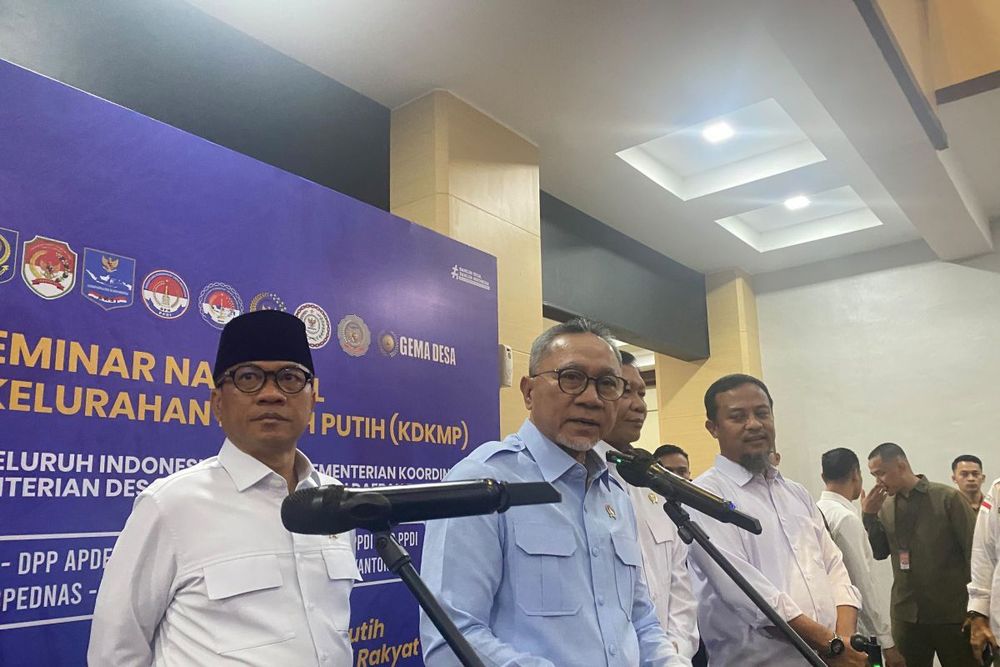
Indonesia's government is working to complete construction of 35,872 Red and White Village Cooperatives (KDMP) by August 2026, Coordinating Minister for Food Affairs Zulkifli Hasan announced during a visit to Makassar, South Sulawesi on Tuesday.
The target represents a major milestone in the phased implementation of a presidential instruction launched in 2025 to develop and revitalize 80,000 village cooperatives nationwide. President Prabowo Subianto officially inaugurated the program on July 21, 2025, during a ceremony in Bentangan village, Klaten, Central Java, establishing the framework for what officials describe as a transformative rural development initiative.
Hasan acknowledged the ambitious timeline but expressed confidence that military support would enable rapid progress. Construction data from July 2026 shows that 15,845 cooperatives have reached full completion, including physical buildings, warehouses, outlets and supporting equipment, while another 19,539 remain under construction.
The government has partnered with the Indonesian Military (TNI) to accelerate construction under an agreement brokered with state-owned food company PT Agrinas Pangan Nusantara. Formed in February 2025 through the transformation of construction consulting firm PT Yodya Karya, Agrinas was established with a mandate to strengthen national food security from upstream to downstream operations.
The military's involvement extends beyond physical construction to include distribution functions. TNI's pharmaceutical laboratory will supply medicines through the cooperative network in partnership with the Health Ministry, expanding the program's scope beyond agricultural commerce.
Hasan projected that the number of operational cooperatives could reach 60,000 by next year. The state budget will initially cover manager salaries as facilities come online, he said, with approximately 30,000 managers undergoing training in cooperative governance, business management and public service.
Legal registration outpaces construction
While physical construction proceeds in phases, administrative preparation has advanced more rapidly. About 83,000 Red and White Village Cooperatives have completed their legal incorporation process, according to the Cooperatives Minister during National Cooperatives Day celebrations in July 2026.
Villages and Disadvantaged Regions Development Minister Yandri Susanto detailed that each cooperative facility includes warehouses supported by one truck, two pickup trucks and two operational vehicles. The government stands ready to assist villages in securing land for development, he added.
Economic objectives and poverty reduction
The program forms part of President Prabowo Subianto's Asta Cita 2024-2029 policy framework, which prioritizes food self-sufficiency and economic development. Officials emphasize the cooperatives' potential to stimulate rural economic growth and reduce poverty by creating employment opportunities in communities where the poverty rate stood at 11.03 percent in March 2025, significantly higher than the 6.73 percent rate in urban areas.
The cooperatives are designed to serve as offtakers for locally produced agricultural and fisheries commodities in coordination with Bulog, the state logistics company established in 1967 to manage food distribution, price control and government food reserves. This coordination aims to integrate village-level production into national supply chains.
Beyond commerce, KDMPs are expected to improve rural residents' access to government assistance programs and subsidized goods, functioning as distribution points for public services.
Hasan stressed that the scale of the undertaking requires patience.
Developing cooperatives in tens of thousands of villages cannot be accomplished overnight, it may take two to three years,he said, framing the August target as one checkpoint in a longer transformation of Indonesia's rural economy.