
Indonesia Overhauls Land Services to Combat Entrenched Land Mafia Networks
Minister Nusron Wahid announces comprehensive reforms to eliminate systemic vulnerabilities exploited by land grabbers, including accelerated processing times and data integration across government agencies to protect Indonesia's nearly 90 million land parcels.
Indonesia Overhauls Land Services to Combat Entrenched Land Mafia Networks
Indonesia's Ministry of Agrarian Affairs and Spatial Planning is implementing sweeping reforms to its land administration system, designed to eliminate the loopholes that have enabled organized land mafia networks to operate across the archipelago.
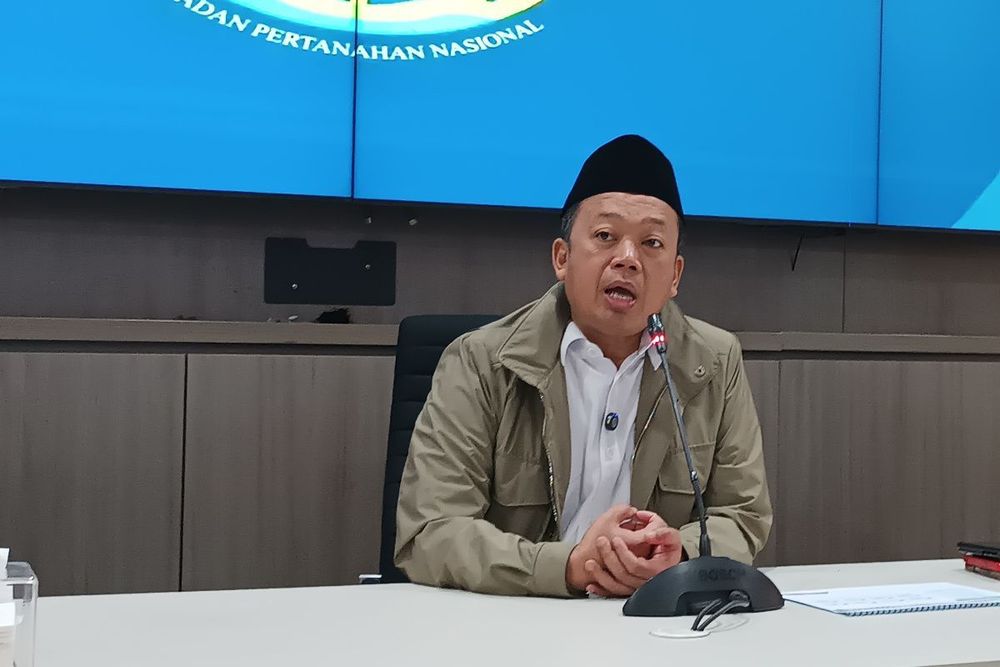
Minister Nusron Wahid, who assumed office under President Prabowo Subianto's Red and White Cabinet in October 2024, outlined the government's strategy on Tuesday, emphasizing that criminal networks thrive wherever administrative gaps and ambiguities exist in the system.
The challenge facing Indonesia is enormous: with nearly 90 million land parcels nationwide and approximately 8,000 parcels currently in dispute, the country's land administration operates at a scale that demands comprehensive systemic reform rather than piecemeal fixes.
Between 2018 and 2022 alone, authorities recorded 305 cases of land mafia activities. Of these, 145 cases resulted in complete investigation files and 242 cases were filed to public prosecutors with final legal decisions, underscoring the persistent nature of the problem.
Data Integration to Close Critical Gaps
A central element of the reform strategy involves integrating land registry databases with local government tax systems. Currently, discrepancies between the Tax Object Number (NOP) used by local governments and the Land Parcel Identification Number (NIB)—a unique 13-digit code assigned to each parcel in the national cadastral system—create opportunities for fraudulent activity.
To address this vulnerability, Minister Wahid and Home Affairs Minister Tito Karnavian, who has served in his position since October 2019 across two presidential administrations, agreed to mandate data integration through a joint ministerial circular. The directive encourages collaboration at the district and city levels to harmonize these identification systems.
This digitalization effort builds upon regulatory foundations established through Ministry Regulation Number 1 of 2021, which initiated the gradual automation of land registration and certification processes nationwide.
Understanding How Land Mafias Operate
Land mafia operations in Indonesia commonly involve collusion with corrupt officials in land departments, exploitation of court processes to obtain legal validation, and forgery of land documents. A fundamental vulnerability exists because most Indonesian landowners have never registered or certified the land they control, leaving their property rights legally weak and susceptible to exploitation.
The minister emphasized that faster service delivery, supported by clean and integrated data, will effectively shut down opportunities for mafia networks to insert themselves into legitimate processes. The ministry is reinforcing strict service timelines to prevent drawn-out procedures that allow illegal brokers to offer their services to desperate property owners.
Starting August 17, 2026, the ministry will implement a 10-day processing limit for Title Transfer services across 17 districts and cities, with plans for gradual nationwide expansion.
Comprehensive Government Response
The service transformation represents part of a broader coordinated effort. On August 11, 2026, the same day as the minister's statement, the Indonesian government announced formation of a cross-ministerial team involving the Agrarian Affairs, Home Affairs, Villages Development, Forestry, and Housing ministries to tackle agrarian conflicts nationwide.
These current initiatives build upon existing institutional frameworks, including the Task Force for Prevention and Eradication of Land Mafia established in 2018 under Directorate General of Agrarian Problems technical guidelines, which operates at both ministerial and regional office levels.
Minister Wahid stressed that eradicating land mafia networks requires more than enforcement alone. Success depends on improving service systems, ensuring data transparency, and maintaining the integrity of human resources within the land administration apparatus.
The ministry continues to operate complaint-handling services and has launched digital platforms designed to increase accessibility and transparency in agrarian services, with the goal of restoring public confidence in Indonesia's land administration system.