
Indonesia faces urgent quantum computing threat to national data security
Deputy Minister Nezar Patria warns that criminals are already collecting encrypted data for future decryption with quantum computers, urging immediate adoption of post-quantum cryptography as Indonesia's US$90 billion digital economy faces critical talent shortages.
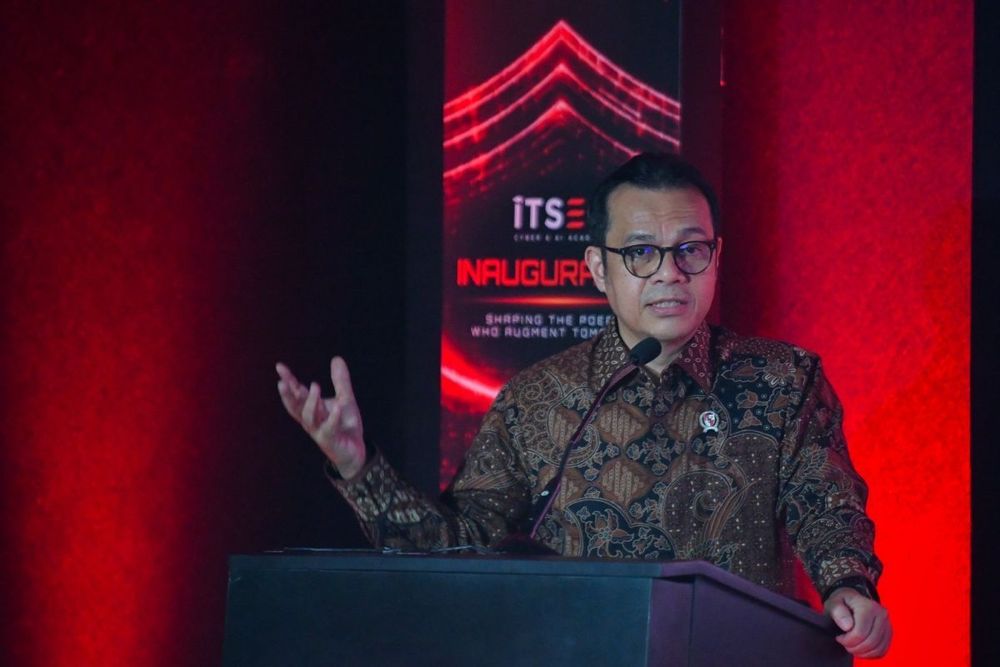
Deputy Minister Nezar Patria warns of quantum cyber threat
Deputy Minister of Communication and Digital Affairs Nezar Patria has issued an urgent warning about emerging cyber threats from quantum computing and artificial intelligence, calling for immediate national preparation against attacks that could compromise Indonesia's vast digital infrastructure.
Speaking at the launch of the ITSEC Cyber & AI Academy in South Jakarta on Monday, Nezar highlighted the growing danger of "harvest now, decrypt later" attacks, where criminals steal and store encrypted data today with the intention of decrypting it once quantum computers become available. U.S. cybersecurity agencies including CISA, NSA, and NIST have confirmed that state actors and well-resourced criminal organizations are already conducting these operations against critical infrastructure worldwide.
"There is data they have stolen, but they cannot open it because it is encrypted. They simply store it," Nezar explained, emphasizing that conventional cryptographic systems designed for current computing power will not ensure long-term data security.
International standards drive urgency
The Deputy Minister's warning comes as international bodies establish concrete timelines for cryptographic migration. The U.S. National Institute of Standards and Technology finalized three post-quantum cryptography standards in August 2024, while the NSA's Commercial National Security Algorithm Suite 2.0 mandates post-quantum algorithm replacement by 2030 for national security systems.
Experts estimate that quantum computers capable of breaking widely-used RSA and elliptic curve encryption could become available between 2030 and 2035. IBM's quantum computing roadmap plans to deliver its first fault-tolerant quantum computer in 2029, followed by a more powerful 2,000-qubit system by 2033.
"We also have to prepare, especially for the security of our data, for our cryptographic systems, which are post-quantum cryptography," Nezar stated.
Lessons from recent breach
The urgency of Nezar's message reflects lessons learned from the June 2024 ransomware attack on Indonesia's Temporary National Data Center. The attack, carried out by the Brain Cipher group using a variant of LockBit 3.0 ransomware, disrupted 282 public services including immigration and airport operations. The attackers demanded US$8 million in ransom, which the government refused to pay.
The incident exposed critical vulnerabilities in Indonesia's digital infrastructure, including inadequate backup systems that complicated recovery efforts. In response, the government has adopted a "security by design" approach that embeds cybersecurity measures into digital architecture from the planning stage.
This strategy becomes increasingly critical as autonomous AI systems introduce new layers of complexity to the threat landscape.
Talent shortage threatens digital ambitions
Beyond technical defenses, Nezar emphasized Indonesia's severe shortage of digital talent as a fundamental vulnerability. The government projects that the country will need nine million digital workers by 2030, requiring approximately 600,000 new professionals annually. Current production stands at only 100,000 to 200,000 per year, creating a gap that could reach nine million workers by decade's end.
This talent crisis takes on greater significance given Indonesia's position as Southeast Asia's largest digital economy, valued at over US$90 billion in 2024 and projected to reach US$366 billion by 2030.
"Without strong talent, I think our wealth of data will ultimately be scattered everywhere and stolen, read and captured by those with more power," Nezar warned.
The Deputy Minister welcomed private-sector initiatives such as the ITSEC Cyber & AI Academy as essential partners in closing the gap between academic training and industry requirements, noting that such collaborations will be critical to securing Indonesia's digital future against both current and emerging quantum-era threats.