
Deputy Minister calls on school principals to drive Indonesia's education transformation
Deputy Minister Fajar Riza Ul Haq emphasizes that school principals must lead reform efforts as Indonesia tackles quality challenges and works to bring 4.3 million out-of-school children back into the education system.
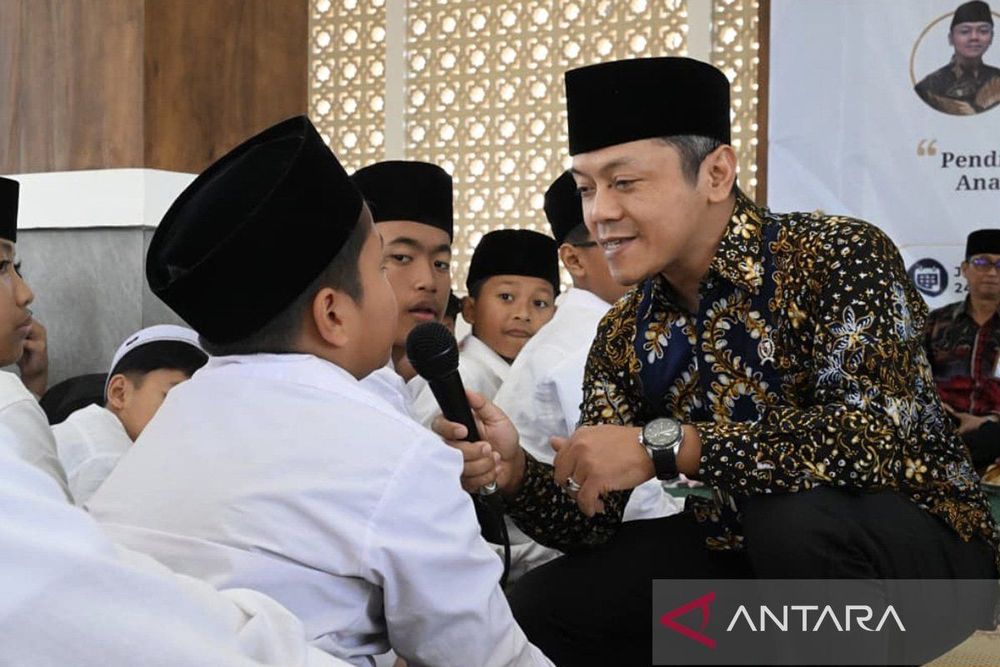
Deputy Minister calls on school principals to drive Indonesia's education transformation
Deputy Minister of Primary and Secondary Education Fajar Riza Ul Haq has called on school principals to spearhead the transformation of Indonesia's education system, stating that effective leadership at the school level is essential for mobilizing teachers and education personnel to create high-quality learning environments.
In a statement released in Jakarta on Friday, Fajar said principals need clear vision, adaptability to changing circumstances, and the ability to foster collaboration within their institutions to meet the evolving challenges facing Indonesian education.
The Ministry of Primary and Secondary Education, formed in October 2024 when President Prabowo Subianto restructured the education sector into three separate entities, is now pushing schools to prioritize quality improvement over enrollment expansion.
The era of pursuing quantity is behind us. Now is the time to focus on quality. Every educational institution must have a vision to continuously improve learning quality, strengthen governance, and foster a better learning culture.
Addressing persistent challenges
The deputy minister highlighted demographic shifts and the persistently high number of children not enrolled in school as critical issues requiring immediate attention. According to UNICEF data, approximately 4.3 million children and adolescents aged 7-18 years are currently out of school in Indonesia, with the poorest children, children with disabilities, and those in under-developed regions facing the highest risk of exclusion.
West Java remains particularly affected by this challenge. In 2022, the province recorded 30,098 out-of-school children of primary school age, 203,755 of lower secondary age, and 678,231 of upper secondary age, making it one of the provinces with the largest out-of-school populations nationwide.
Recent ministry data from November 2025 showed that 58,623 students dropped out during the 2025/2026 academic year, with elementary schools accounting for the largest share at 32,849 students, followed by junior high schools with 10,088 dropouts.
Education should not rely solely on the formal system. All educational pathways must be optimized so that children who have not yet received educational services can return to learning in ways that meet their needs.
Strengthening teacher capacity
The deputy minister emphasized that alongside strong school leadership, teacher quality remains fundamental to improving education standards. The government continues to strengthen teachers' competencies through various policies and capacity-building programs designed to help educators keep pace with scientific and technological advances.
In 2026, the government is targeting 150,000 teachers for participation in the Teacher Professional Education program, which allows active teachers without teaching certificates to complete a streamlined two-year qualification process with their years of service recognized by the government. This initiative aims to address a backlog of 230,000 teachers still requiring certification.
The government has also increased the Teacher Professional Allowance from Rp 1.5 million to Rp 2 million per month following an initiative by President Prabowo Subianto, demonstrating commitment to improving teacher welfare alongside professional development. With approximately 1.6 million education graduates available over the past decade, Indonesia has significant human resources to strengthen its teaching workforce.
Government investment and progress
The education reform drive is supported by record funding, with President Prabowo announcing in August 2025 that Indonesia will allocate IDR 757.8 trillion (approximately US$46.8 billion) for the education sector in 2026, representing 20 percent of the total state budget and marking the largest education allocation in the nation's history.
The Ministry of Primary and Secondary Education is expanding learning services beyond traditional classrooms, including non-formal education and distance learning options, to reach learners from diverse backgrounds and circumstances. By the end of 2024, the ministry had integrated more than a thousand digital applications into a single platform called Rumah Pendidikan, reflecting its commitment to digital transformation.
Collaborative efforts are showing results. Since 2021, nearly 37,000 children have returned to learning across Indonesia, and almost 149,000 children have been prevented from dropping out through government and UNICEF initiatives focused on building local government capacity.
Fajar noted that private educational institutions play a strategic role in addressing these challenges, and the government will continue strengthening partnerships with community-based education providers to expand successful initiatives nationwide.