
Prabowo presents Rp4,097 trillion budget focused on citizen welfare and fiscal consolidation
President Prabowo Subianto unveiled Indonesia's 2027 draft state budget of Rp4,097.2 trillion, emphasizing direct welfare benefits for citizens while targeting a reduced deficit of 2.40% of GDP through eight national priority programs.
Prabowo presents Rp4,097 trillion budget focused on citizen welfare and fiscal consolidation
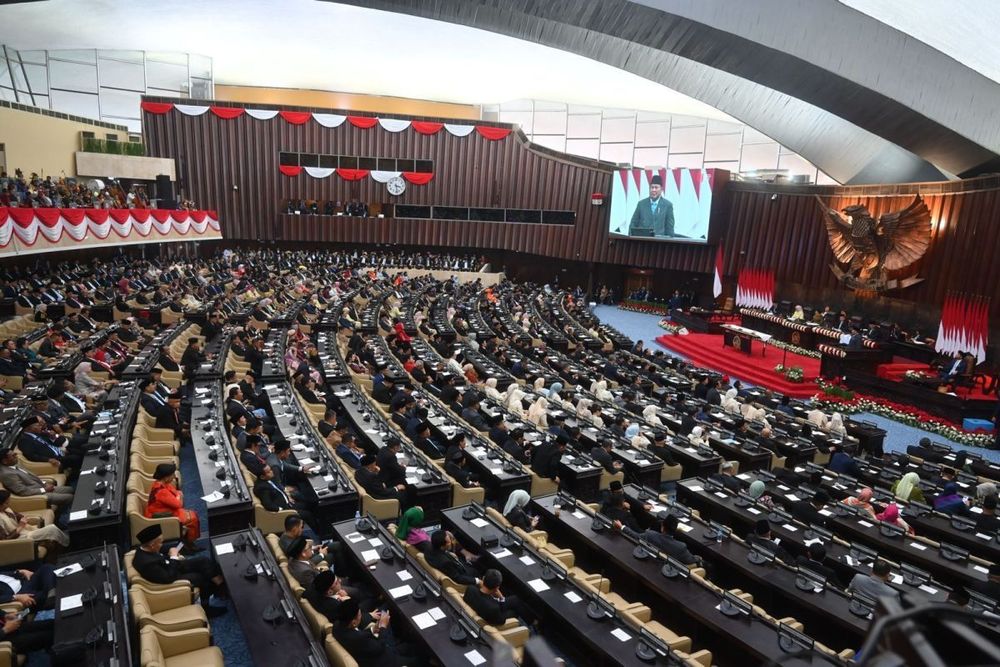
Indonesian President Prabowo Subianto presented a Rp4,097.2 trillion (approximately US$230 billion) draft state budget for 2027 to parliament on Friday, positioning fiscal policy as the primary instrument for delivering welfare protections and improving living standards across the nation.
Speaking at the opening of the 2026–2027 parliamentary session in Jakarta, Prabowo, who took office in October 2024 after winning approximately 58.6% of the vote in February elections, framed the budget as a direct intervention in citizens' daily lives. The proposed spending represents a 3.9% increase from the 2026 budget projection.
"The state budget is an instrument to protect the people, a tool to strengthen the nation, and a means to realize our independence by achieving a better life," Prabowo told lawmakers, emphasizing that contemporary sovereignty must translate into tangible economic benefits.
Eight priority programs target comprehensive welfare
The 2027 budget centers on eight national priority work programs: food sovereignty, energy and water self-sufficiency, education, healthcare, downstream industries, infrastructure and housing, strengthening the people's economy and village development, and poverty reduction.
"The state must be present when farmers need fertilizer, when fishermen need boats and cold storage, and when workers require workplace protections," Prabowo said, outlining how public funds would secure nutritious school meals, affordable housing, clean water, healthcare, and robust safety nets.
The budget projects measurable social improvements, with unemployment expected to decline to 4.30-4.87% from the 2026 target range of 4.44-4.96%, and the poverty rate targeted to fall to 6.0-6.5% from 6.5-7.5% in 2026. The Gini ratio, measuring income inequality, is expected to improve to 0.362-0.367 from the 2026 target range of 0.377-0.380, while the Human Capital Index is targeted to increase to 0.575.
Fiscal consolidation amid economic expansion
The budget proposes a deficit target of 2.40% of GDP for 2027, down from 2.68% in 2026, demonstrating fiscal consolidation while remaining well below Indonesia's legal maximum of 3% of GDP. The proposed state revenue of Rp3,426 trillion represents a 6.8% increase from the 2026 projection, with tax, customs and excise revenue targeted at Rp2,908 trillion.
The fiscal planning occurs against a backdrop of solid economic performance, with Indonesia's economy growing 5.61% in the first quarter of 2026 and 5.29% in the second quarter, averaging 5.45% growth year-on-year for the first half—the strongest performance since the third quarter of 2022.
"Independence must be felt at the people's dining tables, in our children's classrooms, in local health clinics, and in the future of every Indonesian family," Prabowo said, distinguishing economic sovereignty from the political independence secured by past generations.
The president expressed gratitude to the House of Representatives for its ongoing oversight and cooperation in finalizing the 2027 fiscal blueprint, as lawmakers prepare to review and approve the comprehensive spending plan in the coming months.