
Indonesian coral aquaculture expands US market reach with sustainable cultivation
Trade Minister Budi Santoso inaugurated a $2,500 shipment of cultivated ornamental corals from Banyuwangi to the United States, highlighting Indonesia's dominant position in the global coral trade and government support for local exporters.
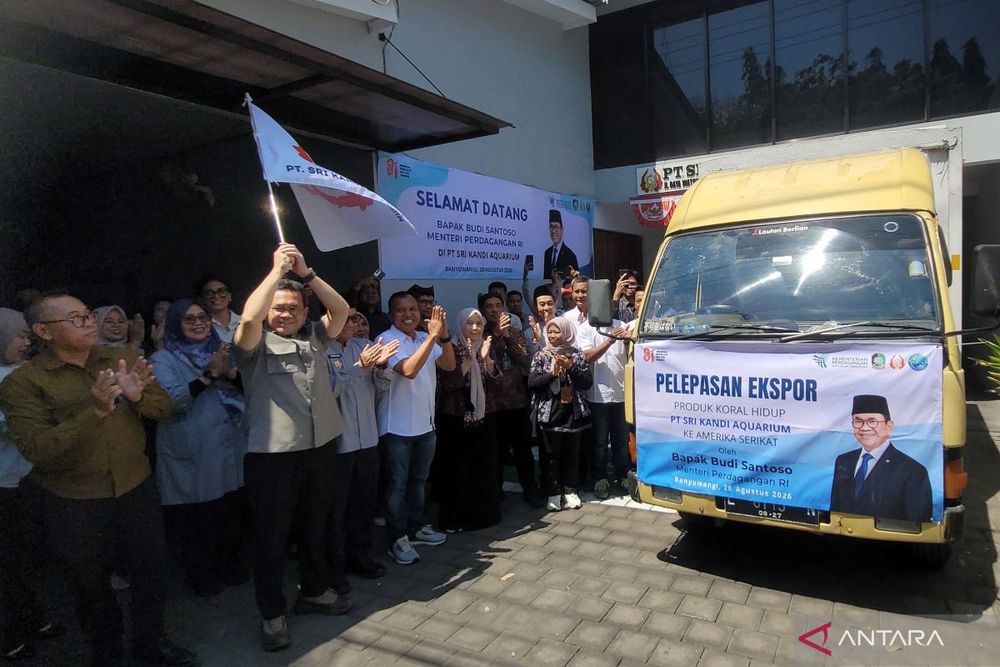
Indonesia ships cultivated ornamental corals to US
Indonesian Trade Minister Budi Santoso on Friday inaugurated an export shipment of live cultivated ornamental corals valued at $2,500 to the United States from Ketapang, Banyuwangi, East Java, reinforcing the government's commitment to supporting local commodity producers in international markets.
The shipment marks another milestone for Indonesia's ornamental coral industry, which has held a near-monopoly on the global aquarium coral trade since the 1990s, when the Philippines banned coral exports. The United States remains the largest importer of live ornamental coral globally, accounting for over 90% of all live coral imports and historically receiving 49% of Indonesia's coral exports.
PT Sri Kandi Aquarium, the local aquaculture company responsible for the shipment, represents part of a broader industry shift toward sustainable cultivation practices. Indonesia has increasingly replaced wild-caught coral exports with cultivated specimens in recent years, with mariculture companies based mainly in Bali and East Java receiving annual cultivation licenses subject to government oversight.
Minister Santoso emphasized the government's ongoing efforts to promote Indonesian products through its network of trade representative offices and Indonesian Trade Promotion Centers operating in 33 countries worldwide.
Their mandate is to connect with prospective buyers and promote Indonesian products on the global stage, including commodities produced by MSMEs right here in Banyuwangi
The coral industry represents a significant economic sector for Indonesia, with live coral exports valued at over 179 billion Indonesian rupiah (approximately 11.5 million USD) in 2022. The trade directly employs an estimated 12,000 people in coastal communities across the archipelago.
Established exporter with global reach
I Ketut Sukandi, owner of PT Sri Kandi Aquarium, reported that the US-bound shipment comprised approximately 200 pieces of cultivated live ornamental coral. The company maintains a robust export schedule, shipping to several European countries six to seven times monthly on average, with each shipment valued at around $2,500 depending on orders.
Since its establishment in 2011, the company has successfully cultivated and exported 29 species of live coral. Ketapang in Banyuwangi hosts multiple coral aquaculture facilities that propagate corals for export, with scientific research confirming the area's suitability for growing fast-growing coral species.
One of the most highly sought-after varieties in the global market is Euphyllia coral. Our export market currently spans 20 countries, including Germany, the United Kingdom, France, Poland, the United States, Canada, and Mexico
Euphyllia species, which include popular Large Polyp Stony corals such as torch, frogspawn, and hammer corals, are prized in the aquarium trade for their mesmerizing movement and beginner-friendly care requirements.
Regulated trade and industry recovery
Indonesia's coral exports operate under strict regulation through CITES (Convention on International Trade in Endangered Species), with the government establishing export quotas divided across nine collecting areas, each with specific catch limits per species or genus.
The industry has recovered from a 20-month export ban implemented from May 2018 until January 2020, which aimed to synchronize regulations between government ministries and address documentation issues. Current exports in 2026 reflect the stabilization and growth of the trade following that regulatory period.
While Bali-based coral companies historically accounted for almost 60% of Indonesia's total coral exports during 2010-2016, with 9.58 million pieces traded, East Java has emerged as a significant cultivation hub alongside the established Bali operations.
Prior to the shipment, Minister Santoso and Deputy Head of Banyuwangi District Mujiono inspected the cultivation facility, observing operations from coral transplantation through final packaging procedures for export.