
Indonesia's coordinating minister calls for urgent railway development across Kalimantan to unlock economic potential
Coordinating Minister Djamari Chaniago emphasized the critical need for railway infrastructure across Kalimantan's five provinces during a visit to South Kalimantan, as the island currently has no operational rail network despite contributing 8 percent to Indonesia's GDP.
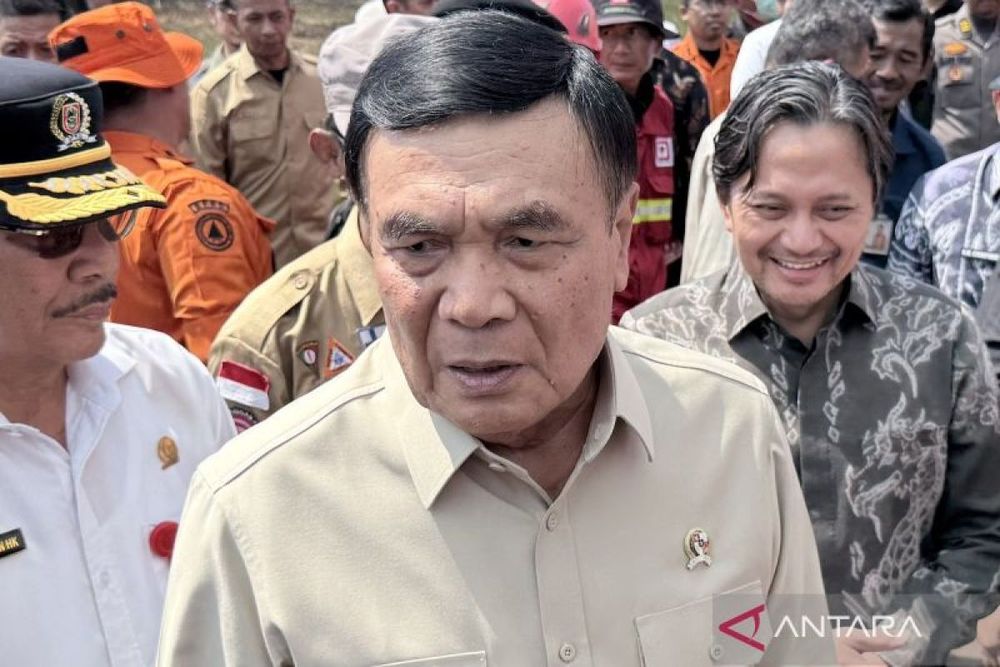
Minister urges railway expansion across Kalimantan, developing growth
Coordinating Minister for Political and Security Affairs Djamari Chaniago called for urgent expansion of Kalimantan's railway infrastructure during a working visit to Banjarbaru, South Kalimantan, on Saturday, emphasizing that improved connectivity is essential to unlocking the island's vast economic potential.
Speaking at a meeting with local government officials, Chaniago stressed that Kalimantan's expansive territory and widely distributed natural resources demand adequate transportation infrastructure to optimize community mobility, goods distribution, and resource management. The island currently has zero kilometers of operational railway network, making it entirely dependent on road, sea, and air transport.
Kalimantan's vast territory, with its widely distributed natural resources, requires adequate connecting transportation infrastructure so that community mobility, goods distribution, and the regional potential management can be carried out more optimally.
The urgency of railway development becomes clear when considering Kalimantan's economic significance. The island contributed approximately 8 percent to Indonesia's total GDP in 2024, with an economy valued at USD 114 billion, driven primarily by natural resource extraction, agriculture, and forestry. Coal and lignite mining alone accounted for roughly 34 percent of East Kalimantan's provincial economy in 2023.
The minister emphasized that railway development deserves serious attention as a key factor in connecting the island's five provinces — Central Kalimantan, East Kalimantan, North Kalimantan, South Kalimantan, and West Kalimantan — which collectively possess extensive territories and significant economic potential. North Kalimantan, the newest province, was separated from East Kalimantan in October 2012.
Regarding the transportation sector, how many railway lines does Kalimantan need? We should not merely discuss the concept; it must be realized.
National railway expansion plans
The government has announced plans to construct a 2,772-kilometer railway network across Kalimantan Island to strengthen connectivity and support logistics distribution. The proposed system would link all five provinces across the island's northern, eastern, southern, central, and western regions, creating an integrated transport backbone primarily for bulk commodities.
This initiative aligns with Indonesia's broader national infrastructure strategy to expand its railway network to 10,500 kilometers by 2030 and 14,000 kilometers by 2045, extending rail coverage to previously unserved regions including Kalimantan and Papua.
Just days before Chaniago's visit, President Prabowo Subianto ordered PT Kereta Api Indonesia and the Ministry of Transportation to construct both the Trans-Sumatra railway line and proceed with the Trans-Kalimantan project, stating:
If possible, we will start at the same time.
Coordinating Minister for Infrastructure and Regional Development Agus Harimurti Yudhoyono confirmed that the Kalimantan railway project remains in the calculation and planning stage. His ministry coordinates five technical ministries responsible for infrastructure development.
Strategic importance of Kalimantan resources
The minister's call for railway expansion reflects the strategic importance of Kalimantan's natural resources to Indonesia's economy. Fossil fuels including petroleum, natural gas, and coal produced in Kalimantan constitute a major source of national revenue, alongside production from Sumatra and offshore sites.
Chaniago added that beyond railway construction, the development of roads, airports, and maritime transportation infrastructure should be strengthened in an integrated manner to improve connectivity across Kalimantan. He noted that better interregional connectivity would deliver significant benefits by facilitating the movement of people, goods, and economic activities across the region.
Transportation infrastructure development is not only a current necessity but also part of a long-term strategy to strengthen Kalimantan's competitiveness. We hope greater attention will continue to be given to connectivity development so that Kalimantan's enormous potential can deliver wider benefits to the public and support regional growth.