
Indonesia opens railway network to foreign investment amid ambitious expansion plan
Transportation Minister Dudy Purwagandhi announces Indonesia is welcoming domestic and foreign investment for railway development, as the government pursues an ambitious Rp1,200 trillion expansion targeting 14,000 kilometers of new and reactivated lines by 2045.
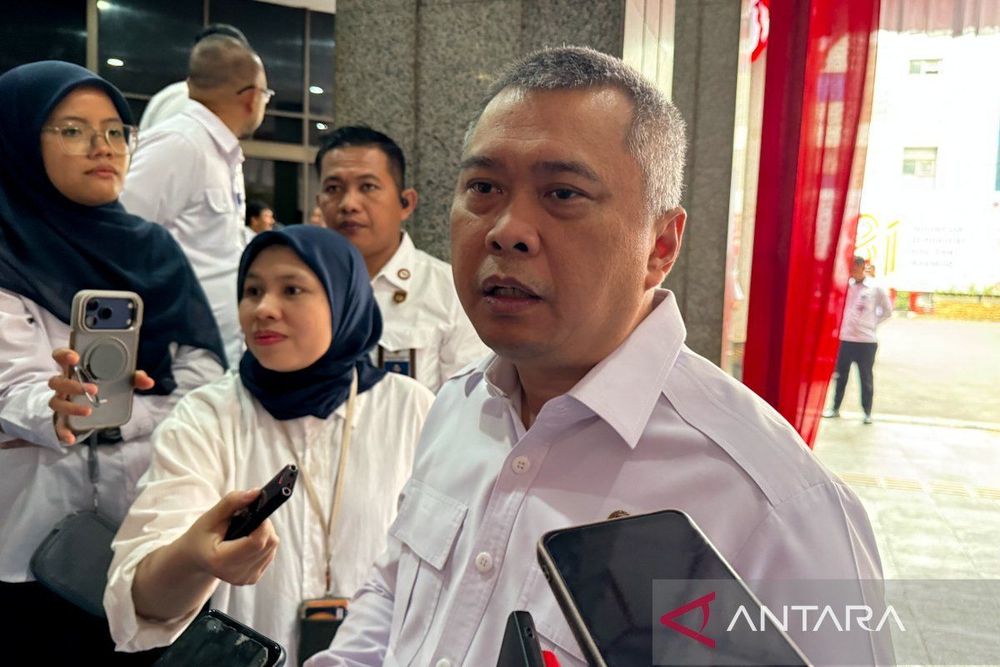
Ministry opens door to investment in Indonesia's rail network
Indonesia is actively seeking domestic and foreign investment to develop its national railway network, with a particular focus on expanding logistics transport infrastructure across Sumatra and Kalimantan, Transportation Minister Dudy Purwagandhi announced Monday.
"If other countries are interested, we are very happy and open to it," Purwagandhi said during a press statement in Jakarta on August 10, 2026.
The government's openness to investment comes as part of an ambitious expansion plan targeting approximately Rp1,200 trillion in railway infrastructure spending through 2045. The program aims to develop around 14,000 kilometers of new and reactivated railway lines across the archipelago, requiring annual investments of approximately Rp60-65 trillion over the next two decades.
Financing strategy and international interest
To meet these targets, the Ministry of Transportation is pursuing around US$53 billion in private capital for railway infrastructure through 2030, utilizing creative financing models centered on concessions rather than relying solely on state budget allocations. Funding is expected to come from multiple sources including national and regional government budgets, public-private partnerships, domestic private investment, foreign investment, and international cooperation.
Russia and China have already expressed interest in investing in Indonesia's railway sector, while the minister confirmed the government remains open to proposals from other nations as well. Regarding reported UK interest in reviving approximately 2,000 kilometers of inactive railway lines, Purwagandhi said he was awaiting further information while stressing the government's commitment to the railway reactivation program.
Strategic route selection
According to Purwagandhi, railway projects are focused on routes with strong economic potential and the ability to drive regional development, with coordination ongoing with the Ministry of National Development Planning. Route selection takes into account regional economic potential, transportation needs, and support for regional development to ensure investments yield optimal benefits for the public and business stakeholders.
The investment requirement has yet to be determined, as it will vary depending on the length and characteristics of each railway line, the type of train, and other technical factors currently under government review.
State operator shows domestic interest
PT Kereta Api Indonesia, the state-owned railway operator headquartered in Bandung, West Java, has expressed interest in investing for the development of the national railway network, specifically regarding existing lines in the Sumatra region. The company, which is completely owned by the government and reported revenue of Rp35.9 trillion in 2024, will focus development efforts on optimizing existing lines with a primary priority on supporting logistics transport.
Presidential directive on Trans-Sumatra and Trans-Kalimantan
During the July 30, 2026 inauguration of the revitalized Semarang Tawang Station in Central Java, President Prabowo Subianto instructed PT Kereta Api Indonesia and the Ministry of Transportation to undertake construction of the Trans-Sumatra railway line and follow it up with the Trans-Kalimantan project.
The Trans-Sumatra railway is planned to span approximately 2,168 kilometers, connecting Aceh in the northern part of Sumatra to Bakauheni in Lampung Province on the southern tip of the island. The president emphasized that railways serve as vital instruments for economic democracy, particularly benefiting low-income communities, and ordered prioritization of Trans-Sumatra first, then Trans-Kalimantan.
Addressing infrastructure gaps
The expansion comes as Indonesia works to address significant infrastructure gaps outside Java. Kalimantan currently has no railway network and requires at least 2,772 kilometers of new railway lines, while Sulawesi has only 109 kilometers of track and needs an additional 3,284 kilometers to improve regional mobility.
Currently, Indonesia has approximately 1,544 kilometers of active railway lines in Sumatra and 3,890 kilometers in Java. The government has announced plans to reactivate approximately 12,000 kilometers of railway lines nationwide, with projects beginning in West Java in 2026, initially targeting 500-600 kilometers including routes from Cianjur to Bandung and from South Bandung through Soreang to Ciwidey.
As part of its National Railway Masterplan, Indonesia is targeting a national railway network of 10,524 kilometers by 2030, covering Java-Bali Island, Sumatra, Kalimantan, Sulawesi, and Papua. The initiative aims to strengthen logistics connectivity and support economic growth across various regions while boosting the country's economic competitiveness through more efficient goods distribution.