
East Nusa Tenggara declares 14-day emergency after deadly Flores earthquake
Governor Melki Laka Lena activates emergency response following magnitude 7.7 earthquake that struck Flores Island, enabling accelerated rescue operations and infrastructure restoration across the archipelagic province.
East Nusa Tenggara declares 14-day emergency after deadly Flores earthquake
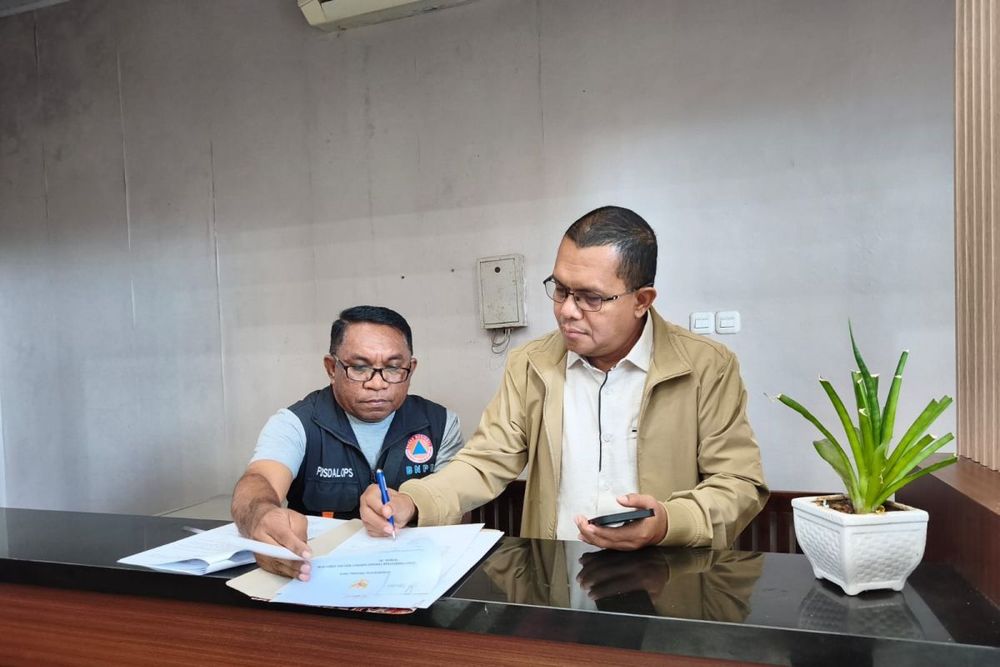
East Nusa Tenggara Governor Melki Laka Lena declared a 14-day emergency response period Sunday following a magnitude 7.7 earthquake that struck Flores Island on August 15, formalizing the province's disaster response through Governor's Decree No. 305/KEP/HK/2026.
The earthquake hit at 15 kilometers depth, approximately 30 kilometers northeast of Mbay in Nagekeo District on Flores, the largest island in East Nusa Tenggara. The island spans 14,250 square kilometers and is home to approximately 2 million people, with major population centers in Maumere and Ende.
The disaster caused multiple deaths and injuries, damaged homes and infrastructure, and disrupted daily activities across several areas. More than 230 aftershocks rattled the island throughout the day, with the strongest measuring magnitude 6.2, adding urgency to the emergency declaration.
The emergency status, running from August 15 through August 28, allows authorities to streamline access, coordination and communication while mobilizing available resources across the sprawling province. East Nusa Tenggara encompasses more than 500 islands across approximately 47,350 square kilometers with a population of 5.74 million, presenting significant logistical challenges for emergency response teams.
Coordinated disaster response
Under the emergency declaration, the provincial government will coordinate with local and central authorities, military and police forces, agencies, businesses and communities to manage the crisis. Available resources will support search and evacuation operations, health services, basic needs provision, temporary shelters, transportation and infrastructure repairs.
Public safety and meeting the basic needs of affected residents are the top priorities during this emergency response
Melki stated in the official announcement issued from Kupang.
The provincial government guaranteed funding for emergency operations under the decree, with costs covered by the provincial budget and other lawful, nonbinding funding sources.
Seismically active region
The earthquake resulted from reverse faulting on the Flores Back-Arc Thrust fault system along the north coast of Flores, where the Australian Plate converges with and subducts beneath the Sunda Plate. This tectonic setting places Indonesia at the intersection of four major plates within the Pacific Ring of Fire, a 40,000-kilometer zone where approximately 90% of the world's earthquakes occur.
The Flores region has recorded 79 earthquakes larger than magnitude 6.0 between 1900 and 2022, with 11 generating tsunamis. The same fault system produced a devastating magnitude 7.8 earthquake on December 12, 1992, which generated a tsunami that killed at least 2,500 people on Flores, marking one of the deadliest earthquakes in the Lesser Sunda Islands region.
Indonesia's position as a vast archipelago of more than 17,000 islands on the Ring of Fire makes it particularly vulnerable to earthquakes and volcanic activity, complicating disaster response efforts across its dispersed geography.
The provincial government urged residents to remain calm, assist one another and follow official information and instructions from authorities, the disaster agency, meteorology and geophysics agency BMKG, military, police and search-and-rescue agency Basarnas.