
President Prabowo mobilizes village-level military officers for wildfire education amid record fire season
President Prabowo Subianto has directed Babinsa officers to educate communities about forest fire dangers as Indonesia faces its worst wildfire season on record, with over 96,000 hotspots detected and more than 107,000 hectares burned in the first half of 2026.
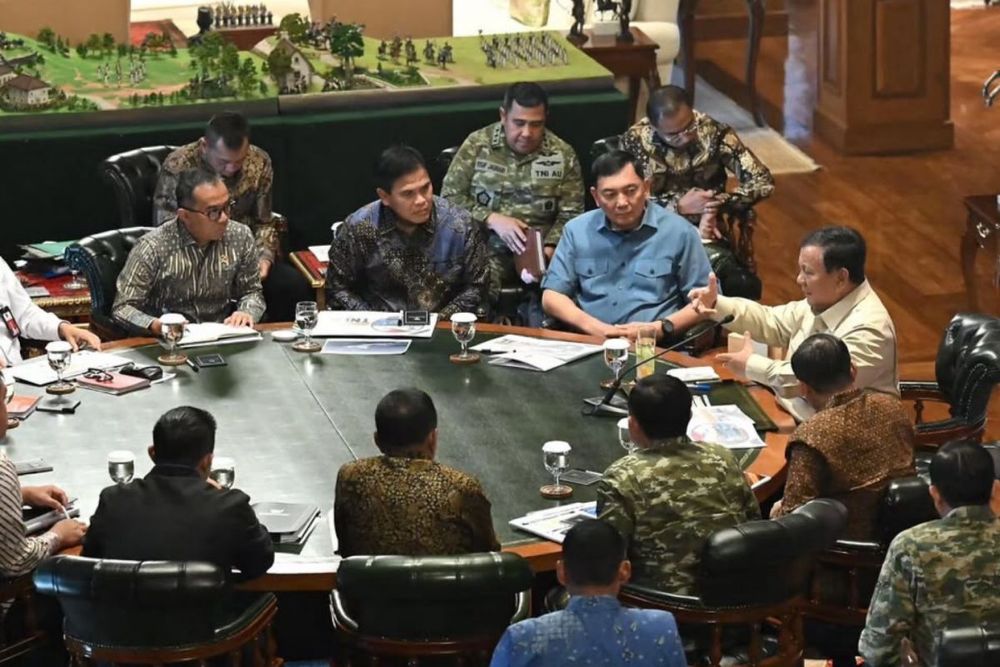
Prabowo asks Babinsa officers to educate villagers on wildfire risks
President Prabowo Subianto has instructed village-level military officers to launch a grassroots education campaign on wildfire prevention as Indonesia confronts an unprecedented fire crisis that has already burned more than double the area compared to the same period in previous years.
Cabinet Secretary Teddy Indra Wijaya announced the directive following a Saturday meeting in Hambalang, West Java, where Prabowo met with the TNI commander, service chiefs, and ministers of defense, higher education, and state affairs.
The president has tasked Babinsa officers—Indonesian Defense Forces' non-commissioned officers deployed at the village level for territorial defense, development, and monitoring duties—with educating residents about the dangers of forest and land fires. These officers, who report to local Military Sector Commands and serve as the military's frontmost territorial unit in direct contact with communities, will encourage villagers to work together in protecting forests and land.
Severe wildfire season prompts action
The directive comes as Indonesia grapples with its most severe wildfire season on record. As of late July, the country had detected more than 96,000 fire hotspots, exceeding the number recorded at the same point in any previous year, including the devastating fire seasons of 2019 and 2023. The forestry ministry reported that more than 107,000 hectares of land caught fire nationwide between January and June 2026, double the area burned during the same period in previous years.
South Sumatra currently faces the highest concentration of wildfire hotspots with 1,429 detected, followed by West Kalimantan with 1,226 and Central Kalimantan with 811. These regions, particularly Sumatra and Kalimantan, are home to some of the world's largest tropical peatlands. Once drained for plantations, peat becomes extremely flammable and can smoulder underground for months, making fires particularly difficult to control.
Indonesia's weather agency BMKG has warned that the 2026 dry season is more intense and prolonged than usual due to El Niño conditions, creating heightened wildfire and drought risks across the archipelago.
Public health concerns mount
The health impact of the fires has been substantial. Indonesia's Health Ministry reported that 3.4 million people are at risk of respiratory infections due to wildfire smoke exposure. Authorities have distributed more than 260,000 face masks to residents in the hardest-hit areas to mitigate health risks.
Disaster response coordination
The Hambalang meeting also addressed the government's response to several recent disasters. Prabowo and military leadership discussed ongoing efforts following the magnitude 7.7 earthquake that struck off the coast of Flores Island on August 15, which killed at least 111 people, injured another 1,678, and damaged approximately 77,900 homes.
Officials also reviewed the response to Mount Merapi's hot cloud eruption on August 28 at 21:22 local time, which sent volcanic material approximately 2,000 meters southwest. The volcano, which has been in continuous eruption since 2020 and remains at Alert Level III, continues to pose risks to surrounding communities.
Additionally, Prabowo requested an update on efforts to adjust recruitment requirements for members of remote Dayak communities seeking to join the Indonesian military, though specific details of the proposed changes were not disclosed.
The president's emphasis on village-level wildfire education through military channels represents an effort to leverage Indonesia's territorial defense structure for environmental protection, bringing fire prevention messaging directly to rural communities most affected by the crisis.