
Indonesia deploys ground forces as primary strategy against unprecedented wildfire season
The Indonesian government has designated ground firefighting operations as the main approach to combat forest and land fires across six priority provinces, as the 2026 fire season burns twice the area lost in all of 2023.
Indonesia deploys ground forces as primary strategy against unprecedented wildfire season
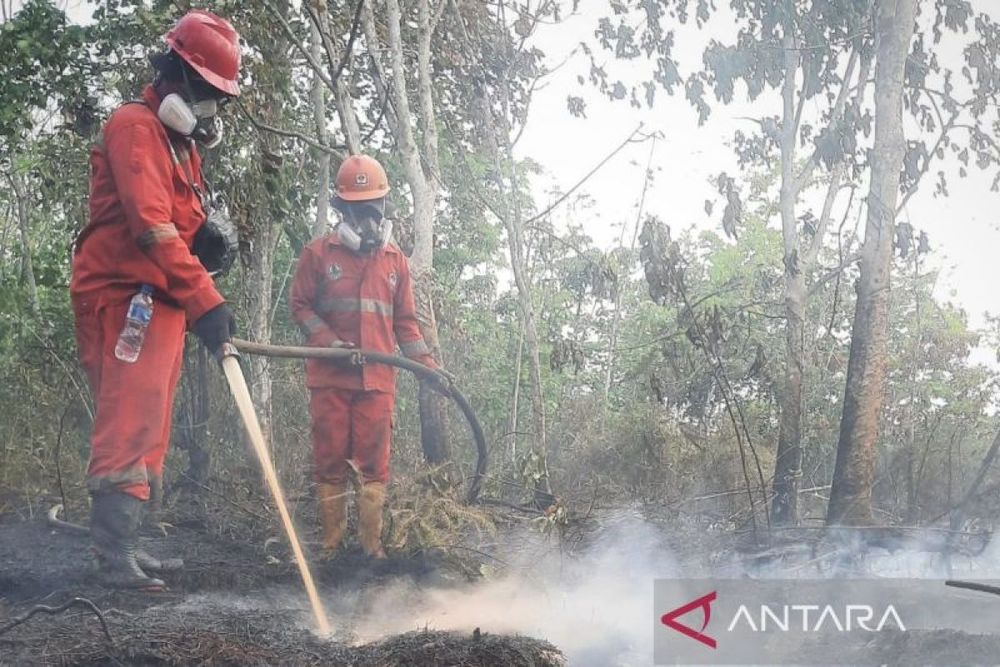
The Indonesian government has made ground firefighting operations the cornerstone of its strategy to combat an unprecedented wildfire season affecting six provinces across Kalimantan and Sumatra, according to the Government Communication Agency.
The central government has directed regional authorities to intensify ground suppression efforts by increasing personnel deployment and equipment supplies. A coordination meeting on Friday concluded that rigorous regional monitoring and oversight are essential to preventing hotspots from expanding and averting broader environmental impacts.
The scale of the 2026 fire season has already surpassed recent years, with Indonesia's forestry ministry reporting that more than 107,000 hectares of land burned nationwide between January and June 2026, double the area burned in all of 2023. By late July, satellite monitoring detected more fire hotspots than at the same point in any previous year, including the severe seasons of 2019 and 2023.
The government has prioritized prevention and containment measures in West Kalimantan, Central Kalimantan, South Kalimantan, Riau, South Sumatra, and Jambi, provinces considered most vulnerable to wildfires. In West Kalimantan alone, an estimated 50,558 hectares were indicated as burned area by August 2026, with approximately 22,200 hectares of Indonesia's total burned territory occurring within key biodiversity areas.
Peatland fires present unique challenge
The emphasis on ground operations reflects the particular nature of Indonesia's fire challenge. The country holds approximately 14 percent of the world's tropical peatlands, concentrated mostly in Sumatra and Kalimantan, which are especially vulnerable to fires that can burn underground for months and release massive carbon emissions. About 4 million hectares of Indonesia's 15 million hectares of peatland have been converted to industrial forests and agricultural plantations, making them susceptible to drainage and fire.
The environmental and economic stakes are considerable. Indonesia's 2015 forest fires cost an estimated 16.1 billion U.S. dollars in economic losses, with health-related impacts accounting for 7.3 billion dollars across Indonesia, Malaysia and Singapore. During that fire season, Indonesia's daily emissions exceeded the average daily emissions from all U.S. economic activity, with fires releasing approximately 11.3 teragrams of carbon dioxide per day in September and October, surpassing the European Union's 8.9 teragrams per day from fossil fuels.
The 2019 Indonesian forest fires emitted approximately 708 million tons of carbon dioxide equivalent, nearly double the emissions from Brazil's Amazon fires that same year, largely due to burning of carbon-rich peatlands. Between 2019 and 2024, fires affected a total of 5.62 million hectares in Indonesia, an area roughly the size of Croatia.
Peak fire season ahead
The National Agency for Disaster Countermeasures has projected that wildfire risks will peak between August and September 2026, warning that haze could cross into neighboring countries as seasonal transition winds shift westward. Since August 6, haze has been observed crossing Indonesia's borders with Malaysia.
The Meteorology, Climatology, and Geophysics Agency forecasts that Indonesia will continue experiencing the impacts of the El Niño phenomenon through early 2027, extending the dry season and maintaining elevated fire risk.
Weather modification operations remain unfeasible until late August due to limited availability of rain clouds, according to disaster management officials, prompting authorities to concentrate on ground and aerial firefighting measures. The government has deployed 38 aircraft, including helicopters, to support patrols and water-bombing sorties. Several units are capable of supporting both firefighting operations and weather modification.
Regional obligations and policy changes
Indonesia's efforts occur against the backdrop of regional commitments under the ASEAN Agreement on Transboundary Haze Pollution, which Indonesia ratified in January 2015 as the last ASEAN member state to join the legally binding treaty aimed at preventing and mitigating transboundary haze.
To strengthen forest and land fire prevention, the government has announced plans to revoke regional regulations that still permit land-clearing through burning, a practice that has contributed to recurring fire seasons.