
Public Works Minister pledges swift reconstruction of facilities damaged in Flores earthquake
Minister Dody Hanggodo commits to rapid restoration of earthquake-damaged public buildings in East Nusa Tenggara, emphasizing earthquake-resistant standards and community involvement in the rebuild following the magnitude 7.7 disaster.
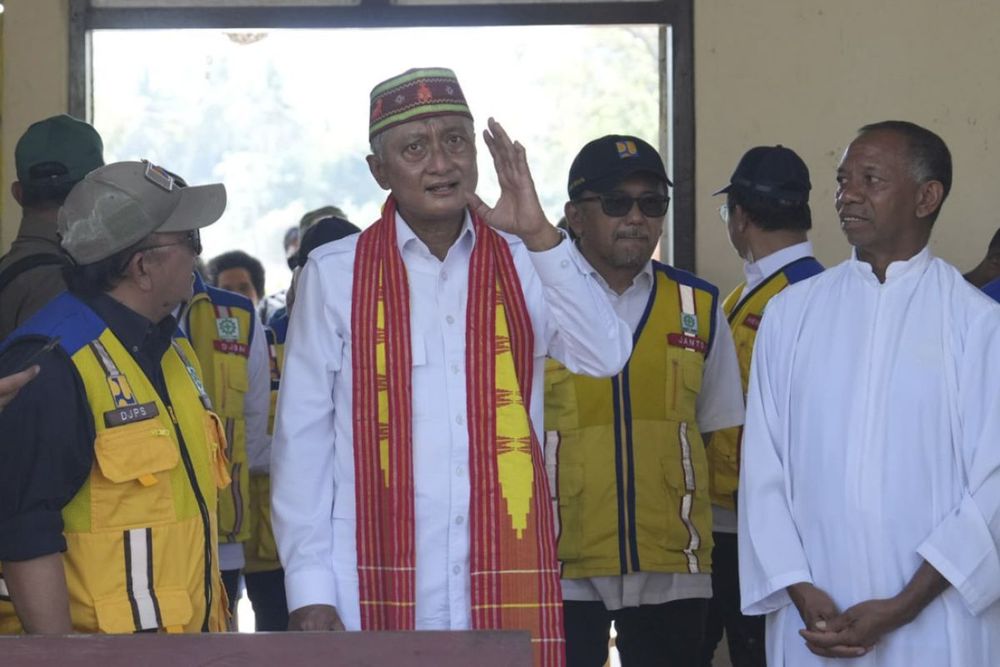
Minister vows to rebuild public facilities damaged by Flores quake
Minister of Public Works Dody Hanggodo has committed to the swift and appropriate restoration of public service buildings damaged by the magnitude 7.7 earthquake that struck Flores on August 15, 2026. The powerful quake, which hit at 05:58 WITA with its epicenter approximately 68 kilometers north-northwest of Ende, has left a trail of destruction requiring immediate government intervention.
Speaking during an inspection tour on Saturday, Hanggodo stressed that reconstruction efforts must consider both the extent of damage and community needs while preserving local cultural identity. The disaster, Indonesia's deadliest earthquake since the 2022 West Java event and the strongest to hit Flores since 1992, has created an urgent need for systematic rebuilding across the region.
The minister personally visited St. Peter and Paul Church in Dampek and Nurul Huda Reo Mosque in Manggarai District, where he assessed structural damage and documented conditions. Flores, a predominantly Catholic island, suffered significant damage to religious and community buildings that serve as cultural cornerstones for local populations.
In the rebuilding, we must maintain the local wisdom by coordinating with related parties
The earthquake's impact extended far beyond initial structural damage. Seismic observatories recorded a maximum Modified Mercalli intensity of VIII (Severe) on Flores, caused by movement on the Flores back-arc thrust fault north of the island. The quake also triggered a tsunami reaching 1.61 meters in Reok, Manggarai Regency, with smaller waves recorded at 16 locations across four provinces.
Assessment results will determine whether buildings undergo rehabilitation or complete reconstruction. According to Hanggodo, repairable structures should be rehabilitated, while severely damaged buildings must be reconstructed using enhanced standards appropriate for earthquake-prone areas. At least 235 aftershocks have followed the main event, with the strongest measuring magnitude 6.2, underscoring the ongoing seismic threat that necessitates improved building standards.
The scale of destruction is substantial. Approximately 95,500 homes sustained damage, with 27,400 collapsed or severely damaged, displacing more than 59,600 people. Landslides blocked sections of the Trans-Flores Highway, the roughly 700-kilometer road linking communities across the mountainous island, further complicating rescue and reconstruction logistics.
Build-back-better approach
The Public Works Ministry is conducting comprehensive data collection through its technical units, including the Directorate General of Human Settlements and the Directorate General of Strategic Infrastructure. Hanggodo emphasized that restoration work must follow the build-back-better principle, an internationally recognized framework first introduced in 2006 by the UN Secretary-General's Special Envoy for Tsunami Recovery and later institutionalized through the Sendai Framework for Disaster Risk Reduction.
This approach aims to rebuild infrastructure with improved quality, safety, and resilience to future disasters. The minister directed that all repaired or reconstructed buildings must be strengthened to withstand potential future earthquakes, ensuring that safety standards are not compromised even when incorporating local architectural traditions.
Community involvement
Coordination with religious and community leaders forms a critical component of the reconstruction strategy. For St. Peter and Paul Church, ministry officials will work closely with pastors, parish administrators, and the Ruteng Diocese. Similar collaboration is planned for Nurul Huda Reo Mosque and other affected places of worship to ensure reconstructed buildings meet community requirements.
Hanggodo emphasized the importance of engaging local residents in the rehabilitation and reconstruction process. Beyond technical and cultural considerations, community participation serves economic purposes by providing employment opportunities and helping residents restore their livelihoods.
Local community involvement is essential to ensure residents do not lose their livelihoods. By participating in the rehabilitation and reconstruction efforts in the worst-affected areas, they can restore their sources of income
The ministry's approach balances multiple priorities: rapid restoration of essential services, adherence to enhanced safety standards, preservation of cultural identity, and support for economic recovery in communities devastated by one of the region's most significant seismic events in recent history.