
Indonesia advances green economy with carbon registry to boost community welfare
President Prabowo Subianto announced Indonesia's commitment to green economy development through the newly launched Carbon Unit Registration System, emphasizing community benefits and forest protection in his State of the Nation Address on Friday.
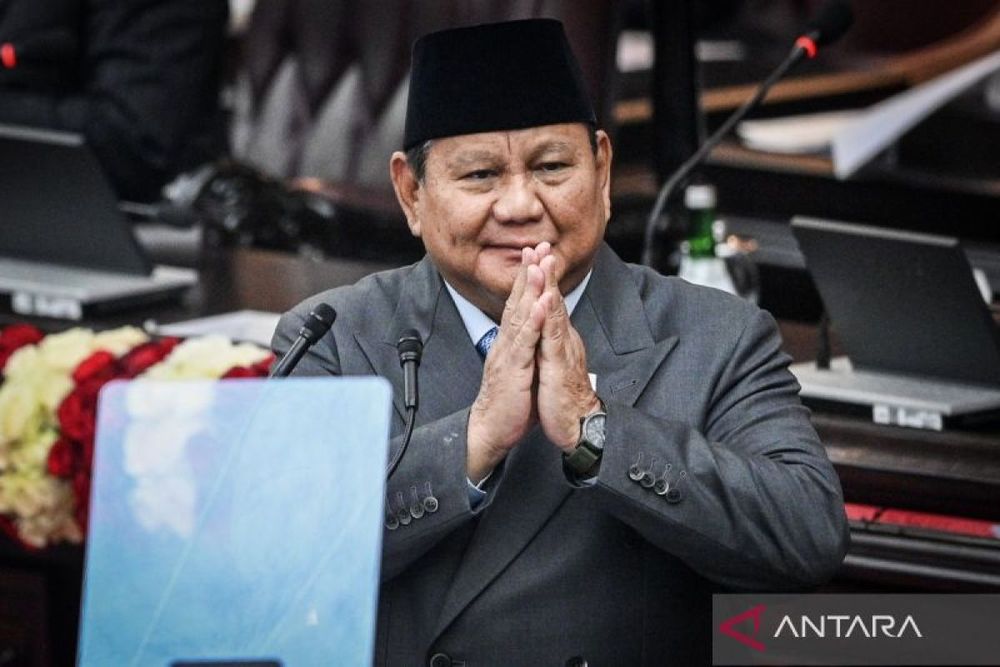
Indonesia advances green economy with carbon registry to boost community welfare
President Prabowo Subianto outlined Indonesia's green economy strategy in his State of the Nation Address on Friday, highlighting the Carbon Unit Registration System as a cornerstone initiative designed to deliver economic benefits directly to communities while advancing climate goals.
Speaking at the 2026 Annual Session of the People's Consultative Assembly and Joint Session of the House of Representatives and Regional Representatives Council at the Parliament Complex in Jakarta, Prabowo emphasized that environmental protection must translate into tangible public welfare.
The Carbon Unit Registration System, launched on July 9, 2026, operates under Minister of Environment Regulation No. 10 of 2026 and Presidential Regulation No. 110 of 2025, which establishes the legal framework for Indonesia's carbon market infrastructure. The platform tracks the complete lifecycle of carbon units from registration through retirement, creating transparency in the country's carbon trading operations.
Just days before the official launch, on July 6, 2026, the government issued carbon trading permits for four Forest Utilization Business Permits, including three concession-scale corporations and one community-level social forestry management group, demonstrating immediate implementation of the new system.
Economic benefits targeted at communities
The President stressed that Indonesia's green economy framework must generate added value for society. Government projections indicate that economic benefits from the carbon sector will reach communities managing 8.3 million hectares of social forestry and 1.4 million hectares of customary forests across the country.
Under current regulations, at least 30 percent of carbon credit revenue must flow to local communities and regional governments, ensuring that those protecting forests receive direct financial benefits from their conservation efforts.
The implementation of the carbon economic value instrument is expected to attract green investment of up to US$5.8 billion to Indonesia, supporting the country's broader climate finance requirements.
Indonesia's forest carbon potential
Prabowo underscored the importance of protecting Indonesia's extensive forest areas, which play a critical role in global carbon absorption and climate change mitigation. The country's forests cover approximately 112 million hectares, representing 61 percent of national territory, and store roughly 100 billion tonnes of carbon—about 10 times the world's annual fossil fuel emissions.
Indonesia's total annual carbon potential reaches an estimated 299 million tonnes of CO2 per year across 128 million hectares, with space for more than 800 high-integrity carbon projects. The country's forests exhibit exceptional carbon regrowth rates of 15-50 tonnes of CO2 equivalent per hectare per year, making Indonesia one of the fastest forest-regrowing nations globally—7 to 10 times faster than European or North American forests.
We are safeguarding forests, including protected forests. In other words, we are reducing carbon emissions, for which we are rewarded by countries that produce high volumes of emissions.
International climate commitments
Indonesia's green economy push aligns with its international climate obligations. In 2024, the country submitted its first Biennial Transparency Report, detailing climate finance needs totaling US$282 billion for mitigation and adaptation to meet Nationally Determined Contribution targets.
We are also promoting the green economy. The Carbon Unit Registration System is being implemented for the first time in Indonesia, and we have established a carbon value exchange that adopts global carbon standards.
The President concluded by emphasizing the dual objectives of his administration's environmental policy: protecting ecosystems that sequester carbon while ensuring conservation efforts provide concrete economic benefits to Indonesian communities.
The State of the Nation Address formed part of the official agenda marking Indonesia's 81st Independence Day celebrations.