
South Kalimantan distributes 20,000 masks as Indonesia faces worst fire season in years
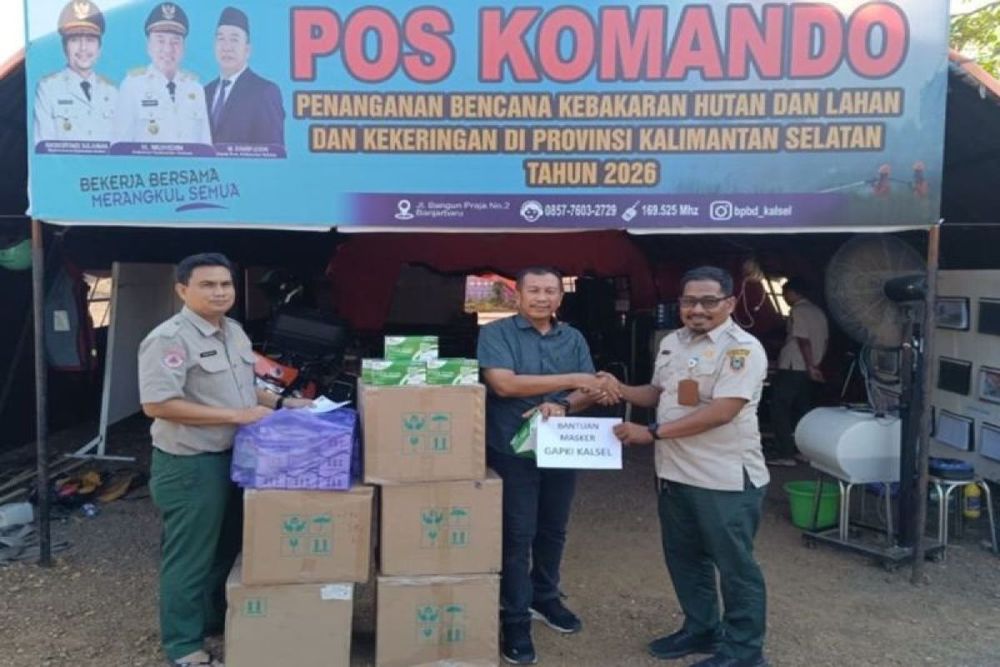
South Kalimantan's Environment Agency and palm oil industry group GAPKI have distributed 20,000 protective masks to residents as forest fires blanket the province in hazardous smoke, part of Indonesia's most severe fire season since 2019.
South Kalimantan distributes 20,000 masks as Indonesia faces worst fire season in years
South Kalimantan's Environment Agency and the Indonesian Palm Oil Association (GAPKI) have distributed 20,000 masks to residents to protect them from hazardous smoke as forest and land fires intensify across the province.
The mask distribution comes as Indonesia faces its worst fire season in years, with more than 96,000 fire hotspots recorded nationwide by late July 2026, exceeding levels seen at the same point during the devastating fire seasons of 2019 and 2023. Burning typically increases in August before peaking in September and October.
GAPKI South Kalimantan has also committed to deploying firefighting teams to support operations in affected areas, following guidance from Deputy Coordinating Minister for Food Affairs Hanif Faisol during a field visit to a monitoring post in Banjarbaru on August 18.
Firefighting teams from GAPKI members will go directly to the field. We will also be active from August 30 through September 8, 2026.
GAPKI South Kalimantan Executive Secretary Hairuddin made this commitment as the crisis intensified.
The province recorded 17 high-confidence fire hotspots on August 19, contributing to a three-province Kalimantan total of 518 hotspots. Detection data shows a dramatic escalation, with over 3,736 hotspots identified across the region in August compared to 758 in July.
South Kalimantan Environment Agency Chief Rahmat Prapto Udoyo praised the involvement of private companies in firefighting efforts.
GAPKI is among them. Eight companies have now joined the ground task force handling the fires.
The private sector support joins a massive government response, with nearly 13,000 personnel assigned to the three Kalimantan provinces to carry out patrols and ground firefighting operations, supplemented by helicopters for water bombing and cloud seeding.
Hazardous air quality threatens public health
The fires have reduced visibility to just 1 to 10 meters in some areas of Kalimantan, with several regencies suffering unhealthy air quality levels. The choking haze poses serious respiratory health risks, with research documenting significant increases in respiratory conditions, lung function complaints, and acute respiratory infections during haze periods in Indonesia.
Of the 20,000 masks distributed, GAPKI provided 17,500 through the Environment Agency and the provincial Disaster Mitigation Agency, with another 2,500 distributed directly to residents in coordination with the Plantation and Livestock Agency.
That brings the total to 20,000 masks. We distributed 17,500 through the Environment Agency and Disaster Mitigation Agency, while 2,500 went directly to residents.
The Plantation and Livestock Agency had previously distributed 2,500 free masks to residents outside its South Kalimantan office as air quality deteriorated.
El Niño threatens to worsen conditions
The fire crisis is unfolding against a troubling meteorological backdrop. Approximately 103,000 hectares of land burned nationwide during the first half of 2026, and Indonesia's Meteorology, Climatology and Geophysics Agency has warned that a developing strong El Niño could further suppress rainfall and increase fire risk in the coming months.
GAPKI, established in 1981, represents approximately 747 member companies managing roughly 3.7 million hectares of oil palm plantations, accounting for over 30 percent of Indonesia's total plantation area. The organization's involvement reflects growing recognition among businesses of the need for coordinated action as fires threaten the province's 4.23 million residents.
Hairuddin emphasized that worsening haze in several areas requires coordinated action by government, businesses, and communities to protect public health and accelerate fire suppression efforts.
The collaboration among authorities, security forces, businesses, and residents aims to accelerate the fire response while reducing smoke-related impacts on health and daily activities across South Kalimantan.