
Three Indonesian volcanoes erupt within hours, ash plumes blanket multiple provinces
Mount Ibu, Mount Lewotobi Laki-laki, and Mount Semeru erupted in rapid succession Tuesday night, sending volcanic ash across North Maluku, East Nusa Tenggara, and East Java as authorities maintain strict exclusion zones.
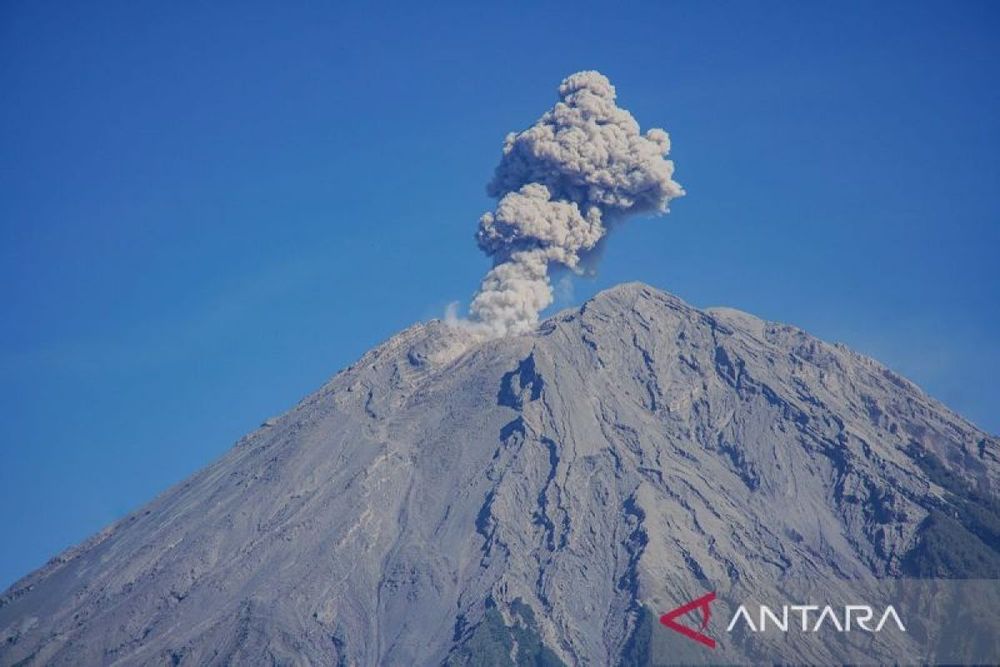
Three Indonesian volcanoes erupt within hours, ash plumes blanket multiple provinces
Three of Indonesia's active volcanoes erupted within hours of each other on Tuesday night, unleashing ash plumes that spread across multiple provinces and prompting emergency authorities to maintain heightened vigilance across the archipelago.
Mount Ibu experiences triple eruption sequence
Mount Ibu in West Halmahera, North Maluku, experienced three consecutive eruptions beginning at 8:36 p.m. local time (WIT), according to the Geological Agency under the Ministry of Energy and Mineral Resources (ESDM). The initial blast sent an ash column 700 meters above the summit, followed by a second eruption at 8:58 p.m. that reached 500 meters. A third eruption at 11:11 p.m. propelled grey-and-white volcanic ash 600 meters eastward. The volcano, which has been in a continuous eruption phase since 2008 with daily eruptive events, remains under Alert Level II (Advisory).
Mount Lewotobi Laki-laki and Mount Semeru erupt nearly simultaneously
Mount Lewotobi Laki-laki in East Flores, East Nusa Tenggara, erupted at 9:09 p.m. WITA, ejecting a dense grey ash cloud 300 meters high toward the west and northwest. Seismic monitoring equipment recorded a maximum amplitude of 11 millimeters lasting 109 seconds. The volcano is currently maintained at Alert Level III (Watch).
Nearly simultaneously, Mount Semeru in East Java erupted at 8:33 p.m. WIB. Although thick fog prevented visual observation of the ash plume, seismographs detected an eruption tremor with a maximum amplitude of 22 millimeters lasting 235 seconds. Mount Semeru, which has been erupting almost continuously since 1967, also remains at Alert Level III.
Understanding Indonesia's volcanic alert system
Indonesia's volcanic alert system operates on four levels, with Level I indicating normal conditions, Level II requiring advisory measures, Level III demanding watch protocols, and Level IV representing the highest warning status. Higher alert levels trigger more frequent monitoring and stricter safety restrictions.
Extensive exclusion zones established around Mount Semeru
Authorities have imposed a comprehensive exclusion zone around Mount Semeru, prohibiting all activity along the Besuk Kobokan river corridor within 13 kilometers of the summit. Residents have been ordered to maintain a distance of at least 500 meters from riverbanks extending up to 17 kilometers downstream due to the risk of pyroclastic flows and cold lava mudslides. A 5-kilometer safety radius from the crater has been established to prevent casualties from incandescent rockfall.
Indonesia's position on the Pacific Ring of Fire
The simultaneous eruptions underscore Indonesia's position as the country with the most active volcanoes globally. The archipelago nation hosts approximately 127 to 130 active volcanoes, representing about 13 percent of all active volcanoes worldwide. This concentration stems from Indonesia's location on the Pacific Ring of Fire, a horseshoe-shaped zone containing about 75 percent of the world's volcanoes and experiencing around 90 percent of global earthquakes.
Mount Semeru's deadly history
Mount Semeru has proven particularly deadly in recent years. A December 2021 eruption killed dozens of people, destroyed thousands of buildings, and forced the evacuation of more than 11,000 residents. The volcano has recorded more than 60 documented eruptions over the past 10,000 years, including catastrophic events in 1909, 1976, and 1981 that claimed hundreds of lives.
Comprehensive volcanic monitoring network
The Center for Volcanology and Geological Hazard Mitigation (PVMBG) operates 70 volcano observatories across Indonesia's active peaks, with seismologists monitoring tremor frequency, gas emissions, and ground deformation around the clock. This extensive monitoring network enables authorities to detect volcanic activity and issue timely warnings to at-risk populations.
Indonesia has experienced more fatal volcanic eruptions than any other nation, with volcanic disasters causing approximately 10 times as many deaths as in any other country. The concentration of active volcanoes combined with dense population centers near volcanic slopes creates persistent risks for millions of residents across the archipelago.
Emergency response teams continue to monitor all three volcanoes as authorities assess whether further evacuations may be necessary. No casualties have been reported from Tuesday night's eruptions.