
Indonesia champions workforce readiness and migrant protection at ASEAN Labour Ministers Meeting
Minister of Manpower Yassierli presents Indonesia's agenda on skill development and worker protection at the 29th ASEAN Labour Ministers Meeting in Bangkok, addressing challenges facing more than 357 million workers across the region.
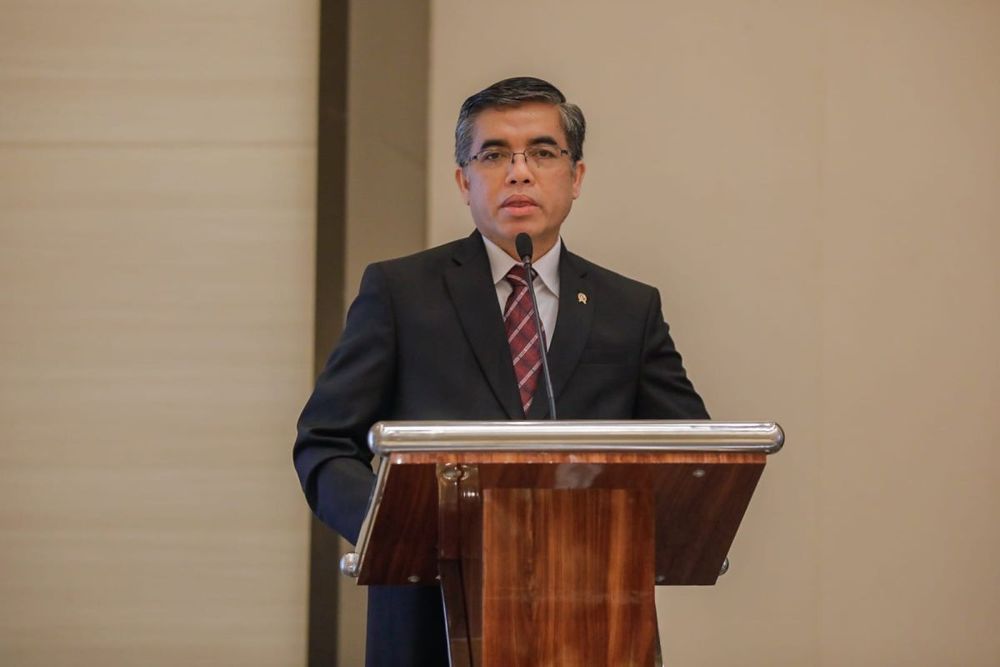
Indonesia champions workforce readiness and migrant protection at ASEAN Labour Ministers Meeting
Indonesia's Minister of Manpower Yassierli is leading efforts to strengthen skill development and worker protection at the 29th ASEAN Labour Ministers' Meeting in Bangkok, Thailand, held from August 23-28, 2026. The meeting brings together representatives from 11 ASEAN Member States under the theme 'Advancing ASEAN Human Capital: Skills Certification towards Global Recognition' to address challenges facing more than 357 million workers across the region.
Yassierli emphasized the need for coordinated regional action to prepare the ASEAN workforce for rapid technological change. The minister highlighted how artificial intelligence, digitalisation, and shifting industry demands require strengthening skills, improving labor market information, enhancing employment services, and expanding worker protections.
The discussions at the forum align with ongoing work on the ASEAN Declaration on Promoting Competitiveness, Resilience, and Agility of Workers for the Future of Work. ASEAN is currently finalizing a new Labour Ministers' Work Programme for 2026-2030, which will build on initiatives from the 2021-2025 programme covering workforce competitiveness, green jobs promotion, migrant worker protection, digital skills, and occupational safety.
Domestic workforce development initiatives
Indonesia is backing its regional advocacy with substantial domestic programmes. The National Apprenticeship Program aims to reach 150,000 participants after an initial phase that trained 100,000 new university graduates, achieving a 30 percent job placement rate. Additionally, the National Vocational Training Program targets up to 300,000 participants as part of broader workforce competency development efforts.
These initiatives address structural challenges in Indonesia's labor market, where approximately 60 percent of the workforce remains employed in the informal sector with less favorable job security and income levels. The country's unemployment rate stood at 4.68 percent in February 2026.
Migrant worker protection agenda
Beyond workforce preparation, Indonesia is raising critical issues around migrant worker protection at the meeting. The country will present progress on key ASEAN commitments, including the protection and placement of migrant workers in the fishing sector and support for migrant workers and their families during crises.
Indonesia ratified ILO Convention 188 on Work in the Fishing Sector through Presidential Regulation No. 25 of 2026 on May 1, 2026, and formally submitted the ratification instrument to the ILO Director-General in Geneva on June 10, 2026. The convention, adopted in 2007, establishes minimum international standards for working and living conditions of fishers, covering conditions of service, accommodation and food, occupational safety and health, medical care, and social security.
The focus on migrant worker protection carries significant economic weight. Indonesian migrant worker remittances reached US$4.536 billion in the first quarter of 2026, with Malaysia accounting for US$1.209 billion and Saudi Arabia for US$1.005 billion. In the first semester of 2026, Indonesia placed 153,049 migrant workers in various countries, with Taiwan receiving 32 percent, followed by Malaysia, Saudi Arabia, and Hong Kong.
Regional and international cooperation
Indonesia is strengthening partnerships with global organizations including the International Labour Organization and the International Organization for Migration. These collaborations support skill development, employment services, decent work standards, and migrant worker protection across the region.
Minister Yassierli stressed that effective regional cooperation must deliver tangible benefits for workers. He emphasized that ASEAN's labour agenda should ensure workers have opportunities to upskill, secure better jobs, and remain protected as the employment landscape continues to evolve.