
Indonesia marks Independence Day with renewed focus on workforce development
Manpower Minister Yassierli uses the 81st anniversary of independence to emphasize government programs expanding skills training and job opportunities, as Indonesia positions itself as a global model for industrial development.
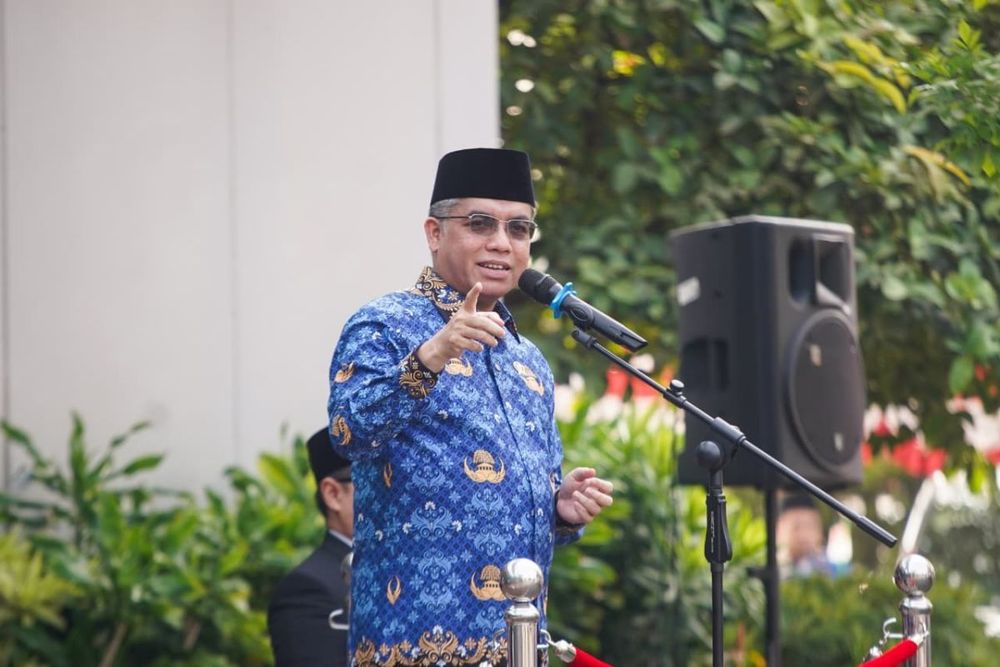
Independence Day as push to boost workforce quality: Ministry
Indonesia's Manpower Minister Yassierli marked the nation's 81st Independence Day by reaffirming the government's commitment to strengthening workforce quality and creating employment opportunities through comprehensive training and development programs.
Speaking on Tuesday, Yassierli, who assumed office as Indonesia's 28th Minister of Manpower in October 2024, said the anniversary serves as a reminder to pursue policies that expand public access to employment and skills enhancement.
"The spirit of independence gives us the energy to keep building Indonesia through a quality, competent, and competitive workforce. We will continue expanding skills development so people are increasingly ready to enter the workforce," Yassierli said.
Ambitious training targets
The ministry is advancing these goals through several flagship initiatives, including the National Vocational Training Program, which targets 70,000 participants throughout 2026. The first phase of this program enrolled 10,405 trainees across 21 government-run vocational training centers and 59 other training units nationwide, selected from a pool of 29,850 applicants.
Participants receive comprehensive support including free training, meals, daily transportation allowances of Rp20,000, work accident and death insurance, as well as training and competency certificates from the National Professional Certification Agency. The program has demonstrated strong effectiveness, with about 50 percent of first-batch participants securing job placement commitments upon completion.
The National Internship Program, known as MagangHub, attracted 102,600 participants in 2025 involving 8,048 companies and government agencies. The program aims to enroll 150,000 participants in 2026, reflecting its expanding role in connecting job seekers with practical work experience.
Digital platform for job matching
The ministry also operates KarirHub, a centralized job portal platform launched in February 2026 in collaboration with eight major job portals. The platform targets creating 3-4 million job opportunities this year while combating employment scams by providing verified listings and matching candidates with positions that align with labor market needs.
These programs address a labor market where unemployment stood at 4.68 percent, or 7.24 million people, as of February 2026. This marks an improvement from 4.76 percent in February 2025, with nearly 1.9 million Indonesians finding jobs within the year.
Workforce and industrialization
Yassierli emphasized that workforce development goes hand in hand with creating safe, productive, inclusive, and fair labor environments. The ministry continues strengthening occupational safety and health standards as well as industrial relations to support these objectives.
The minister highlighted that a competitive workforce is essential to Indonesia's industrialization strategy and economic self-reliance. Indonesia's downstreaming policy, which restricts exports of unrefined commodities to drive domestic processing, received international recognition from the United Nations Industrial Development Organization in its 2026 Industrial Development Report, positioning Indonesia as a model for downstream-based industrial development.
The policy is particularly significant given Indonesia's natural resource wealth. The country holds 22 percent of the world's nickel reserves and contributes 37 percent of global production, with export bans implemented since 2014 and fully enforced since 2020 to drive investment in domestic processing.
"There is no downstreaming without people who can carry it out, no industrialization without competent workers, and no economic self-reliance without the strength of Indonesia's workforce," Yassierli said.
The minister also noted that the downstreaming agenda, national industrial development, and food and energy security all require workers with competence needed to create domestic added value, linking workforce quality directly to the nation's broader economic goals.