
Indonesia deports Palestinian businessman to Cyprus following Interpol red notice
Indonesian authorities clarify that Abdul Karim Raed Miqdad, arrested and deported to Cyprus on terrorism charges, is a businessman rather than an activist or preacher, as the government defends its action based on international law enforcement cooperation.
Identity verification
Indonesian authorities have defended their arrest and deportation of Palestinian national Abdul Karim Raed Miqdad to Cyprus, emphasizing that the action followed proper legal procedures based on an Interpol red notice from Cypriot authorities.
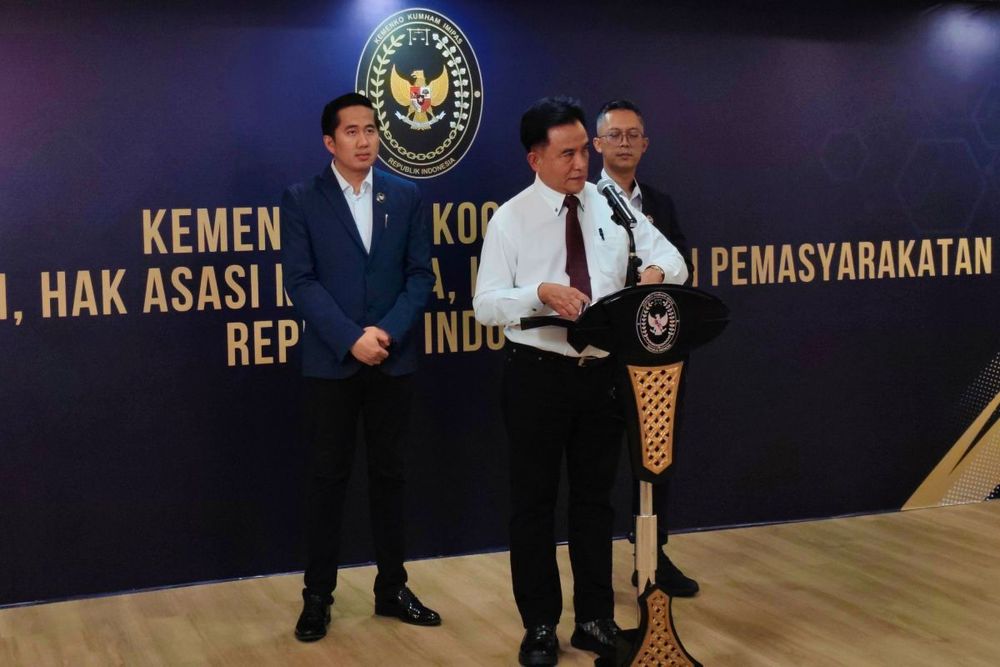
Coordinating Minister for Law, Human Rights, Immigration, and Corrections Yusril Ihza Mahendra addressed growing public concerns during a press conference on Wednesday, clarifying misconceptions about the individual's identity and the legal basis for the deportation.
"There are growing claims that the Indonesian government arrested and deported a Palestinian cleric," Yusril stated, adding that the government had communicated with the Palestinian Embassy in Jakarta to verify Karim's background.
Background and verification
According to available documentation, Abdul Karim, 41, is a businessman who has resided in Indonesia for three years with his wife and children. The minister emphasized that no evidence suggests Karim is a humanitarian activist in Gaza or a Muslim preacher, contrary to public perception.
"The individual was known to travel overseas often. No evidence that the individual is a humanitarian activist in the Gaza Strip, as some members of the public believe," Yusril explained. He noted that if Karim were genuinely a Muslim preacher, he would likely be known through public preaching activities in Indonesia.
Yusril, who assumed his current ministerial position in October 2024 under President Prabowo Subianto after previously serving as Minister of Justice and Human Rights from 1999 to 2004, stressed that the government acted on legitimate law enforcement grounds.
Arrest and deportation process
Karim was arrested in Tangerang, Banten, on July 16 based on an Interpol red notice issued by Cypriot authorities. A red notice is an international alert requesting law enforcement worldwide to locate and provisionally arrest a person pending extradition or similar legal action, though each member country decides what legal value to assign such notices and the authority of their officers to make arrests.
The deportation to Cyprus occurred on July 17, with Karim facing terrorism charges under Cypriot jurisdiction. Cyprus operates under the Combating Terrorism Act of 2010, which carries a maximum penalty of life imprisonment for terrorism offenses with no statute of limitations.
Indonesia's cooperation with Interpol reflects a broader pattern of international law enforcement collaboration. As an archipelago nation with over 17,500 islands positioned on maritime and air crossroads between Asia and the South Pacific, Indonesia faces significant transnational crime challenges. In 2023 alone, the Directorate General of Immigration successfully arrested 22 international fugitives in collaboration with Indonesian Police and Interpol, with most repatriated to face trial in their home countries.
Diplomatic assurances
Yusril confirmed that Karim will stand trial in Cyprus and assured that he will not be extradited to a third country. "After meeting the Cypriot ambassador, Indonesia's Foreign Ministry will issue an official diplomatic notification to the Cypriot government for reassurance that they will not deport the individual to a third country," he said.
The case has drawn attention partly because of Indonesia's longstanding diplomatic support for Palestine, which dates back to 1950. Indonesia does not maintain formal diplomatic relations with Israel and has consistently stated it will not recognize Israel until a two-state solution is achieved and Palestine gains recognition as an independent state.
The deportation represents Indonesia's commitment to honoring international law enforcement cooperation agreements while navigating the sensitivities of its historical solidarity with the Palestinian cause.