
Indonesia champions ASEAN unity and centrality at parliamentary caucus meeting
Indonesia's House of Representatives calls on Southeast Asian parliaments to strengthen dialogue and cooperation through the ASEAN Way, hosting the 17th AIPA Caucus meeting as the bloc marks 50 years of the Treaty of Amity and Cooperation.
Indonesia champions ASEAN unity and centrality at parliamentary caucus meeting
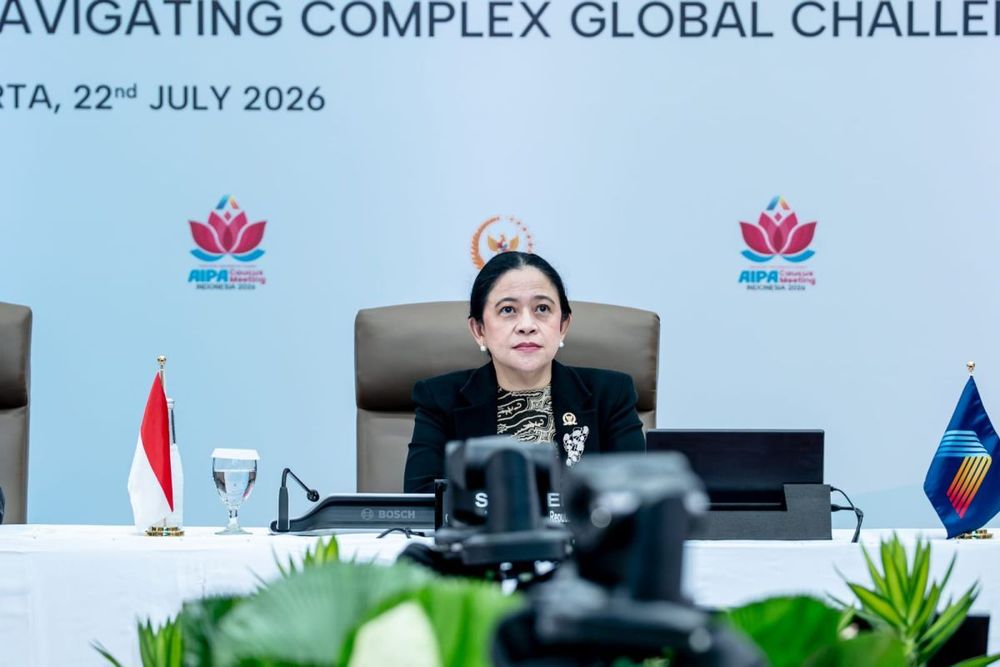
Indonesia's House of Representatives urged Southeast Asian parliaments to reinforce regional dialogue and cooperation as it hosted the 17th Meeting of the ASEAN Inter-Parliamentary Assembly Caucus in Jakarta on Wednesday.
Speaking at the hybrid gathering at the Nusantara Building in the Parliament complex, DPR Speaker Puan Maharani emphasized the importance of the ASEAN Way, a diplomatic framework built on principles including non-interference, quiet diplomacy, non-use of force, and consensus-based decision-making through consultation and dialogue.
Puan called on regional countries to strengthen ASEAN as multilateral institutions face mounting challenges worldwide. Indonesia currently holds the AIPA Caucus Presidency for 2026, which rotates annually among ASEAN member parliaments.
ASEAN centrality is rooted in our willingness to strengthen unity, trust and regional cooperation based on the values enshrined in the ASEAN Way.
The meeting's theme, "The Role of Parliament in Strengthening ASEAN Centrality in Navigating Complex Global Challenges," reflects growing concerns about maintaining regional cohesion amid shifting geopolitical dynamics.
Parliamentary cooperation for regional harmony
The AIPA Caucus serves as a mechanism to develop joint legislative initiatives among members, aiming to harmonize laws across ASEAN member countries while monitoring the implementation of AIPA resolutions. Originally founded on September 2, 1977 as the ASEAN Inter-Parliamentary Organization, it was transformed into the ASEAN Inter-Parliamentary Assembly in 2006, with statutes formalized in 2007.
While AIPA holds advisory power, it lacks the legislative and oversight authority of bodies like the European Parliament, positioning it as a consultative forum that bridges public aspirations with regional policy directions.
Puan stressed that ASEAN must retain its central role in promoting political, economic, social and cultural relations among the bloc's 11 member states, which now includes Timor-Leste following its accession in October 2025.
Indonesia remains committed to ASEAN centrality and cohesion through dialogue, consensus, cooperation, respect for international law and multilateralism, Puan said, adding that the nation will continue working to ensure ASEAN remains relevant in a multipolar world.
Marking 50 years of the Treaty of Amity and Cooperation
This year's caucus meeting holds particular significance as it coincides with the 50th anniversary of the Treaty of Amity and Cooperation in Southeast Asia. Signed on February 24, 1976 in Bali, Indonesia during the first ASEAN Summit by the original five founding members, the treaty has since grown into a framework embraced by 58 High Contracting Parties worldwide, including major powers such as the United States, China, Japan, France, Canada, the European Union, India and Russia.
The treaty's expansion beyond Southeast Asia underscores its role as a foundation for regional stability and international relations in the Indo-Pacific.
The ASEAN Way sustains ASEAN centrality and regional stability. We must strengthen these values and pass them on to future generations.
The Philippines holds both the ASEAN Chairmanship and the AIPA presidency for 2026, coordinating regional leadership during this anniversary year.
Puan noted that parliaments serve as bridges connecting public aspirations with the direction of regional policies, making their role essential in building an inclusive, resilient and adaptive ASEAN community.
The meeting brought together parliamentary representatives from across Southeast Asia, with delegates participating both in person and virtually from their respective countries, demonstrating modern approaches to regional parliamentary cooperation.