
Indonesia's President Prabowo urges new officers to master AI and cyber defense amid rising digital threats
President Prabowo Subianto commissioned 1,177 military and police officers at the Merdeka Palace, emphasizing the urgent need for cyber warfare capabilities and AI expertise as Indonesia faces escalating digital security challenges and transnational threats.
Indonesia's President Prabowo urges new officers to master AI and cyber defense amid rising digital threats
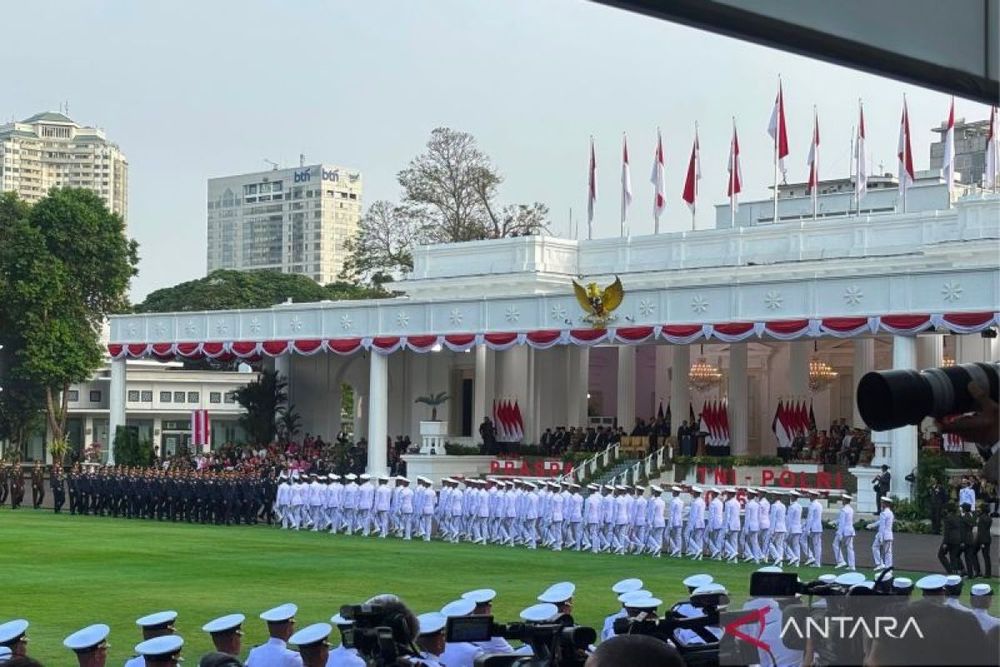
President Prabowo Subianto commissioned 1,177 new military and police officers on Wednesday, delivering a pointed message about the changing nature of national security in an era where cyber warfare poses threats as serious as conventional armed conflict.
Speaking at the 2026 officer commissioning ceremony at the Merdeka Palace in Jakarta, Prabowo urged the graduating class—comprising 512 Army officers, 229 Navy officers, 154 Air Force officers, and 282 National Police officers—to prepare for security challenges that extend far beyond traditional battlefields.
"The world is changing very rapidly, and competition among nations is becoming increasingly intense. Threats no longer come only from weapons. Threats come through cyber warfare, information warfare, narcotics, smuggling, transnational crime, and efforts to weaken the nation through cultural infiltration."
Unprecedented surge in digital attacks
The President's warning comes as Indonesia confronts an unprecedented surge in digital attacks. According to the National Cyber and Crypto Agency, the country faced 5.5 billion cyberattacks in 2025, representing a 714 percent increase compared to the annual average for the 2020-2024 period. The nation now registers approximately 3,300 attempted cyberattacks each week, with ransomware emerging as the most disruptive threat category between December 2025 and May 2026, targeting government agencies, healthcare facilities, and critical information technology infrastructure through double-extortion tactics.
These digital threats carry significant economic implications for Southeast Asia's largest digital economy. Indonesia's digital sector was valued at $130 billion in 2025 and is projected to reach $360 billion by 2030, making robust cybersecurity capabilities essential for economic stability. The cybersecurity market itself has expanded rapidly in response, growing from $1.35 billion in 2025 to a projected $4.06 billion by 2031.
New military doctrine emphasizes modern capabilities
Prabowo instructed the officers to equip themselves with cutting-edge technical skills, including artificial intelligence, cyber defense systems, autonomous technology, and foreign languages. His emphasis on modern warfare capabilities aligns with the Indonesian Military's recent institutional changes, including the endorsement of "Nusantara Trident Shield," the country's first major military doctrine update designed specifically to address AI warfare, unmanned systems, cyber capabilities, and electronic warfare.
The President stressed that building strategic national resilience requires self-reliance across critical sectors, including food, energy, technology, and defense industries. In March 2026, Prabowo characterized this push for self-sufficiency as rooted in "common sense" and essential for surviving a volatile global landscape.
Transnational crime and narcotics trafficking
Beyond cyber threats, Prabowo highlighted the persistent challenge of transnational crime, particularly narcotics trafficking. Indonesia's National Survey on the Prevalence of Drug Abuse in 2023 showed a prevalence rate of 1.73 percent, equivalent to 3.3 million Indonesians aged 15-64 years, with concerning increases among those aged 15-24. The National Narcotics Agency has documented Indonesia's dual role as both a transit point and growing market for international drug networks.
"Master science and technology, AI, cyber systems, unmanned technology, and foreign languages,"
the President directed, while emphasizing that strong discipline and ethical leadership must remain foundational values as security forces adapt to shifting geopolitical realities.
During the ceremony, Prabowo presented the prestigious Adhi Makayasa awards to four top-ranking cadets: Calvin Tidar Sakti from the Army, Muhammad Rizki Wira Utama Baihaqi Putra from the Navy, Yehezkiel Bonaventura Yudaniarman from the Air Force, and Harindra Arsandho Tegarbaja from the National Police.