
Indonesia Calls for APEC-Wide Cooperation on Mangrove Conservation Through World Mangrove Center
At the 2026 APEC Ministerial Meeting on Forestry in Shenzhen, Indonesia urged member economies to join the World Mangrove Center, a global platform for mangrove research and restoration jointly established with Germany.
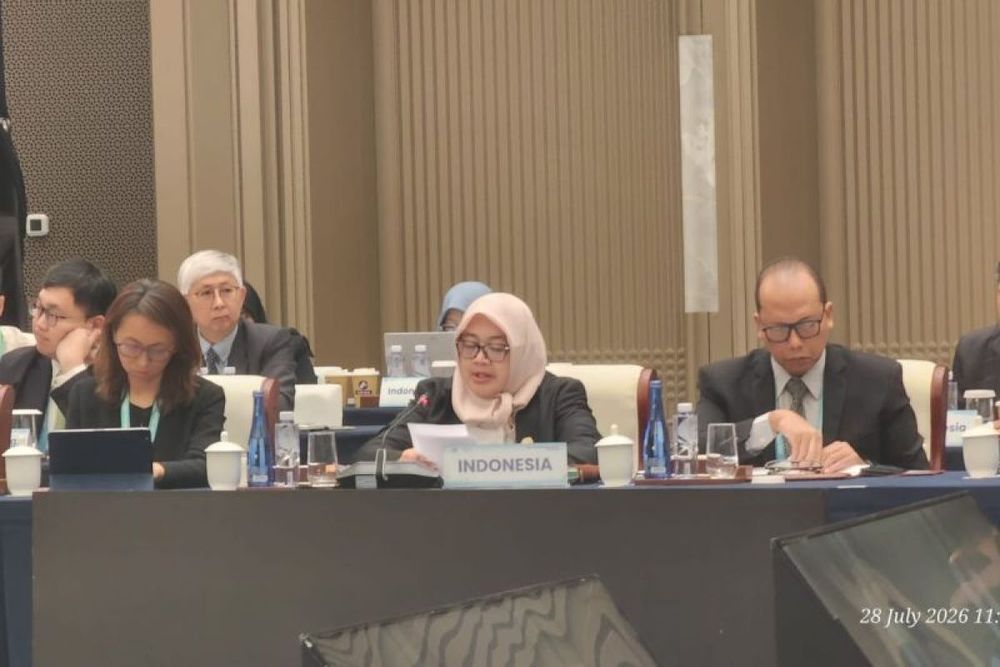
Indonesia Calls for APEC-Wide Cooperation on Mangrove Conservation Through World Mangrove Center
Indonesia has called on Asia-Pacific Economic Cooperation (APEC) member countries to strengthen regional cooperation on mangrove conservation by joining the World Mangrove Center (WMC), a global collaboration platform jointly established by the governments of Indonesia and Germany.
The appeal was made by Laksmi Wijayanti, Director General of Sustainable Forest Management at the Ministry of Forestry, representing Indonesia at the 2026 APEC Ministerial Meeting on Forestry held on July 27-28 in Shenzhen, China. The meeting carried the theme "Building a Green Asia-Pacific for Shared Ecological Well-being."
Wijayanti explained that the WMC serves as a platform to strengthen research, innovation, knowledge exchange, and resource mobilization for global mangrove conservation and restoration. The center brings together governments, research institutions, international organizations, civil society, and other stakeholders to promote sustainable mangrove management.
Indonesia's leadership in championing the initiative is grounded in its status as home to the world's largest mangrove forest area. The country holds approximately 19 percent of global mangrove coverage, with around 3.36 million hectares under its jurisdiction. The Ministry of Forestry oversees approximately 80 percent of these mangrove ecosystems.
Operational Infrastructure and Recent Progress
The World Mangrove Center is developing field observatory stations across Indonesia to serve as research and restoration sites for the global initiative. Indonesia's National Mangrove Map, updated in 2021, showed the country's mangrove area had increased to 3,364,080 hectares, representing a gain of 52,835 hectares compared to the 2013-2019 baseline.
Wijayanti invited all APEC members to join the WMC to strengthen research networks and enhance technical capacity. She underscored the need to promote nature-based solutions and accelerate collaborative efforts to address climate change, biodiversity loss, and challenges to coastal resilience.
The initiative reflects Forestry Minister Raja Juli Antoni's policy to position Indonesia as a more active player in international forums to strengthen forestry governance and advance the green economy.
Indonesia's Forest Verification System
At the ministerial meeting, Wijayanti emphasized that Indonesia has built a strong foundation through the Legality and Sustainability Verification System (SVLK), which has gained international recognition. The system received official recognition from the European Union under the Forest Law Enforcement, Governance and Trade (FLEGT) licensing framework, making Indonesian timber products eligible for export to EU markets without additional due diligence requirements.
The SVLK has boosted market confidence and facilitated sustainable timber trade by ensuring the legality of forest products. However, Wijayanti noted that addressing illegal logging requires more than law enforcement alone.
Indonesia is advancing the development of non-timber forest products (NTFPs) to strengthen the livelihoods of communities living in and around forest areas.
By creating economic value from sustainable forests, communities have a greater incentive to protect forests rather than cut them down. This is the transformation we need to build together in the Asia-Pacific region.
Regional Economic Context
The Asia-Pacific region accounts for more than half of the world's forest area, around 60 percent of global forest product output, and 40 percent of global forest product trade. Southeast Asia contains the largest regional share of mangrove coverage globally, with 48,222 square kilometers out of approximately 147,000 square kilometers worldwide as of 2020.
Indonesia called on APEC to strengthen cooperation in improving market access, interoperability of traceability systems, reducing technical trade barriers, and encouraging green investment for the development of NTFP value chains in the Asia-Pacific region.
The 2026 meeting marked fifteen years since the first APEC Ministerial Meeting on Forestry was held in Beijing in 2011. During this period, the Asia-Pacific region exceeded the Sydney Forestry Goal by adding 27.9 million hectares of new forest, demonstrating the effectiveness of regional forestry cooperation.