
Indonesia's Nusantara to pilot major World Bank mangrove restoration program
Indonesia's future capital Nusantara has been designated as the pilot site for the Mangroves for Coastal Resilience program, a US$400 million World Bank initiative targeting mangrove rehabilitation across multiple provinces by 2027.
Nusantara selected as pilot site for mangrove restoration project
Indonesia's future capital Nusantara in East Kalimantan has been selected as the pilot location for a major mangrove restoration initiative under the Mangroves for Coastal Resilience (M4CR) program led by the Ministry of Forestry, officials announced Saturday.
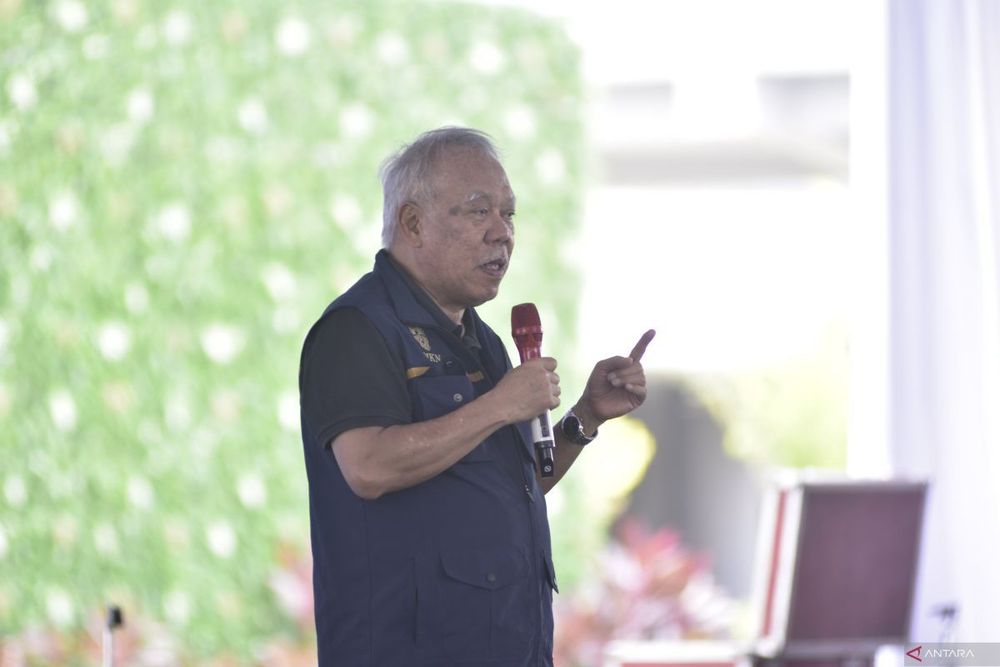
Nusantara Capital Authority (OIKN) Head Basuki Hadimuljono told participants at an M4CR event in North Penajam Paser that the World Bank-backed program represents a significant expansion of coastal ecosystem restoration efforts. The initiative is supported by a US$400 million loan from the International Bank for Reconstruction and Development and includes a US$15 million grant component, with Denmark providing support for blue carbon financing mechanisms.
The program will ultimately be implemented across nine provinces nationwide, including East Kalimantan, North Kalimantan, Riau, Kepulauan Riau, North Sumatra, Kepulauan Bangka Belitung, West Kalimantan, West Papua, and Papua. However, Nusantara will serve as the initial demonstration site.
"We are ready to serve as a pilot location. The prototype developed in Nusantara will later be replicated in North Kalimantan, East Kalimantan, Riau, and North Sumatra," Hadimuljono stated during the gathering.
The OIKN head, who was inaugurated by President Prabowo Subianto in November 2024 after serving as acting head since June, emphasized that while mangrove rehabilitation work has already commenced in the new capital, the M4CR program will substantially expand these efforts.
The authority has set an ambitious target to restore approximately 1,100 hectares of mangroves in Nusantara by 2027, with around 150 hectares allocated specifically under the M4CR initiative. This restoration work is part of Indonesia's broader National Mangrove Rehabilitation Program, launched in 2020 with the goal of rehabilitating 600,000 hectares of degraded mangroves by 2024.
"The M4CR program targets completion by 2027, so we need to accelerate our work," Hadimuljono said, expressing confidence that the planting objectives would be met on schedule.
Indonesia's Global Mangrove Significance
The focus on mangrove restoration carries particular importance for Indonesia, which possesses the world's largest mangrove area at approximately 3.1 million hectares, representing 22.6 percent of global mangroves. The country's mangrove ecosystems encompass over 202 species, including 43 true mangrove species. East Kalimantan province alone accounts for roughly 7.5 percent of Indonesia's total mangrove coverage.
These coastal forests provide critical environmental benefits, storing up to four times more carbon than terrestrial forests. This stored carbon, known as blue carbon, plays a significant role in climate change mitigation efforts.
Nusantara as National Model
Muhammad Zainal Arifin, executive director of the M4CR program and secretary of the Ministry of Forestry's Directorate General of Watershed Management and Forest Rehabilitation, explained the strategic reasoning behind selecting Nusantara as the initial site.
"We want other regional governments to replicate what is being demonstrated in Nusantara. Strong ecological foundations will ensure sustainable social and economic growth in the future," Arifin said.
The choice of Nusantara reflects the new capital's emphasis on environmental sustainability from its inception. The capital relocation from Jakarta was partly motivated by severe environmental challenges in the current capital, including flooding, air pollution, traffic congestion, and Jakarta's status as the world's fastest-sinking city.
Nusantara, located in North Penajam Paser and Kutai Kartanegara regencies approximately 1,250 kilometers from Jakarta, covers a planned area of 2,560 square kilometers. Construction began in 2022, with full completion scheduled for 2045. The mangrove restoration areas represent a small but ecologically significant portion of the capital's total footprint.