
Indonesia launches partnership to unlock economic value of mangrove ecosystems
The Coordinating Ministry for Community Empowerment and University of Indonesia have initiated a program to monetize mangrove conservation, targeting sustainable economic benefits for coastal communities while addressing climate change.
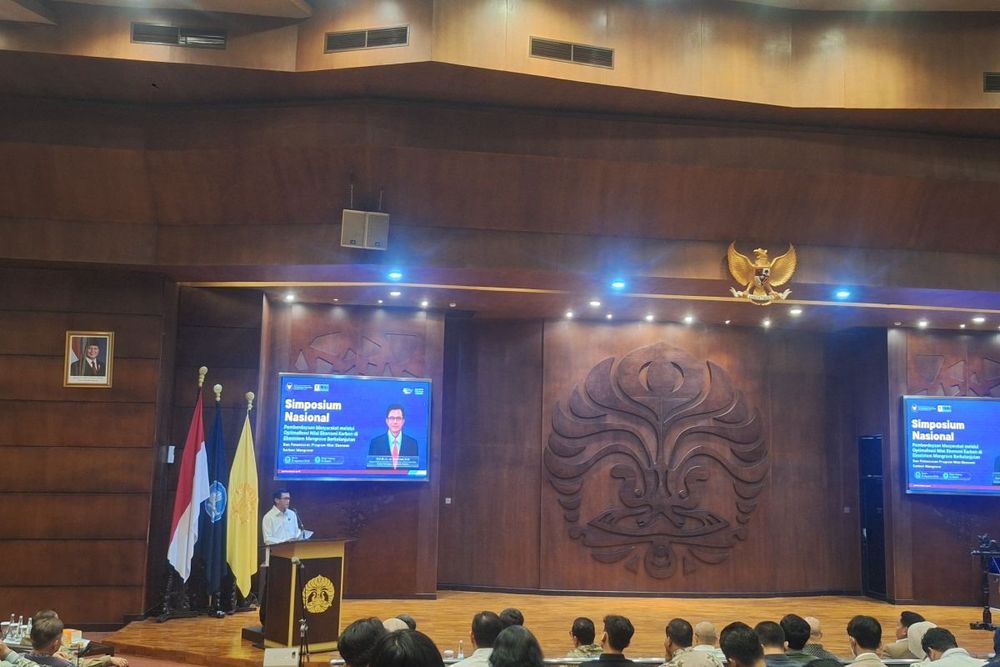
Ministry, UI launch program to boost mangrove economic value
The Coordinating Ministry for Community Empowerment and the University of Indonesia launched a collaborative program on Monday aimed at transforming mangrove conservation into tangible economic benefits for local communities across the archipelago.
Speaking at the UI Campus Convention Hall in Depok, Abdul Haris, Deputy for Village, Underdeveloped Village, and Special Village Empowerment at the ministry, emphasized the strategic importance of Indonesia's mangrove forests, which account for approximately 20 percent of the world's total coverage at 3.44 million hectares.
Carbon absorption and climate value
Indonesia's mangroves currently store approximately 3.14 billion tons of CO2, equivalent to greenhouse gas emissions from about 2.5 billion passenger vehicles driven for one year. These coastal forests sequester carbon at rates ten times greater than mature tropical forests and store three to five times more carbon per equivalent area, making them crucial assets in climate change mitigation.
Haris noted that industrial activity is heavily concentrated along Java's coastline, where mangrove ecosystems play a vital role in absorbing carbon emissions. The government plans to collaborate with technical teams from the Forestry Ministry and Environment Ministry to develop comprehensive strategies for leveraging this carbon absorption capacity.
Economic valuation framework
While acknowledging that exact conversion rates have not yet been established in rupiah terms, Haris outlined a framework where carbon-emitting industries would provide financial incentives to local governments that preserve and maintain mangrove ecosystems. Recent World Bank research suggests Indonesian mangroves generate annual values ranging from US$15,000 to nearly US$50,000 per hectare.
Beyond carbon sequestration, mangroves support Indonesia's fishing industry substantially. Approximately 55 percent of the nation's total fish catch biomass consists of mangrove-dependent species, with annual production valued at US$825 million.
Regulatory and restoration challenges
The program will operate within existing blue carbon governance structures established by Presidential Regulation No. 98 of 2021 and Ministerial Regulation No. 21 of 2022, with primary authority resting under the Ministry of Marine Affairs and Fisheries.
Haris emphasized that regional governments requiring new regulations would receive support and oversight throughout the development process. The ministry plans to work with local administrations to identify pilot project areas and map implementation challenges comprehensively.
The initiative comes as Indonesia faces significant mangrove degradation, with coverage declining from 4.4 million hectares in 1990 to the current 3.44 million hectares. Between 2008 and 2020, the country lost substantial mangrove areas, with at least 750,000 hectares now requiring urgent restoration.
Government efforts through the Peatland and Mangrove Restoration Agency have rehabilitated approximately 84,000 hectares of mangroves since 2020, though restoration continues to face challenges as degradation occurs at rapid rates.
Sustainable implementation goals
Haris characterized Monday's launch as an initial step in collaboration with UI to explore mechanisms for utilizing mangrove economic value effectively. The ministry is targeting concrete, sustainable action under President Prabowo's administration, requiring thorough mapping and planning given the complexity of creating necessary regulations.
The program aligns with Indonesia's broader mangrove conservation initiatives, including the World Mangrove Center, established jointly by the governments of Indonesia and Germany as an international cooperation hub promoting sustainable mangrove management globally.
Implementation will require high performance standards and ongoing commitment across multiple government agencies and regional administrations to ensure economic benefits reach coastal communities while maintaining ecological integrity of mangrove ecosystems.