
Indonesia hosts regional workshop to advance ASEAN social forestry frameworks
Indonesia's Forestry Ministry brought together representatives from 11 ASEAN member states to share knowledge on implementing social forestry principles, building on the ASEAN Guiding Principles published in 2022 and Indonesia's national training program launched in 2025.
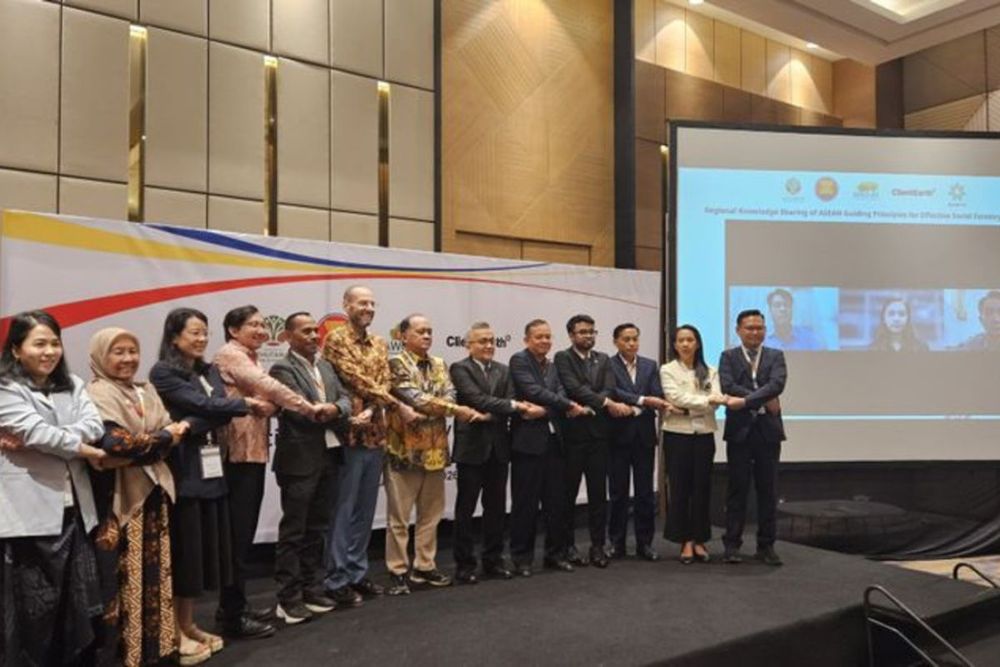
Indonesia hosts regional workshop to advance ASEAN social forestry frameworks
Indonesia's Forestry Ministry hosted a two-day regional workshop in Jakarta on August 4–5, 2026, to strengthen social forestry management across Southeast Asia, emphasizing the need to enhance tenure security and expand community participation in forest governance.
The Regional Knowledge Sharing of ASEAN Guiding Principles for Effective Social Forestry Legal Frameworks gathered representatives from 11 ASEAN member states to exchange experiences on policymaking, best practices, and challenges in implementing social forestry principles developed by the ASEAN Working Group on Social Forestry with support from RECOFTC and ClientEarth and published in 2022.
Marcus Octavianus Susatyo, director of social forestry management at Indonesia's Forestry Ministry, said the workshop serves as a foundation for aligning national policies with regional goals.
This collaboration serves as a crucial foundation for synchronizing national policies with regional aspirations, strengthening tenure security, and increasing community participation in forest management.
Building on regional progress
The 2026 workshop follows a series of regional efforts to implement social forestry across ASEAN. At the 2024 workshop, member states identified national priorities for applying the guiding principles. Indonesia then launched a national training program in 2025 in partnership with RECOFTC, the Ministry of Forestry, ASEAN, and ClientEarth to enhance the capacity of social forestry facilitators and align practices with the regional framework.
While some ASEAN countries including Indonesia and the Philippines have had community forestry legal frameworks in place for several decades, others like Lao PDR and Thailand have adopted frameworks in recent years, making knowledge sharing particularly valuable for the diverse group of participants.
Indonesia's social forestry expansion
Indonesia has emerged as a regional leader in social forestry implementation. As of May 2026, the Forestry Ministry had granted access to 8.34 million hectares of social forestry land to more than 1.43 million households through five different schemes:
- community forests
- community plantation forests
- village forests
- partnership forests
- customary forests
These initiatives are supported by over 16,000 social forestry business groups.
The country set a national target of allocating 12.7 million hectares of land for social forestry by 2030 as part of its national development agenda. With more than 120 million hectares of officially designated forest area, Indonesia is home to the world's third-largest expanse of tropical rainforest. An estimated 48.8 million people in Indonesia directly rely on the country's forests for their well-being, according to the Ministry of Environment and Forestry.
Regional context and coordination
Forests in the ASEAN region cover over 193 million hectares, providing essential resources for millions of people. ASEAN's collaboration in agriculture and forestry dates back to 1977, when cooperation expanded to include these fields, marking a key milestone in the region's journey toward food security and sustainability.
The 2026 workshop focused on exchanging views on progress, achievements, and challenges in social forestry implementation. Discussions covered regulatory updates, identification of replicable implementation models, and the need to improve coordination between central and regional governments. Participants also addressed simplifying procedures, strengthening guidance for social forestry groups, and expanding market access for businesses engaged in social forestry initiatives.
Azam Hawari, ClientEarth's representative to Japan and Southeast Asia, emphasized the value of cross-border learning.
There is no country that has all the answers. Therefore, this forum is considered important for countries to learn from one another, exchange experiences, and identify solutions that can be applied with respect to their respective contexts.