
Indonesia joins forces with OceanX to strengthen marine park conservation
The Indonesian Ministry of Forestry has partnered with global research organization OceanX to enhance management of seven marine national parks through scientific data collection and biodiversity research.
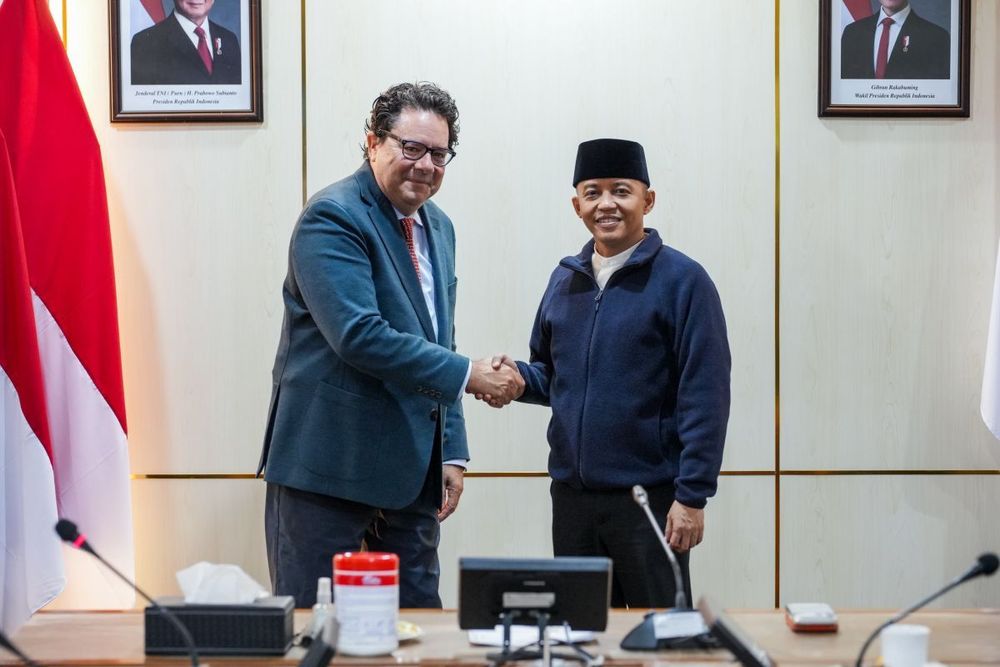
Indonesia joins forces with OceanX to strengthen marine park conservation
The Indonesian Ministry of Forestry has entered a partnership with OceanX, a nonprofit ocean exploration initiative founded in 2016 by billionaire investor Ray Dalio and his son Mark Dalio, to strengthen the management and protection of seven marine national parks through advanced scientific research.
Forestry Minister Raja Juli Antoni announced on Wednesday that the collaboration aligns with President Prabowo Subianto's directive to enhance conservation management through scientific data. The partnership will focus on expanding baseline data, mapping underwater topography, and conducting comprehensive biodiversity inventories across the parks.
The initiative targets seven marine national parks under the ministry's jurisdiction: Wakatobi, Thousand Islands, Takabonerate, Cenderawasih Bay, Togean, Karimunjawa, and Bunaken. The ministry also oversees Komodo National Park, a UNESCO World Heritage Site recognized in 1991, which encompasses both terrestrial and marine conservation areas and hosts more than 1,000 species of tropical fish, 260 coral species, and rare marine mammals including the dugong.
Global biodiversity hotspot
Indonesia sits at the heart of the Coral Triangle, the world's most biodiverse marine region containing 76% of all known coral species and over 3,000 fish species. The archipelago nation holds approximately 51,000 square kilometers of coral reefs, representing 18% of the world's total coral reef areas and hosting 569 coral species.
Among the parks covered by the partnership, Wakatobi National Park stands out as the epicenter of coral reef biodiversity, hosting approximately 750 out of 850 coral reef species found worldwide and nearly 1,000 fish species. As of January 2020, Indonesia maintained a network of 300 marine and coastal protected areas covering 23.9 million hectares across 34 provinces, with 7.3% of Indonesian waters under protection.
Minister Antoni emphasized the importance of scientific foundations for conservation policy.
Marine conservation management must be based on strong scientific data and research. The Ministry of Forestry is fully committed to improving the management of Indonesia's marine national parks.
The minister noted that the ministry's mandate extends beyond terrestrial forests to encompass significant marine territories.
We are the Ministry of Forestry, but our authority also covers marine areas. We are open to collaboration,he said, adding that the ministry is pursuing marine ecosystem restoration efforts, including coral reef restoration.
Advanced research capabilities
Vincent Pieribone, co-CEO and Chief Science Officer of OceanX and a professor at Yale School of Medicine specializing in bioluminescence and neuroscience, confirmed that his organization has completed two research missions in Indonesia and is currently focusing on marine biodiversity research in North Sulawesi.
OceanX will deploy its research vessel OceanXplorer, which features state-of-the-art laboratories, submersibles capable of diving to 6,000 meters, and advanced mapping systems. The vessel is currently docked in Singapore as part of broader research missions across Southeast Asia, with planned expeditions in Indonesia and Malaysia.
Under the partnership terms, OceanX will assist in collecting spatial and biodiversity data across conservation areas. All data generated will belong to the Ministry of Forestry to serve as a foundation for science-based policymaking.
The collaboration carries significant implications for both biodiversity conservation and human welfare. More than 370 million people depend on the ecosystem goods and services of the Coral Triangle, with 120 million directly benefiting from coastal and offshore fisheries production and marine tourism, underscoring the critical importance of effective marine park management.