
Indonesia to survey natural hydrogen deposits in Central Sulawesi
The Ministry of Energy and Mineral Resources is preparing a comprehensive survey to map white hydrogen potential in Central Sulawesi, following insights about significant natural hydrogen deposits at Tanjung Api.
Indonesia to survey natural hydrogen deposits in Central Sulawesi
Indonesia's Ministry of Energy and Mineral Resources is moving forward with plans to map natural hydrogen deposits in Central Sulawesi, responding to revelations about substantial hydrogen potential in the region.
The initiative follows statements by Deputy Minister of Higher Education, Science, and Technology Stella Christie, who highlighted significant natural hydrogen reserves at Tanjung Api in Central Sulawesi during the Global Hydrogen Ecosystem Summit 2026 in Jakarta on Wednesday, July 22.
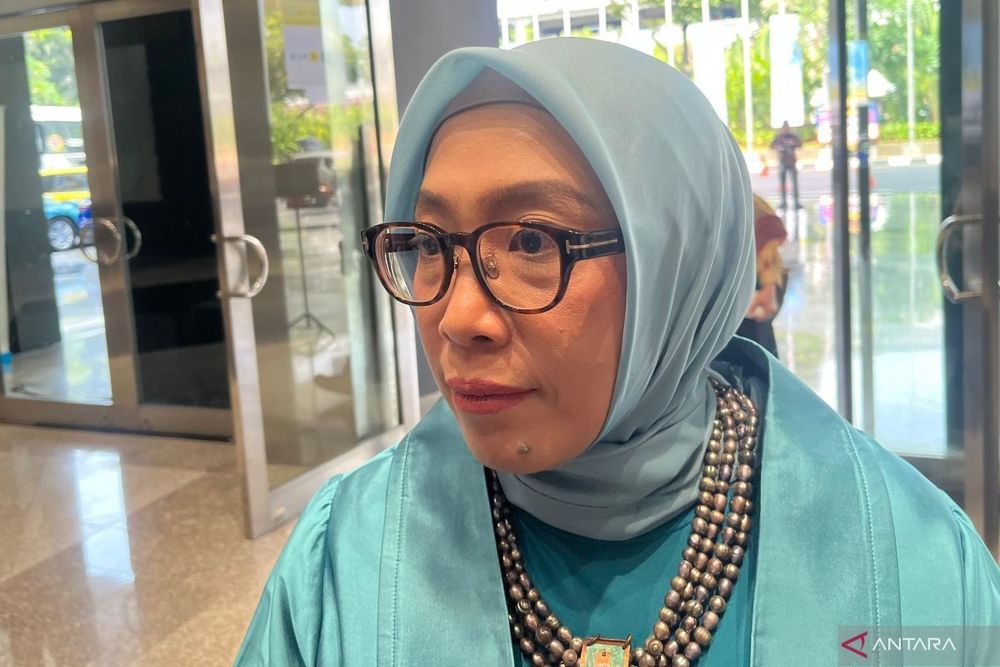
"She provided excellent insight into white hydrogen, highlighting significant potential in Tanjung Api, Central Sulawesi," said Eniya Listiani Dewi, Director General of New, Renewable Energy, and Energy Conservation at the Ministry of Energy and Mineral Resources.
Legal Framework in Development
Dewi explained that her office is currently drafting a ministerial decree that will establish the legal framework for conducting official surveys of natural hydrogen potential across Indonesia. The decree is being prepared in collaboration with the Director General of Oil and Gas.
White hydrogen, also known as natural or geologic hydrogen, forms naturally in the Earth's crust through geological processes such as serpentinization, where water reacts with iron-rich minerals deep underground. This differs fundamentally from hydrogen produced through industrial methods.
The hydrogen at Tanjung Api is generated through serpentinization of ultramafic rocks in the East Sulawesi Ophiolite Complex, where water reacts with iron-rich peridotite at the base of the ophiolite, producing hydrogen that migrates to the surface. Central Sulawesi has the most extensive distribution of ultramafic rocks in Indonesia, making it a prime target for natural hydrogen exploration.
Historical Context and Recent Findings
The Tanjung Api site, whose name means "Fire Cape," has been documented since the late 18th century during the Dutch colonial era. The location appeared on Dutch topographic maps as early as 1869, reflecting burning gas seeps on the beach that have been active for over 150 years.
Research conducted in 2023 by Indonesia's Geological Agency found that gas samples from Tanjung Api contained 20-30% hydrogen along with methane, demonstrating the presence of hydrogen-rich material in the area.
"Several years ago, Russian researchers came to Indonesia to investigate. Indonesia actually has substantial potential, but it was simply never measured," Dewi said, noting that hydrogen levels were never recorded during past gas exploration activities.
Global Context
Natural hydrogen extraction remains extremely rare globally. Currently, Bourakébougou in Mali is the only facility commercially producing white hydrogen worldwide, harvesting around five tonnes per year from a well discovered in 1987.
However, global natural hydrogen exploration has seen recent breakthroughs. Australia's Ramsay 2 well achieved 95.8% purity hydrogen extraction at 531 meters depth in April 2024, while scientists in Canada discovered continuous hydrogen flow from ancient underground rocks in Ontario mine boreholes earlier this year.
Strategic Energy Development
Dewi stated that developing natural hydrogen resources could strengthen regional energy infrastructure by utilizing domestic energy sources for local power generation. "The electricity potential in Sulawesi will be maximized using our own natural resources," she said.
The white hydrogen survey aligns with Indonesia's broader hydrogen strategy. In June 2025, the country launched its National Roadmap for Hydrogen and Ammonia, outlining 215 action plans targeting 4.2 million tons of hydrogen consumption annually for power generation. The initiative aims to achieve net-zero emissions by 2060 while creating 300,000 jobs and generating USD 70 billion in revenue.
Dewi assured that cross-ministerial collaboration will be implemented to accelerate research and mapping of natural hydrogen sites throughout the country.
Deputy Minister Christie, a cognitive scientist who earned degrees from Harvard University and Northwestern University before her appointment in October 2024, provided crucial location insights that will guide the technical studies. "Professor Stella provided key insight, pointing out the specific location and the vast potential in Sulawesi," Dewi explained.