
Morocco Launches $1.5 Billion Waste-to-Energy Plant Project in Casablanca
A consortium led by Kanadevia Inova has signed a 33.5-year concession to build and operate Africa's second large-scale waste-to-energy facility in Casablanca, processing 1.5 million tonnes of waste annually and generating electricity for one million people by 2030.
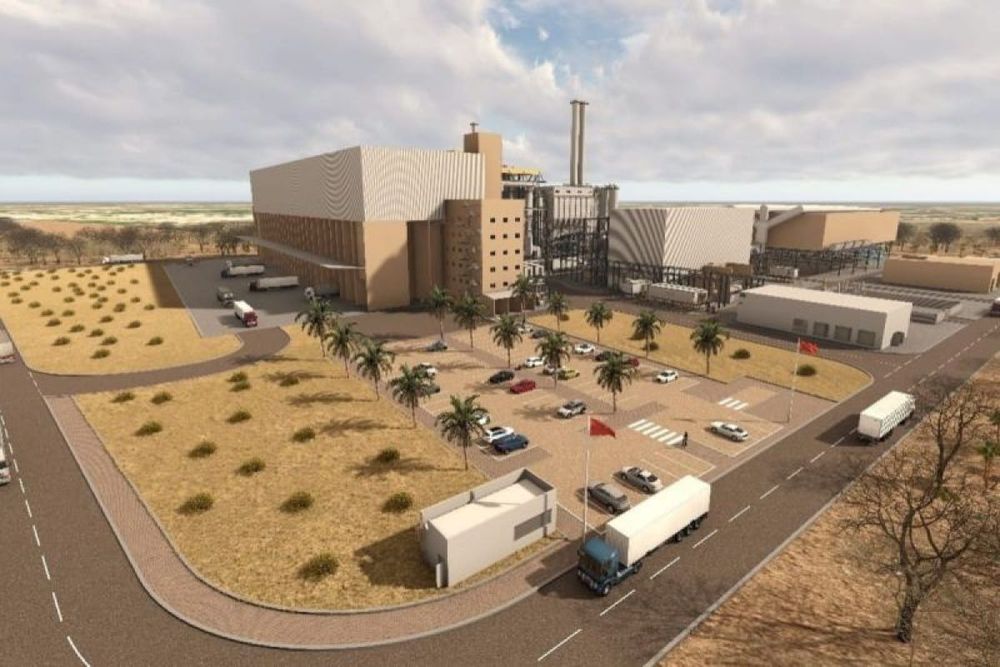
Kanadevia Inova Signs Concession Agreement for Its First Waste-to-Energy Plant in Africa
Kanadevia Inova AG, in partnership with Morocco's Nareva and Japan's ITOCHU Corporation, has signed a 33.5-year concession agreement to develop a $1.5 billion waste-to-energy facility in Casablanca, Morocco. The project represents a major milestone in addressing the city's mounting waste management crisis and advancing the country's renewable energy ambitions.
The facility, scheduled to begin operations in June 2030, will be constructed adjacent to the Médiouna landfill, one of Africa's largest disposal sites. The landfill has accumulated waste to a height of nearly 70 meters and is approaching full capacity, creating urgent environmental and operational challenges for the city.
Greater Casablanca, home to over 4.27 million people, generates approximately 4,000 tons of household and similar waste daily. The new plant will process roughly 1.5 million tonnes of waste annually while generating approximately 126 megawatts of electricity—enough to meet the annual electricity needs of around one million people.
The facility will incorporate advanced combustion and boiler systems developed by Kanadevia Inova, a Swiss-based subsidiary of Japan's Kanadevia Corporation with over 1,600 reference projects worldwide dating back to 1933. The plant will feature the company's proprietary Autaro™ automatic combustion control system alongside a 50-megawatt solar power facility, a 4-megawatt landfill gas recovery unit, and a leachate treatment facility.
Strategic Energy and Environmental Impact
The consortium has secured power purchase agreements with Morocco's state-owned electricity utility ONEE (Office National de l'Electricité et de l'Eau Potable) and regional utility SRM Casablanca-Settat, providing a commercial foundation for the project's estimated 1 terawatt-hour annual electricity output.
By reducing methane emissions—a greenhouse gas with approximately 28 times the global warming potential of carbon dioxide—the project is expected to avoid up to 128 million tons of CO2 emissions over the concession period. This represents roughly 20 percent of Switzerland's annual emissions, or the equivalent of removing 300,000 cars from the road.
The facility has been designed to accommodate future carbon capture, utilization, and storage technologies, positioning the project to further reduce greenhouse gas emissions and support long-term decarbonization objectives.
Regional and National Context
The Casablanca facility will be only the second large-scale waste-to-energy plant in Africa, following the New Horizons Energy facility in Cape Town, South Africa, commissioned in 2017. Unlike the Cape Town plant, which processes 500 to 600 metric tons daily to produce biomethane, the Casablanca facility will generate electricity at significantly greater scale.
Morocco previously developed a smaller waste-to-energy project in Fez in 2015, valued at approximately €10 million and processing around 900 tonnes of waste per day. The Casablanca project represents a substantial scale-up of this technology within the country.
The project aligns with Morocco's national energy strategy, which targets 52 percent renewable electricity capacity by 2030 against electricity demand growing at approximately 3 percent annually. The national waste valorization strategy prioritizes reduced landfilling and higher material recovery rates.
Nareva, Morocco's leading independent power producer with installed electrical capacity of 3,431 megawatts and annual output exceeding 16 terawatt-hours, brings significant energy sector expertise to the consortium as a subsidiary of Al Mada, a Moroccan investment holding company.
Construction is expected to begin by the end of 2026, with Moroccan construction company Somagec engaged to build the facility. Kanadevia Inova will establish a special purpose company to implement the project while proceeding with engineering, procurement, construction, and long-term maintenance agreements.