
Battery Technology Critical to Indonesia's Renewable Energy Transition, Says UI Professor
University of Indonesia Professor Rinaldy Dalimi emphasizes that affordable battery storage is essential for Indonesia to unlock its 3,600 GW renewable energy potential and achieve its 2060 net zero emissions target amid ongoing global energy security challenges.
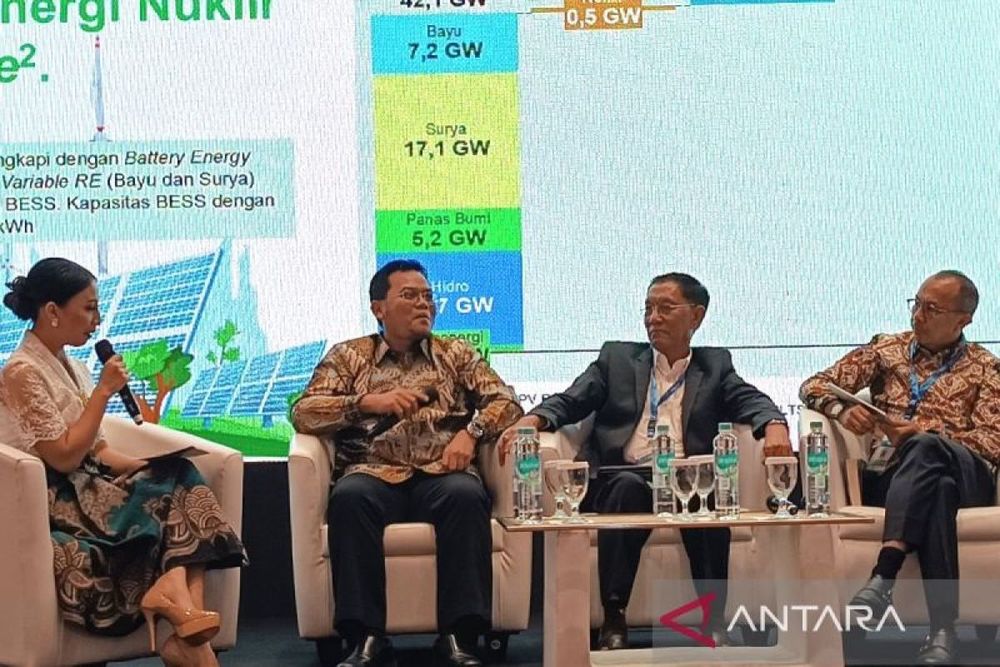
UI Professor: Batteries hold the key to renewable energy future
Battery technology stands as the critical missing piece in Indonesia's renewable energy transition, according to University of Indonesia Professor Rinaldy Dalimi, who warned that without affordable energy storage solutions, the country's vast clean energy potential will remain largely untapped.
Speaking at a discussion entitled "Energy Transition Is Not an Option, But a Necessity" in Jakarta on Wednesday, Rinaldy stated that if affordable, small-scale batteries became available, the world's energy problems would be 90 percent solved. His assessment comes as Indonesia pursues an ambitious path toward net zero emissions by 2060, with targets to reduce greenhouse gas emissions by 31.89 percent by 2030 through domestic measures or 43.2 percent with international support.
Indonesia possesses enormous renewable energy potential reaching approximately 3,600 gigawatts, encompassing solar, wind, hydro, bioenergy, geothermal, and other energy sources. Solar energy alone accounts for the majority of this potential, with estimates showing 2,898 GW of solar capacity available. However, the country's total renewable power capacity stood at just 8.4 GW in 2024, though projections indicate expansion to 38.1 GW by 2035, representing a compound annual growth rate of 14.7 percent.
The fundamental challenge, Rinaldy explained, lies in the inherent variability of renewable energy production, which depends on weather conditions and seasons. Without adequate storage technology, electricity generated from renewable sources cannot be stored for use during periods of reduced supply. Recent industry data shows progress on this front, with global benchmark costs for four-hour battery storage projects falling 27 percent year-on-year to $78 per megawatt-hour in 2025, according to BloombergNEF.
State electricity company PLN has outlined plans to address storage needs in its electricity supply plan for 2025-2034, which targets construction of 69.5 GW of new generation capacity. Of this total, 42.6 GW would come from renewable energy sources and 10.3 GW from energy storage systems including battery storage. The transition effort is supported by Indonesia's Just Energy Transition Partnership, which mobilizes $20 billion in public and private financing to accelerate decarbonization of the power sector.
Calculated Transition Required
Rinaldy emphasized that the energy transition does not need to happen abruptly but must be carried out with precise calculations and competent technology. The current geopolitical situation has added complexity to global energy planning, with several countries reconsidering their transition timelines due to energy security concerns.
Following Russia's invasion of Ukraine in 2022, European nations restarted coal-fired power plants that had been previously shuttered. Italy subsequently postponed its coal phaseout from 2025 to 2038, citing intensifying geopolitical tensions. This global trend illustrates that achieving net-zero emissions remains a difficult challenge for countries seeking to maintain energy security.
The financial burden of transition weighs heavily on PLN, which received government subsidies and compensation totaling IDR 177 trillion (USD 11 billion) in 2024, a 24 percent increase that represented 33 percent of the company's total revenue. Rinaldy noted that adapting to environmental requirements for ceasing coal-fired power generation would not be easy for PLN, as the cost of replacing coal with renewable energy remains high.
The social dimension of the transition adds further complexity, with more than 267,000 workers employed in Indonesia's coal mining industry and around 32,000 in coal-fired power plants as of 2024, according to the Ministry of Energy and Mineral Resources. These employment considerations underscore why Rinaldy advocates for a measured approach rather than an immediate shift away from fossil fuels.
While Indonesia waits for affordable battery technology with high storage capacity to become commercially viable, the country must balance its climate commitments with energy security and economic realities, Rinaldy concluded.