
Indonesia Deploys Advanced Water Technologies as Record El Niño Threatens National Food Security
BRIN presents weather modification, desalination, and water purification technologies to President Prabowo as international forecasters warn 2026 El Niño could become strongest in 150 years, with drought already affecting 294 points nationwide.
Indonesia Deploys Advanced Water Technologies as Record El Niño Threatens National Food Security
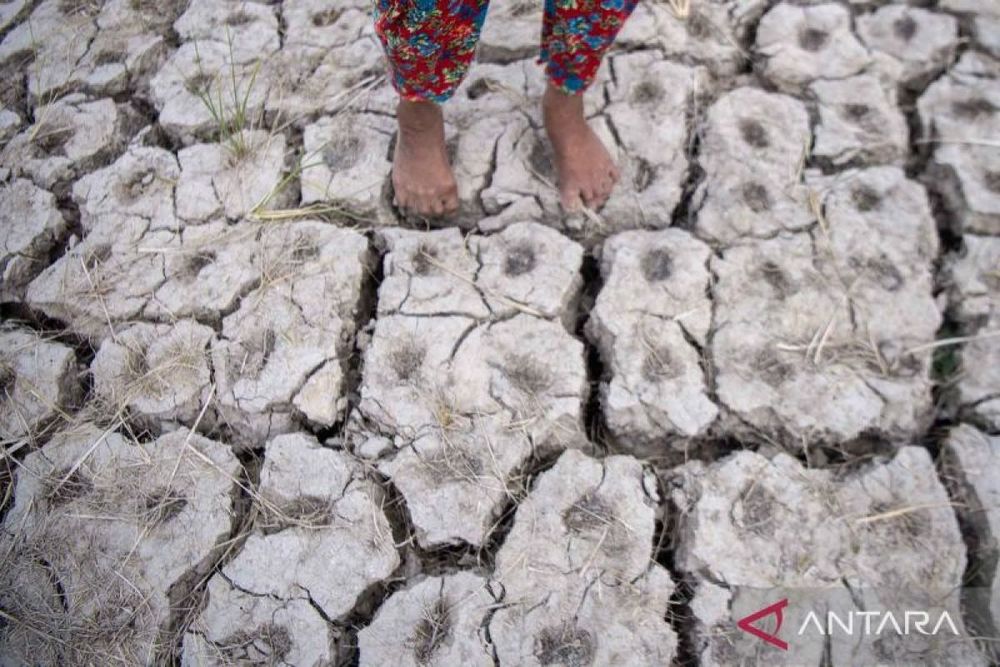
Indonesia's National Research and Innovation Agency is advancing a suite of water security technologies as the country confronts what international climate forecasters project could become the strongest El Niño in roughly 150 years of observations, with drought conditions already spreading across more than half the archipelago.
Head of BRIN Arif Satria said President Prabowo Subianto recently summoned the agency to present technological solutions as this year's phenomenon threatens hotter and drier conditions than previous events. Multiple forecast models from NOAA, ECMWF, and the Bureau of Meteorology predict the 2026 event could surpass historic El Niño cycles including 1997-1998 and 1982-1983.
By late July, drought had already affected 294 points across Indonesia, with 180 of those occurring in irrigation areas and rice fields, threatening agricultural productivity at a critical time for national food supply.
Presidential directive for enhanced weather modification
Speaking at the Presidential Palace in Jakarta on Thursday, Arif said President Prabowo instructed BRIN to improve weather modification capabilities through the use of 2-5 micron sodium chloride particles, flare technology, and unmanned aerial vehicles to make cloud-seeding operations more effective.
The directive comes as Indonesia's Meteorology, Climatology, and Geophysics Agency reported that by mid-July, dry conditions had spread across 54.5 percent of the country's seasonal zones, with nearly 93 percent of Indonesia recording low rainfall and almost 73 percent entering the dry season.
BMKG said the El Niño-Southern Oscillation index had reached +1.59, placing the phenomenon in the strong category, with forecasts indicating rainfall ranging from low to very low across much of Indonesia through August and September.
Desalination expansion addresses coastal water needs
The agency is expanding seawater desalination technology that has been deployed in 40 coastal areas to strengthen freshwater supplies. Arif said President Prabowo expressed particular satisfaction with this breakthrough during the presentation.
BRIN has also developed Arsinum, a water purification system that converts floodwater, wastewater, and brackish water into potable water. During a demonstration at the Presidential Palace, President Prabowo, Energy and Mineral Resources Minister Bahlil Lahadalia, and Marine Affairs and Fisheries Minister Sakti Wahyu Trenggono tested water produced by the technology.
Arif said the agency has proven the technology at various disaster sites across the country.
Underground rivers targeted as new water sources
President Prabowo also directed BRIN to identify underground rivers that could serve as new sources of raw water. The agency is developing technologies to map underground river systems and treat water containing Escherichia coli bacteria.
BRIN will establish a living laboratory in Kebumen District, Central Java, to develop technologies for producing cleaner, safer, and more hygienic groundwater. Similar studies are underway in Gunungkidul and other regions with potential for underground rivers.
Agricultural impacts mounting
The urgency of BRIN's water security initiatives reflects mounting agricultural pressures. Indonesia's rice production dropped for three consecutive months between March and May 2026, with April output plunging by more than 800,000 tonnes compared to the same period in 2025, according to Statistics Indonesia.
Java and Sumatra together contribute around 75 percent of Indonesia's national rice output, yet a large share of paddy cultivation remains rainfed, making production highly sensitive to climate variability. This structural vulnerability is compounded by a positive Indian Ocean Dipole co-occurring with the 2026 El Niño, which typically suppresses rainfall further across equatorial Southeast Asia.
Indonesia has also recorded higher fire hotspot activity by late July 2026 than at the same point in any previous year, including during devastating fire seasons in 2019 and 2023, with wildfire risks accumulating faster than during previous major El Niño cycles.
BMKG warned that this year's El Niño could affect agriculture, clean water supplies, reservoir and irrigation management, forest and land fires, energy, public health, fisheries, and economic activity across the country. The agency said the greatest impacts are expected in areas south of the equator, including Bali, Java, West Nusa Tenggara, East Nusa Tenggara, southern Sumatra, and southern Papua.
As of late July 2026, Indonesia's national government-managed rice reserves stood at 5.24 million metric tons, supplemented by standing crops estimated at 10 to 11 million tons, providing buffer capacity during the drought crisis.
Indonesia consistently experiences dry climatic conditions during El Niño phases, with significant historical consequences for agricultural output, rural incomes, and staple food prices. The 1997-1998 drought caused massive crop failures, water shortages, and forest fires across various parts of the country.
The rainy season is expected to begin in mid-October, according to BMKG forecasts.