
Deputy Minister calls on regional governments to expand youth engagement spaces
Deputy Minister Ratu Ayu Isyana Bagoes Oka urged local authorities to create more facilities for youth activities during World Population Day commemoration, highlighting programs to address mental health challenges and support Indonesia's demographic dividend.
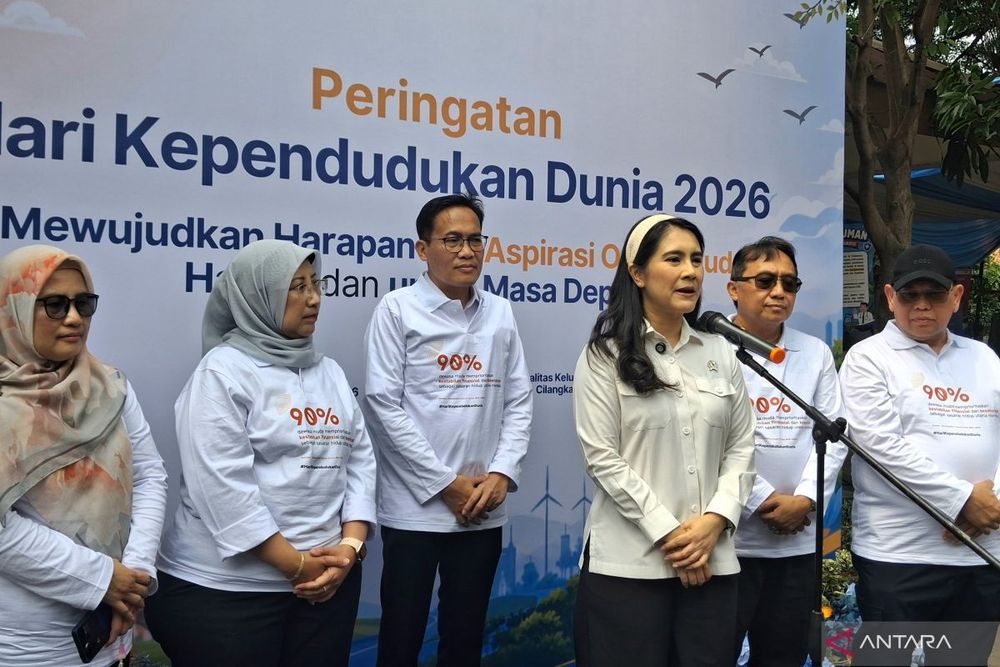
Deputy Minister calls on regional governments to expand youth engagement spaces
Deputy Minister of Population and Family Development and Deputy Head of the National Population and Family Planning Agency (BKKBN), Ratu Ayu Isyana Bagoes Oka, called on regional governments Thursday to establish more facilities where young people can direct their energy toward constructive activities.
Speaking at the World Population Day commemoration with the United Nations Population Fund (UNFPA) at the Garuda Child-Friendly Public Space in East Jakarta on July 30, 2026, Isyana outlined multiple ministry initiatives designed to support adolescents and tackle mental health concerns. This year's World Population Day, observed on July 11, carried the theme "Realizing the hopes and aspirations of young people – today and for the future," reflecting a UNFPA survey of over 100,000 people aged 18 to 39 across 73 countries.
At the Ministry of Population and Family Development and BKKBN, we have the Youth Information and Counseling Center program to address mental health issues. We also have the Population-Aware Schools program and other initiatives, including the Family Development for Adolescents program, which provides education for families with teenage children.
The deputy minister pointed to a successful local initiative in East Jakarta, where municipal authorities responded to youth brawls by establishing a boxing facility.
As the mayor of East Jakarta explained earlier, one response to the problem of youth brawls was to establish a boxing ring where young people could channel their energy. Indirectly, some of them have even gone on to achieve success through boxing. From our side, the ministry continues to communicate and coordinate with regional leaders.
The emphasis on youth development comes as Indonesia experiences a demographic dividend period, with approximately 69 to 70 percent of its population aged between 15 and 64 years. This favorable demographic window, expected to last until around 2045, aligns with the nation's broader development goals.
Population Development Roadmap for regional implementation
Isyana revealed that the Ministry of Population and Family Development and BKKBN are collaborating with various stakeholders to formulate the Population Development Roadmap, which will serve as a framework for developing quality human resources in support of the Golden Indonesia 2045 vision. That vision aims to position Indonesia as the world's fifth-largest economy with a GDP of US$7.3 trillion and per capita income reaching US$25,000 by the country's centennial, with targeted annual economic growth of 7 to 8 percent.
We have prepared the Population Development Roadmap, which has been shared with provincial, regency, and municipal governments. It includes indicators that local governments can use to identify their demographic challenges. From there, they can determine the appropriate action plans to address those issues.
The roadmap supports the Golden Indonesia 2045 Vision's four strategic pillars: human development and the mastery of science and technology, sustainable economic development, equitable development, and strengthening national resilience and governance.
BKKBN brings substantial credibility to this effort, having won the 2022 UN Population Award in the institution category for helping avert 100 million unplanned births and reducing fertility rates from 5.6 to 2.2 within a single generation through innovative and rights-based family planning initiatives. Indonesia's Total Fertility Rate currently stands at approximately 2.0 to 2.18 children per woman, approaching the replacement level of 2.1.
The ministry's focus on youth mental health reflects growing awareness of challenges facing Indonesian adolescents. International research, including the UN World Youth Report 2025 on Youth Mental Health and Well-being, identifies six social determinants shaping youth mental health: education, employment, family dynamics, poverty, technology, and societal attitudes, emphasizing that inequalities in these areas create disparities in mental health outcomes.
The Ministry of Population and Family Development was formed from BKKBN in the Prabowo Subianto-Gibran Rakabuming Raka administration that began in late 2024, with BKKBN maintaining its role as a Non-Ministerial Government Institution focused on population control and family planning.