
Indonesia deploys digital platform to fix social assistance mistargeting
Indonesia launches Digital Social Protection Portal to address widespread mistargeting in social aid programs, integrating government data across ministries to ensure benefits reach eligible recipients after findings showed 45 percent of assistance was misdirected.
Indonesia deploys digital platform to fix social assistance mistargeting
Indonesia is deploying a nationwide digital platform to fix chronic mistargeting in its social assistance programs, after government reviews revealed that 45 percent of benefits were reaching ineligible households, affecting more than 1.9 million families.
The Digital Social Protection Portal (Perlinsos) integrates data across multiple ministries and government agencies to verify beneficiary eligibility through cross-referenced information, marking a shift from fragmented record-keeping that allowed widespread errors in the country's social safety net.
The Ministry of Communication and Digital Affairs said the platform automatically verifies population records, employment status, asset ownership, and electricity consumption to produce more accurate beneficiary lists.
"The objective is simple, to ensure assistance reaches those who are truly entitled to receive it. As data become more integrated, the risk of mistargeting can continue to decline," Director of Regional Digital Government Technology Acceleration Aris Kurniawan said Wednesday.
Scale of the problem
The mistargeting issue came to light in September 2025 when government audits found that nearly half of social assistance recipients may not have qualified for benefits under program criteria. The findings underscored the urgency of overhauling Indonesia's social protection data systems, which handle approximately 15 percent of the country's total state expenditure—around $31 billion out of $208 billion allocated in 2024, ranking third in budget priority after public services and the economy.
Indonesia's poverty rate stood at 8.25 percent as of September 2025, with citizens classified as extremely poor making up 0.78 percent of the population, making accurate targeting critical for limited resources.
Pilot results and expansion
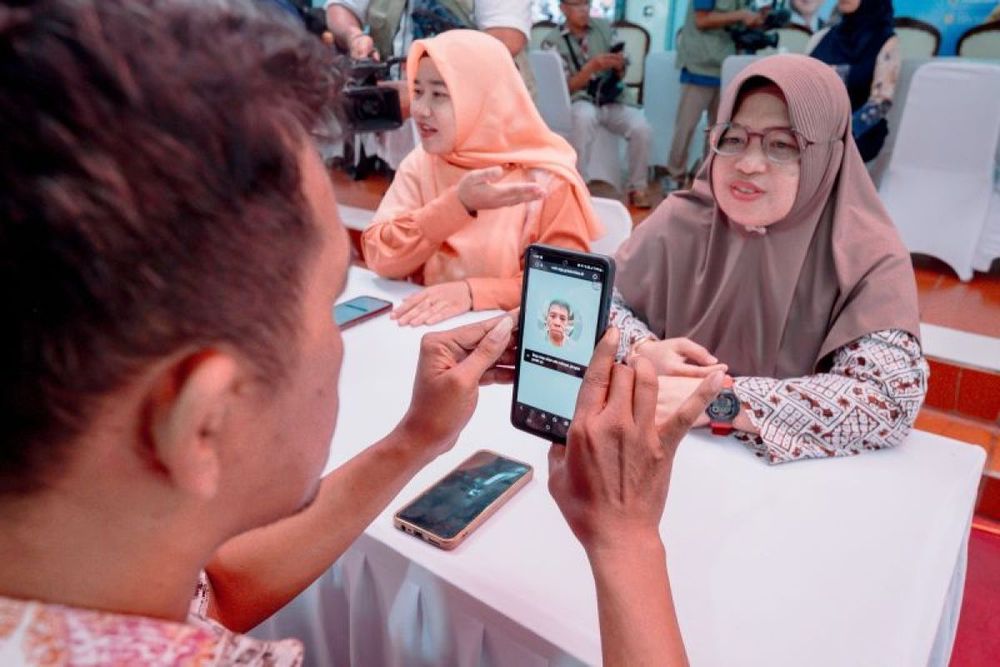
The Government Communication Office and Ministry of Communication and Digital Affairs reviewed the platform's pilot implementation Tuesday during a visit to Tambaksari Sub-district in Surabaya, Indonesia's second-largest city with a population of approximately 3.01 million.
The Digital Social Protection Portal has been tested in 43 districts and cities, with Surabaya recording the highest data collection rate at 99.82 percent. The platform has already produced tangible results—in the second quarter of 2026, the government added 470,000 families to the social aid recipient list following updates to the National Socioeconomic Single Data (DTSEN) system, demonstrating the platform's ability to identify previously overlooked eligible households.
The ministry supports the platform through the National Data Center and the Government Service Integration System, which enable secure, real-time data exchange among government institutions.
Data protection framework
All data exchanges under the platform require public consent in compliance with Indonesia's Personal Data Protection Law (Law No. 27 of 2022), the country's first comprehensive data privacy regulation that came into force on October 17, 2022. Prior to this law, Indonesia lacked unified data protection legislation, with provisions scattered across more than 30 different laws and regulations.
The law established a two-year transition period for government agencies and private organizations to comply with its provisions, with full enforcement beginning on October 17, 2024—meaning the Digital Social Protection Portal now operates under complete data protection requirements.
Data security is handled through encryption using Cryptography as a Service technology provided by the National Cyber and Crypto Agency (BSSN), Indonesia's primary intelligence agency responsible for cybersecurity and cryptography, established in 2017.
The government also allows citizens to correct inaccurate information through an objection mechanism if they find discrepancies in their personal records.
Building public trust
Head of the Government Communication Office Muhammad Qodari said the platform represents more than technical infrastructure.
"The government is building not only a digital system, but also public trust. When data become more accurate, assistance can be better targeted, public services become faster, and people receive their rights more fairly," Qodari said.
He praised the Surabaya city administration and local residents for their support during the pilot phase.
According to Aris, integrated data synchronization speeds up beneficiary verification, reduces duplicate records, and helps identify people whose economic conditions have changed, making social assistance distribution more responsive to actual need.
The government expects the platform's interoperable data system to serve as the foundation for broader digital public services beyond social assistance, creating more effective, transparent, and responsive government operations across sectors.