
Indonesia's Social Aid Digitalization Expands to 153 Districts Across 38 Provinces
President Prabowo Subianto announces digitalized registration for family assistance programs now operational in 153 districts, with over three million families enrolled and a target of 49 million households nationwide.
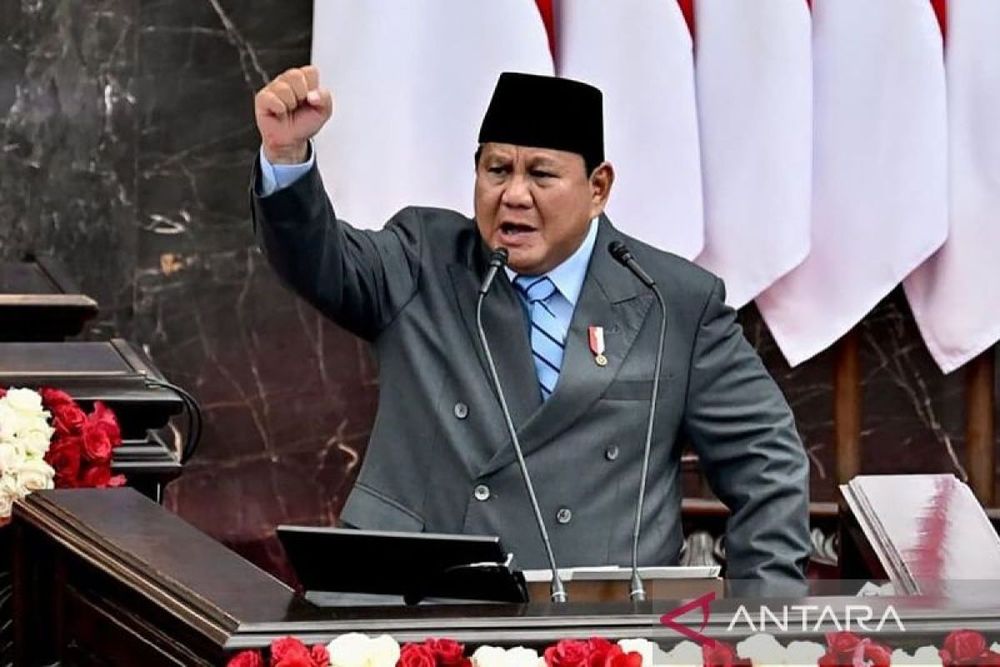
Social aid digitalisation reaches 153 districts and cities: Prabowo
Indonesian President Prabowo Subianto announced that the digitalization of social assistance programs has reached 153 districts and cities across 38 provinces, marking a significant expansion in the government's effort to modernize welfare distribution systems.
Speaking during his State of the Nation Address at the People's Consultative Assembly (MPR) Annual Session and Joint Session of the House of Representatives (DPR) and Regional Representative Council (DPD) in Jakarta on Friday, August 14, the president confirmed that digitized registration for the Family Hope Programme (PKH) and Non-Cash Food Assistance (BPNT) is now fully operational in these areas.
The PKH, a conditional cash transfer program that has operated in Indonesia since 2007 following international models, currently targets 10 million families in the lowest income deciles, providing assistance ranging from Rp75,000 to Rp250,000 per month. The BPNT program, introduced in 2017 to replace the previous in-kind Rice for Prosperous Families (Rastra) initiative, distributes non-cash assistance through cards that beneficiaries can use to purchase essential food items including carbohydrates, animal protein, vegetable protein, and vitamins.
More than three million families have already registered through the new digital system, representing progress toward the ambitious target of 49 million registered families. Upon full implementation, the programs will cover more than half of all Indonesian households in the nation of approximately 287 million people.
Improved Access and Cost Savings
President Prabowo emphasized that the digitalization initiative aims to make social protection more accurately targeted, easily accessible, and delivered with greater dignity. The system leverages the National Socio-Economic Single Data (DTSEN) to improve targeting accuracy across social assistance programs.
The digital transformation has eliminated significant financial burdens previously borne by low-income families seeking assistance. Formerly, underprivileged households spent approximately Rp150,000 on transportation, document preparation, photocopies, and lost wages during the registration process. Under the new system, registration is completely free of charge, and eligibility verification that once required considerable time now completes within minutes or hours.
Low-income families should not have to pay out of pocket to prove their economic status in order to be eligible for assistance
President Prabowo stated.
Broader Policy Context
The digitalization effort forms part of a comprehensive reform agenda under the Prabowo administration, which has implemented 121 transformative policies during its first 21 months in office, covering areas such as food self-sufficiency, social assistance, and economic development.
The government has demonstrated its commitment through substantial budget allocations, with the 2026 Social Protection Program budget for PKH and BPNT standing at Rp78.42 trillion. Overall social protection spending increased by 8.6 percent year-on-year to Rp508.2 trillion in 2026, with approximately 62 percent allocated for basic needs programs.
These investments come as Indonesia has achieved notable progress in poverty reduction, with the poverty rate falling to 8.57 percent in September 2024, representing 24.06 million people—the lowest level since Statistics Indonesia (BPS) began recording such data.
President Prabowo confirmed that the digitalization initiative will continue expanding to other government social assistance programs and subsidies, reinforcing the administration's integrated approach to improving targeting accuracy, transparency, and public access to welfare services.