
Finance Ministry deploys nationwide field monitoring for free meal program amid budget pressures
Indonesia's Finance Ministry has mobilized its nationwide treasury network to conduct on-site inspections of nutrition service units as the Rp268 trillion free meal program faces implementation challenges and efficiency demands.
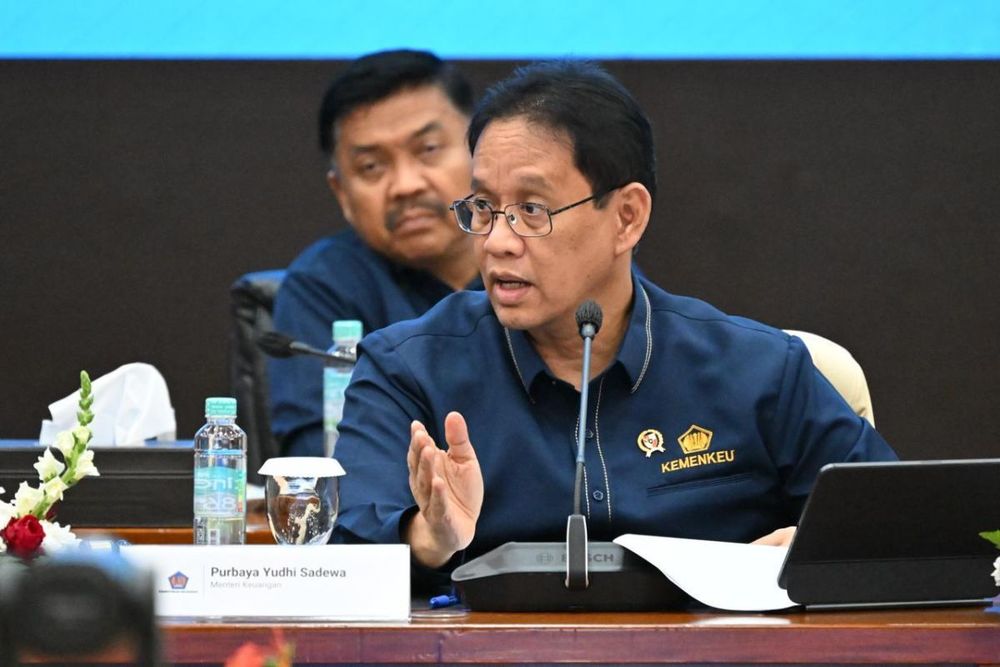
Finance Ministry deploys nationwide field monitoring for free meal program amid budget pressures
Indonesia's Ministry of Finance has deployed its extensive network of regional treasury offices to conduct comprehensive field oversight of the government's flagship free nutritional meal program, which served 63.13 million beneficiaries by mid-2026 after launching just 19 months earlier.
Finance Minister Purbaya Yudhi Sadewa announced Wednesday that district and city-level offices of the Directorate General of Treasury have undertaken systematic on-site surveys at Nutrition Fulfillment Service Units across the country, examining both operational procedures and financial controls at the facilities providing meals under the program.
The Ministry is leveraging the Directorate General of Treasury's presence in every province and second-tier administrative region to monitor the initiative, which expanded from 190 initial kitchens serving approximately 570,000 people in 26 provinces when it launched on January 6, 2025, to more than 29,000 service units nationwide by June 2026.
Speaking at a press briefing in Jakarta, Minister Purbaya emphasized the ground-level nature of the oversight effort. The treasury network, operating through 30 regional offices established in 2004 as part of state financial management reform, has conducted comprehensive assessments rather than relying on remote monitoring.
Budget realization and efficiency measures
Budget realization for the free meal program reached Rp101.1 trillion by the end of the second quarter of 2026. The 2026 allocation stands at Rp268 trillion, reduced from an original Rp335 trillion following President Prabowo's directive in May 2026 to improve budget efficiency amid fiscal pressures.
As part of efficiency measures, the government suspended the program during school holidays from June 22 to July 13, 2026, and announced that all future school holiday suspensions would continue as a cost-containment strategy.
The minister stated that monitoring reports indicate the national program is generally operating well, though field evaluations identified site-specific shortcomings requiring administrative and operational improvements. These findings will be submitted directly to the National Nutrition Agency to guide program adjustments as implementation continues.
Leadership transition and coordination
Minister Purbaya said formal coordination with newly appointed BGN Head Sudaryono would take place following the agency's internal consolidation. Sudaryono, who previously served as Deputy Minister of Agriculture and was involved in designing the program from its inception, was appointed on July 22, 2026, replacing Nanik Sudaryati Deyang, who resigned after 45 days in office due to health reasons.
The program addresses Indonesia's child nutrition challenge, with the Ministry of Health's 2024 Indonesian Nutritional Status Survey recording a stunting rate of 19.8 percent among children under five, affecting approximately 4.48 million children nationwide.
The initiative represents one of the government's largest fiscal undertakings and is projected to have significant economic spillover effects beyond its primary nutrition objectives, with estimates suggesting it could inject nearly Rp80 trillion into grassroots communities quarterly.